How to Write E-commerce Content Marketing That Converts
Why Content Marketing for E-commerce Is Your Competitive Advantage
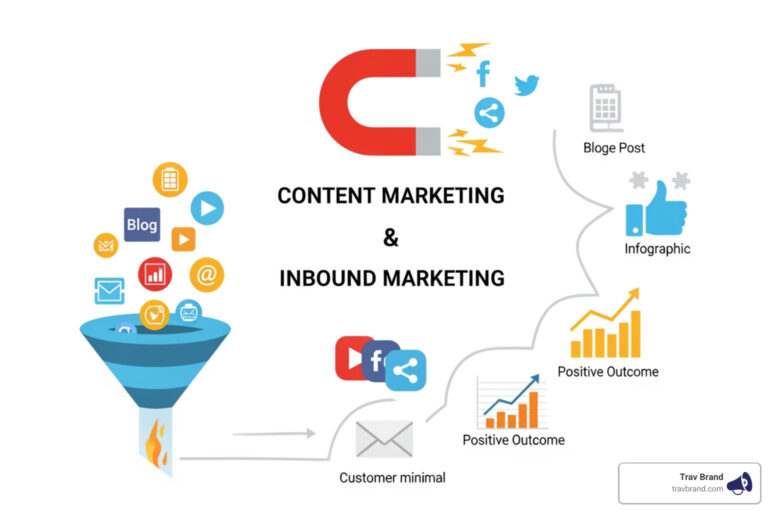
Content marketing for e-commerce is the strategic creation and distribution of valuable content to attract, engage, and convert online shoppers into loyal customers. It works by:
- Building trust and authority with educational content.
- Driving organic traffic through SEO.
- Increasing conversions by addressing customer questions.
- Differentiating your brand in a crowded market.
- Generating sustainable ROI with evergreen content.
The numbers are compelling: organic search drives 53% of all website traffic, and 72% of marketers report that content marketing increases engagement. With average e-commerce conversion rates at just 1-3%, brands that invest in strategic content gain a significant advantage.
The challenge isn’t if content marketing works, but knowing what to create, where to distribute it, and how to tie it to revenue. Success requires treating content as the cornerstone of your sales strategy, not an afterthought.
I’m Trav Lubinsky, and I’ve spent my career scaling consumer brands with strategic content. This guide will show you how to create content that converts browsers into buyers and builds lasting brand loyalty.
Why Content Is King in the Kingdom of Carts
In a crowded online marketplace, content transforms a simple transaction into a meaningful relationship. It’s the vehicle for your brand’s story, selling solutions and experiences, not just products.
Content marketing for e-commerce is critical for:
- Traffic Generation: SEO-optimized content is a magnet for potential customers. According to BrightEdge, organic search drives 53% of all website traffic.
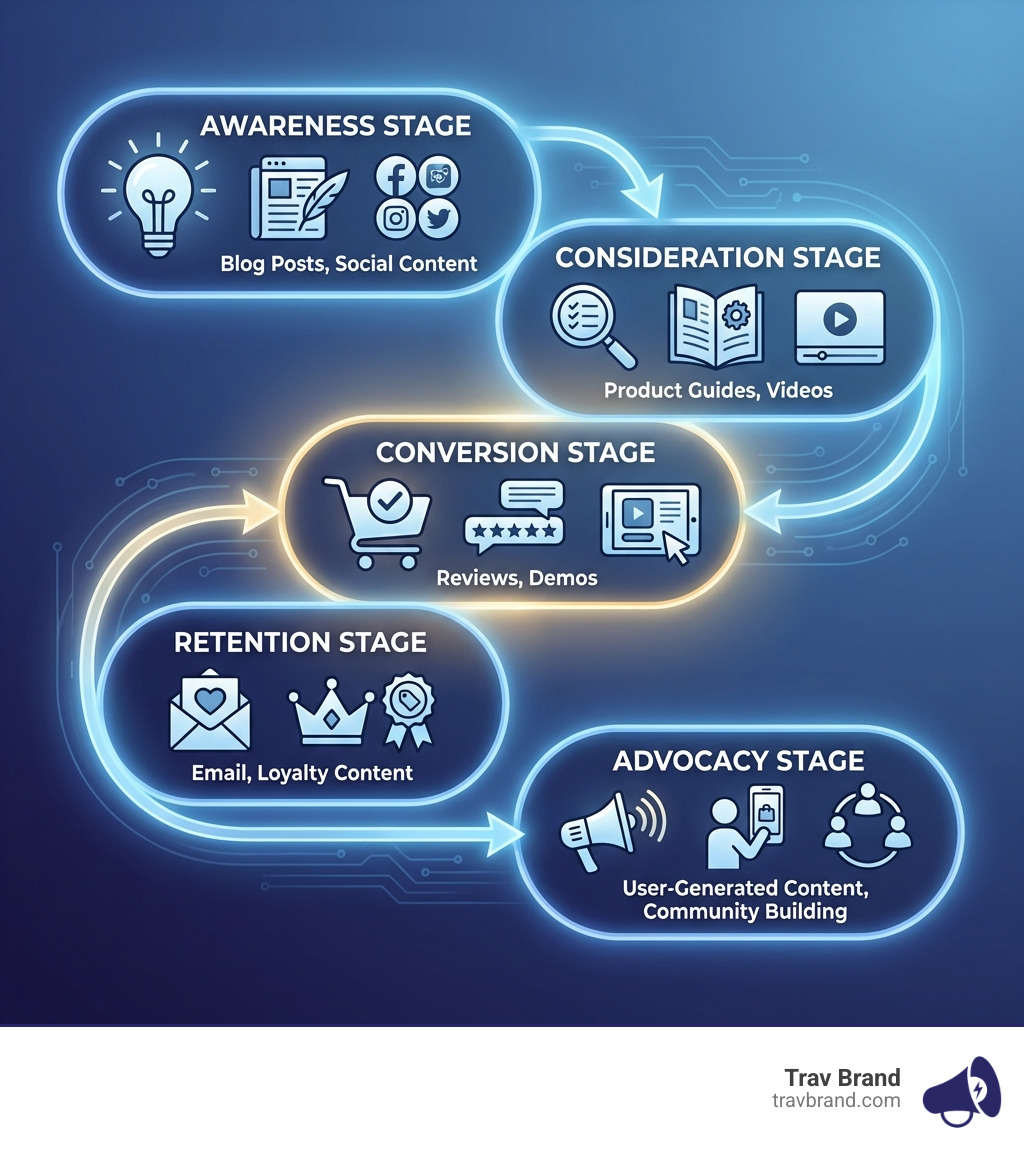
- Sales Growth: By educating and inspiring, content guides customers through their purchase journey, building the confidence needed to make a sale.
- Brand Authority: Consistently providing valuable information establishes your brand as a trusted expert in your niche.
- Customer Trust: Helpful content that doesn’t push a hard sell builds a foundation of trust that encourages repeat business.
- Building Community: Great content fosters conversation, turning shoppers into an active community.
- Impressive ROI: Content marketing pays dividends. For example, email marketing has an average ROI of $42 for every $1 spent.
Building Brand Authority and Customer Trust
Today’s customers want to know why a product matters and who is behind the brand. We use content to answer their questions and solve their problems, positioning the brand as a helpful expert. Whether it’s a sizing guide or a product tutorial, valuable content establishes authority and trust.
This approach directly addresses issues like cart abandonment, which affects 60-80% of shoppers. Content alleviates doubts like “Is this product right for me?” by providing clear answers and building confidence. As highlighted in Founder Storytelling and DTC Performance, authentic narratives drive conversions more effectively than discounts.
How Content Directly Drives Traffic and Sales
Content translates into traffic and sales through several key channels:
-
SEO Benefits: High-quality, keyword-rich content ranks higher in search results, driving valuable organic traffic. When a user finds our helpful guide, they are drawn into our e-commerce Understanding E-commerce and Funnels.
-
Social Media Reach: With billions of users on social media, sharing content on platforms like Instagram, TikTok, and Facebook amplifies our brand message and drives traffic back to our store.
-
Email Marketing Funnels: Email remains a powerful channel for nurturing leads. Sending personalized content and product updates keeps our brand top-of-mind and encourages subscribers to return and purchase.
-
Reducing Cart Abandonment: Detailed product guides, customer reviews, and how-to videos act as a virtual sales assistant, reassuring customers and giving them the confidence to complete their purchase.
The E-commerce Content Playbook: Formats That Convert
The most effective content marketing for e-commerce strategies use a mix of formats to engage customers at different stages of their journey. The key is to combine visual appeal, compelling storytelling, and a focus on value.
Key Types of Content Marketing for E-commerce
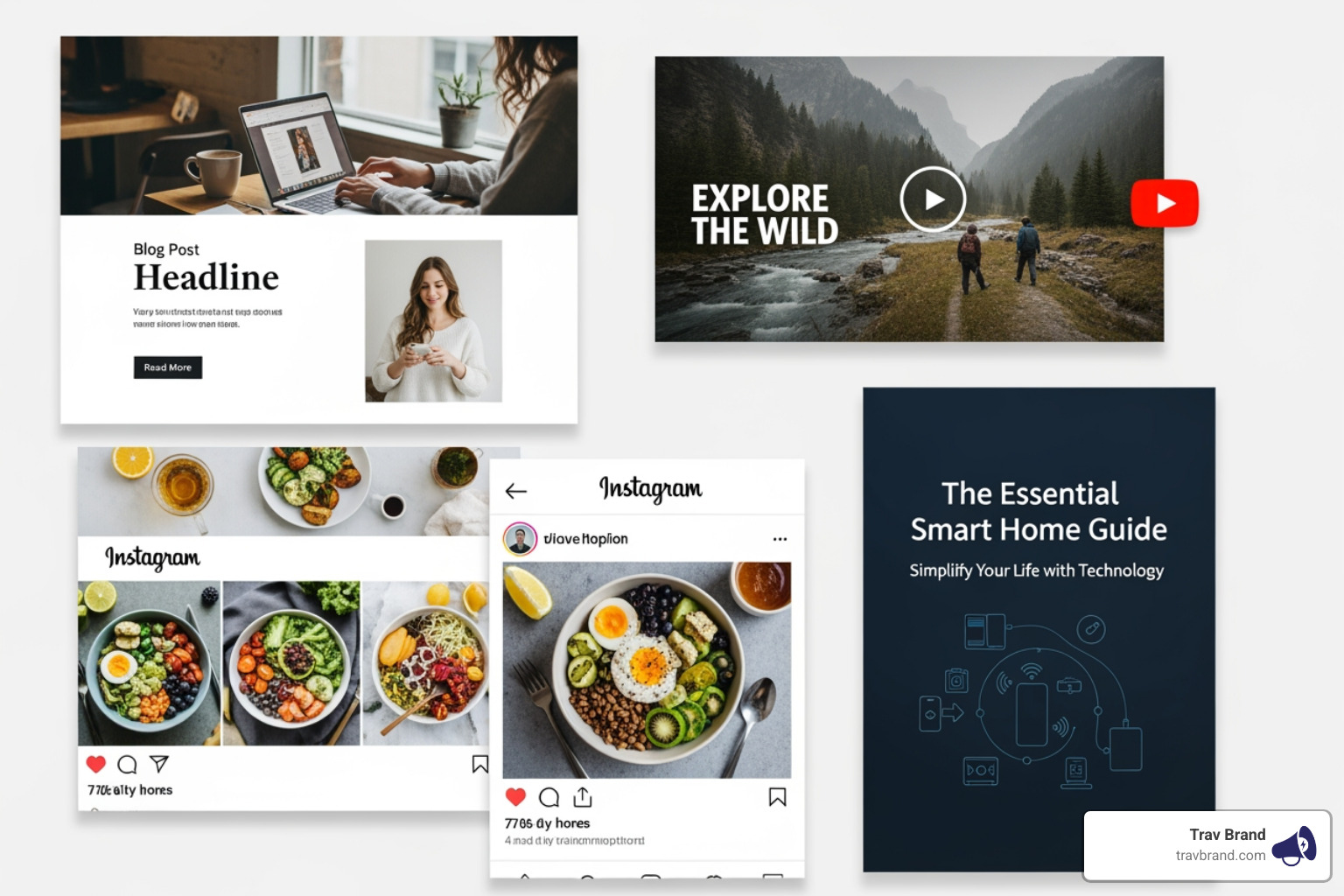
Here are the content types that consistently deliver results for e-commerce:
- Blogs: The hub for storytelling, guides, and thought leadership. Brands like Beardbrand and The Hundreds built massive followings with blogs that became “the definitive streetwear resource” and established expertise through long-term commitment, as founder Eric Bandholz noted was key to their success.
- How-to Guides & Tutorials: These explain how to use products or solve problems, improving customer satisfaction and demonstrating practical value.
- Buying Guides: These simplify complex purchasing decisions, helping customers choose the right product, which builds confidence and reduces returns.
- Case Studies: Real-world examples of how your products solve problems for customers, building immense credibility.
- Detailed Product Descriptions: Go beyond features to tell a story, highlight benefits, and evoke emotion. They are also crucial for SEO.
- FAQs: A well-crafted FAQ page provides quick answers, improves customer experience, and captures long-tail keyword traffic.
- Resource Centers/Ebooks: Comprehensive guides position your brand as an authority and are excellent for lead generation.
These formats are the backbone of a Strategic Marketing Content plan.
The Power of Video in E-commerce
Video is the reigning emperor in e-commerce content. HubSpot research shows it was the most effective format for retail in 2023, with marketers incorporating it 50% more than other formats. Video excels at visual storytelling, building emotional connections, and establishing trust. With 79% of Shopify’s traffic coming from mobile, short-form video on TikTok and Instagram Reels is essential.
Effective video types include:
- Product Demos & Tutorials: Showcasing how a product works, like Beardbrand’s popular video series.
- Unboxing Videos: Creating excitement and anticipation, often with influencers.
- Customer Testimonials: Authentic reviews that provide powerful social proof.
- Behind-the-Scenes: Humanizing your brand by showing your values, process, or team.
- Live Shopping: Merging live streams with e-commerce for immediate purchase opportunities.
- Personality-Driven Content: Featuring founders or team members to build brand character, as the founder of Mini. Katana did to build a massive following.
For more on this, explore our Video Marketing Analysis.
Leveraging User-Generated Content (UGC)
User-generated content (UGC) is any content created by customers—reviews, images, videos. It’s digital word-of-mouth and a goldmine for e-commerce brands.
UGC is powerful because it provides:
- Authenticity and Trust: People trust other people more than brands. UGC is authentic social proof.
- Community Engagement: Featuring customer content makes them feel valued and encourages participation.
- Cost-Effective Content: UGC is a free source of high-quality, diverse marketing material.
- Reduced Purchase Hesitation: Seeing real people use a product successfully boosts buyer confidence.
Brands like GoPro and Glossier thrive by encouraging users to share content. We actively encourage UGC through customer reviews, social media campaigns with specific hashtags, and photo/video contests. For more tips on building an engaged community, see Building Your Personal Brand on Instagram: Tips and Strategies.
Developing Your Strategy for Content Marketing for E-commerce
Without a clear strategy, content marketing is inefficient. For content marketing for e-commerce to convert, we need a roadmap that focuses on creating the right content for the right audience on the right channels.
Our approach involves these steps:
- Define Goals (e.g., increase traffic, boost conversions).
- Know Your Audience (create buyer personas).
- Competitor Analysis (find gaps and opportunities).
- Choose Formats & Channels (blogs, video, social media, email).
- Create a Calendar (plan for consistency).
- Promote (develop a robust promotion plan).
- Measure & Optimize (track performance and refine).
Our Web Content Strategy guide offers more detail on planning.
Integrating SEO into Your Content Marketing for E-commerce
SEO connects your valuable content to customers actively searching for it. Integrating SEO is non-negotiable for driving consistent organic traffic.
- Keyword Research: Understand what customers are searching for, from informational queries (“how to choose a skincare routine”) to transactional ones (“best anti-aging serum”).
- On-Page SEO: Strategically place keywords in titles, headings, body text, and meta descriptions. Prioritize creating comprehensive, user-friendly content.
- Technical SEO: Ensure a healthy site structure, paying attention to URL structure, site speed, and mobile-friendliness to avoid issues like keyword cannibalization.
- Link Building: Earn backlinks from reputable sites by creating exceptional, shareable content that others want to reference.
To stay competitive, we regularly conduct a Content Marketing Competitive Analysis. And for a deeper dive into e-commerce SEO, SpyFu offers excellent resources.
Effective Channels for Content Distribution
Creating great content is only half the battle; distribution is the other half. We use a multi-channel approach across owned, earned, and paid media.
-
Owned Media: Channels you control, like your blog/website and email marketing. Email is especially powerful, with an average ROI of $42 for every $1 spent. We use it to deliver personalized content and nurture leads. Learn more in Maximizing Growth: The Power of Email and SMS Automation.
-
Earned Media: When others share your content, such as through social media sharing or PR & guest posts. This builds credibility and expands reach.
-
Paid Media: Strategic amplification through social media ads and PPC. With over 4.6 billion social media users worldwide, targeted ads on platforms like Facebook and Instagram are essential for reaching new audiences.
Social media amplifies content by building community, enabling targeted reach, and facilitating influencer partnerships. Features like Instagram Shopping and live streams also integrate direct purchase opportunities, blurring the line between browsing and buying.
Personalization and Measurement
To master content marketing for e-commerce, personalization and measurement are essential.
Personalization: Speaking Directly to the Customer
Customers expect custom experiences. We achieve this through:
- Audience Segmentation: Grouping audiences by demographics or behavior to deliver more relevant content.
- Personalized Recommendations: Using algorithms to suggest products or content based on user interactions.
- Dynamic Content: Tailoring website elements or emails based on the user (e.g., new vs. returning visitor).
Measurement: Tracking Our Way to Success
“You can’t scale what you don’t track.” We monitor key metrics to understand impact and optimize our strategy:
- Awareness & Reach: Website traffic, traffic sources, social reach.
- Engagement: Time on page, bounce rate, social engagement (likes, shares), email open/click rates.
- Conversion: Lead generation, conversion rate, assisted conversions, and sales revenue.
- Loyalty & Retention: Customer Lifetime Value (CLV) and repeat purchase rate.
We use tools like Google Analytics and A/B testing to ensure our efforts translate into measurable growth, as detailed in our Optimize for Conversions: Complete Guide. This data-driven approach is key to a successful Content Performance Analysis.
Winning at E-commerce: Content Marketing in Action
Let’s look at brands that have mastered content marketing for e-commerce.

-
Beardbrand: The Power of Long-Term Video
Founder Eric Bandholz committed to creating a series of videos offering guidance on beard care. This value-first approach, which he noted required being “willing to suffer for very long periods of time,” built a massive YouTube following and established the brand as an authority. -
The Hundreds: Blog as a Definitive Resource
For ten years, founder Bobby Hundreds’ blog was “the definitive streetwear resource,” providing cultural commentary that built an engaged community around The Hundreds as a lifestyle, not just a clothing brand. -
Mini. Katana: Personality-Driven Social Media
The founder of Mini. Katana used his personality on TikTok and Instagram to build a huge following and drive organic sales, proving the power of humanizing your brand. -
ManoMano: Community-Driven Expertise
The DIY marketplace ManoMano created a community of expert “Manodvisors” to answer customer questions, successfully recreating the helpful in-store experience online. -
Fashion Retailers & Brand Narrative:
Brands like Boohoo and its subsidiary PrettyLittleThing use content to highlight values and cultural relevance, from sustainability initiatives to collaborations with rappers, extending the brand narrative beyond just products.
Key Challenges & Best Practices:
- Patience is a Virtue: Content marketing is a marathon. Expect results in six to nine months, not overnight.
- Invest in Quality: Top-tier content stands out. You get what you pay for.
- Avoid Being Spammy: Focus on providing value, not just pushing sales.
- Be Original & “10X” Your Content: Aim to create content that is ten times better than the competition.
- Customer-Centricity: Let customer questions and pain points fuel your content strategy.
- Balance Visuals & Text: Use compelling visuals, especially video, but don’t neglect well-written, SEO-optimized text.
Following these practices helps develop Innovative Brand Building Strategies to Stand Out in a Competitive Market and truly win at e-commerce.
Frequently Asked Questions about E-commerce Content Marketing
What is the difference between content marketing and content commerce?
While related, they serve different functions:
-
Content Marketing is the broad strategy of creating valuable content (like a blog post) to attract an audience, build trust, and nurture a relationship that eventually leads to a sale.
-
Content Commerce directly integrates shoppable functionality into the content itself. It blurs the line between content and shopping, allowing for immediate purchases within the experience (e.g., clicking to buy a product from a live-stream tutorial). It’s about converting interest into a sale on the spot.
In short, content marketing attracts, while content commerce converts within the content.
How can social media be used to amplify e-commerce content?
Social media is a powerful amplifier for e-commerce content. With over 4.6 billion users worldwide, it’s an essential distribution channel. Key amplification methods include:
- Broad Distribution: Share blogs, videos, and guides to reach new audiences on platforms like Instagram, TikTok, and Facebook.
- Community Building: Interact with followers through comments, Q&As, and discussions to build a loyal community.
- Targeted Advertising: Use platform ad tools to promote content to specific demographics and interests, driving qualified traffic.
- Influencer Partnerships: Collaborate with influencers to leverage their credibility and reach their engaged audiences.
- Shoppable Features: Use features like Instagram Shopping and live shopping to turn content into immediate sales opportunities.
How can brands measure the success of their e-commerce content marketing?
Measuring success is about proving ROI and optimizing your strategy. We track metrics across the customer journey, using tools like Google Analytics and A/B testing to ensure our efforts are profitable. Key categories to measure include:
-
Awareness & Reach: Track metrics like website traffic, traffic sources, and social media impressions to see how many people your content is reaching.
-
Engagement Metrics: Monitor how users interact with your content through metrics like time on page, bounce rate, social shares, and email click-through rates.
-
Conversion Metrics: This is the ultimate measure of success. Track lead generation (e.g., email sign-ups), conversion rates, assisted conversions, and, most importantly, sales revenue attributed to content.
-
Loyalty & Retention Metrics: Understand the long-term impact with metrics like Customer Lifetime Value (CLV) and repeat purchase rate.
By consistently analyzing these Content marketing metrics, you can demonstrate the value of your content and make data-driven decisions.
Conclusion
We’ve seen that content marketing for e-commerce is a fundamental strategy for growth. It’s the force that builds trust, establishes authority, drives organic traffic, and converts browsers into loyal customers.
Effective content marketing requires a strategic, long-term commitment to creating valuable, relevant content. It’s about authentic storytelling and genuine value, which triumphs over fleeting discounts. By embracing a comprehensive content marketing for e-commerce strategy, brands can connect with customers on a deeper level and thrive in a competitive market.
Ready to transform your e-commerce presence with content that converts? At Trav Brand, we specialize in building and scaling brands through comprehensive digital marketing strategies. We offer a complete ecosystem from strategy to execution, focusing on measurable results. Let us help you craft powerful narratives that drive tangible business outcomes.
Develop your brand with our expert services