
Unlock Your Brand’s Potential: Developing a Winning Strategic Content Strategy
Why Strategic Marketing Content Is the Foundation Your Brand Can’t Afford to Skip
Strategic marketing content is the structured, intentional approach to creating and distributing content that aligns with your business goals and audience needs – rather than publishing randomly and hoping something sticks. Here’s what it delivers:
- Audience Building: Attracts and retains the right people through valuable, consistent content
- Business Alignment: Ensures every piece of content serves a clear objective (awareness, leads, conversions, loyalty)
- Measurable Results: Provides trackable outcomes like traffic growth, lead generation, and revenue impact
- Brand Authority: Establishes your business as a trusted voice in your industry
- Efficient Resources: Focuses time and budget on what actually works, not guesswork
Without a strategic approach, you’re essentially wandering in a forest without a compass. You might create great individual posts or videos, but they won’t connect into a system that drives measurable growth. Research consistently shows that marketers with a documented content strategy are far more likely to consider themselves effective – and they can justify higher budgets because they can prove ROI.
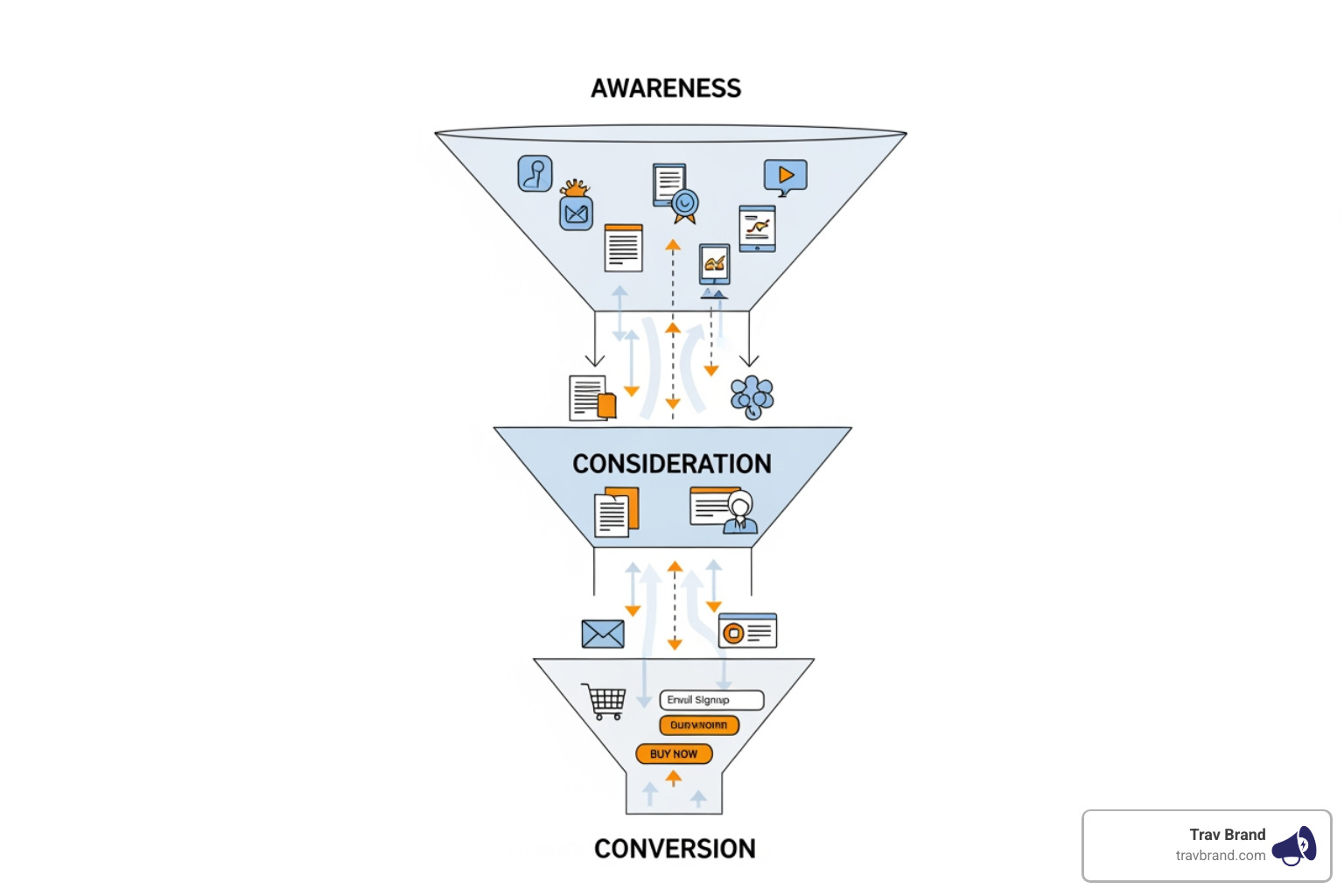
The difference between ad-hoc content and strategic content is simple: one is reactive, the other is intentional. Ad-hoc content responds to whatever feels urgent today. Strategic content follows a roadmap that guides your audience from awareness to conversion, building trust at every stage.
This matters more than ever in 2025. Content marketing now generates three times more leads than paid advertising while costing 62% less. And 70% of marketers are actively investing in content marketing – which means your competitors already are. The question isn’t whether to do content marketing, but whether you’ll do it strategically or keep throwing content at the wall.
I’m Trav Lubinsky, and I’ve spent my career building brands and scaling companies by developing strategic marketing content ecosystems that turn visibility into revenue. From launching and exiting ventures like Flex Watches to advising billion-dollar brands, I’ve seen how a cohesive content strategy becomes the difference between brands that survive and brands that dominate.
Why a Documented Strategy is Your Roadmap to Success
The digital landscape is a noisy place. With countless brands vying for attention, simply creating content isn’t enough. We need to be intentional, methodical, and, most importantly, strategic. The biggest problem with not having a strategic marketing content plan is that it leads to wasted time, effort, and resources. Without a clear direction, our content efforts become scattered, failing to achieve measurable business objectives.
According to research, 65% of the most successful content marketing teams have their content plan documented. Compare that to only 14% of the least successful teams, and the picture becomes clear: documentation isn’t just bureaucracy; it’s a critical differentiator. Moreover, 62% of marketers who said they were successful at content marketing had a documented strategy in place. This isn’t a coincidence. A documented strategy ensures that everyone on the team is aligned, understands the overarching goals, and knows their role in achieving them.
A documented strategy helps us:
- Align teams: It minimizes duplicated efforts and ensures everyone, from content creators to sales, is working towards the same objectives.
- Secure budget: When we can clearly articulate our strategy and expected ROI, it’s easier to justify investment in content marketing.
- Increase effectiveness: Marketers with a documented strategy feel significantly less challenged and consider themselves more effective across all content marketing tactics and social media channels.
A strategic marketing content plan is vital for building brand awareness and establishing credibility. It allows us to consistently deliver valuable information that resonates with our audience, positioning us as a trusted authority. This is crucial for Innovative Brand Building Strategies to Stand Out in a Competitive Market. By building trust and demonstrating expertise, we can attract, engage, and convert customers more effectively.
Content Strategy vs. Content Marketing vs. Content Plan
These terms are often used interchangeably, but they represent distinct, albeit interconnected, aspects of our overall approach to content. Understanding the differences is key to developing truly strategic marketing content.
| Aspect | Content Strategy | Content Marketing | Content Plan |
|---|---|---|---|
| Focus | The “Why” and “What” – our overarching vision and goals | The “Execution” – scheduling, publishing, and promotion | The “How” – tactical details of creation and distribution |
| Scope | Long-term, high-level, covers all content within the org | Medium-term, campaign-focused, specific to marketing content | Short-term, operational, day-to-day tasks |
| Key Question | Why are we creating content? Who are we helping? | How do we get our content to our audience? | What content, when, and by whom? |
| Deliverable | Mission statement, audience personas, business goals | Published content, distribution reports | Editorial calendar, content briefs, task assignments |
The Main Goals of a Content Marketing Strategy
Every piece of strategic marketing content we create should serve a purpose. Our goals typically fall into a few key categories:
- Brand Awareness: This is often the primary reason marketers use content. 86% of marketers cite growing brand awareness as their primary reason for using content marketing. We want our brand to be known, recognized, and associated with value.
- Lead Generation: Content can be a powerful magnet for new prospects. A solid strategy can generate three times more leads than paid advertising.
- Customer Conversion: Once we have leads, content helps nurture them, addressing their concerns and guiding them towards a purchase decision.
- Customer Loyalty: Acquiring a new customer can cost a company between 5-25 times more than keeping a current one. Content keeps existing customers engaged, informed, and feeling valued, fostering long-term relationships.
- Thought Leadership: By consistently providing insightful and valuable content, we establish ourselves as experts in our field. This is especially critical in B2B marketing, where 75% of B2B organizations leverage content marketing to build trust with their target audiences.
- Sales Enablement: Content provides our sales teams with valuable resources to share with prospects, answering questions and addressing objections during the sales cycle.
The Blueprint: Crafting Your Strategic Marketing Content Framework
Developing a strategic marketing content framework is like designing a house. We need a solid blueprint before we start building. This framework ensures that every piece of content we create is purposeful, relevant, and contributes to our overall business objectives. It’s about aligning our content with our brand’s “why” and creating a cohesive narrative.
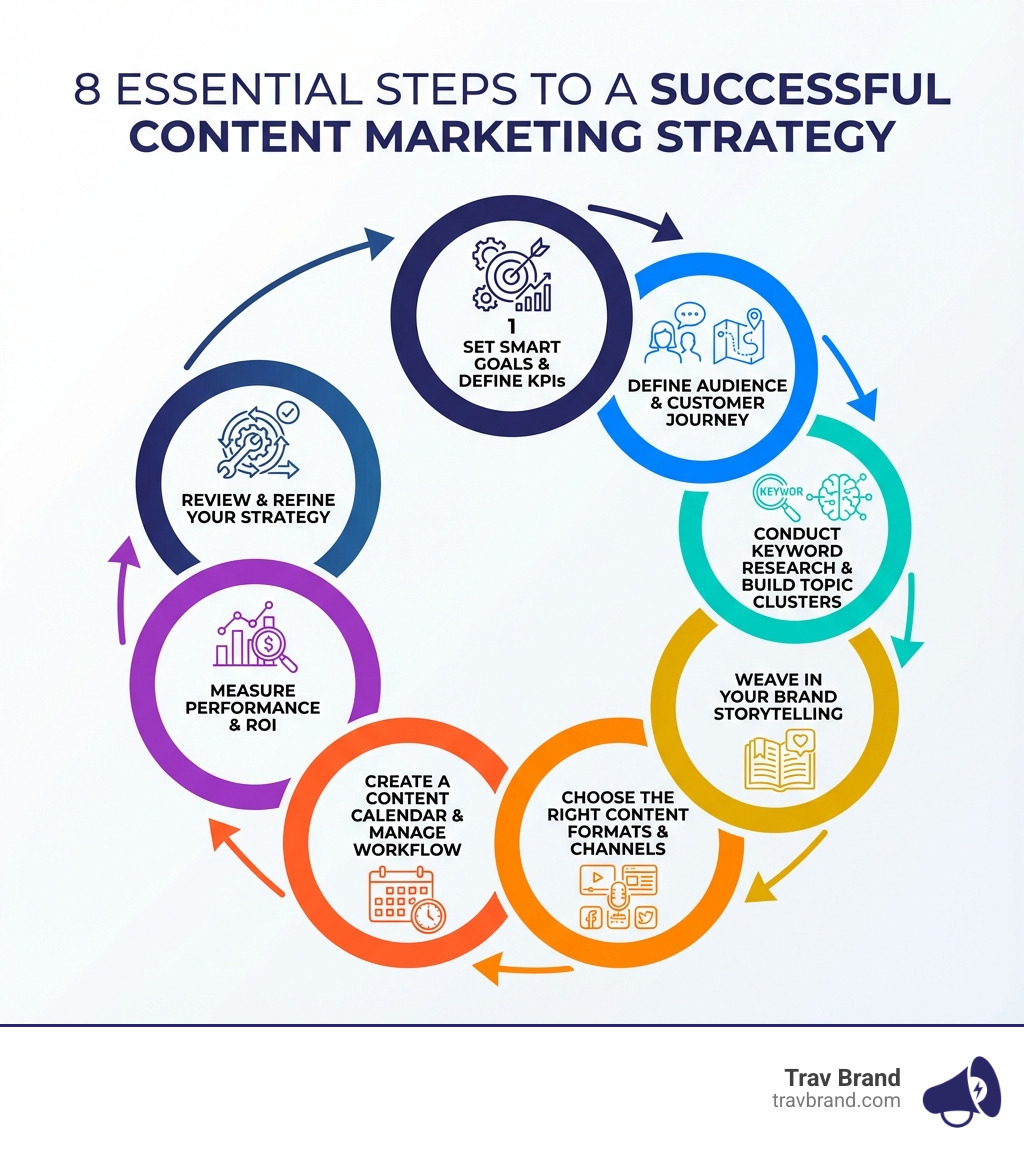
Step 1: Set SMART Goals and Define KPIs
Before we even think about content ideas, we need to know what we want to achieve. Our goals must directly align with our overall organizational objectives. For instance, if our business goal is to increase market share, our content goal might be to increase brand awareness among a specific demographic.
We use the SMART framework to define our goals:
- Specific: Clearly defined, no room for ambiguity. (e.g., “Increase website traffic” is vague; “Increase organic website traffic by 20%” is specific.)
- Measurable: We need metrics to track progress.
- Achievable: Goals should be realistic and attainable.
- Relevant: Goals must align with our broader business objectives.
- Time-bound: We set a deadline for achievement (e.g., “by the end of Q4”).
Once our SMART goals are established, we define Key Performance Indicators (KPIs) to measure our success. For example, if our goal is to increase organic website traffic, our KPIs might include:
- Traffic metrics: Unique visitors, page views, bounce rate.
- Engagement metrics: Time on page, social shares, comments.
- Conversion metrics: Lead generation forms completed, content downloads, sales inquiries.
Step 2: Define Your Audience and Customer Journey
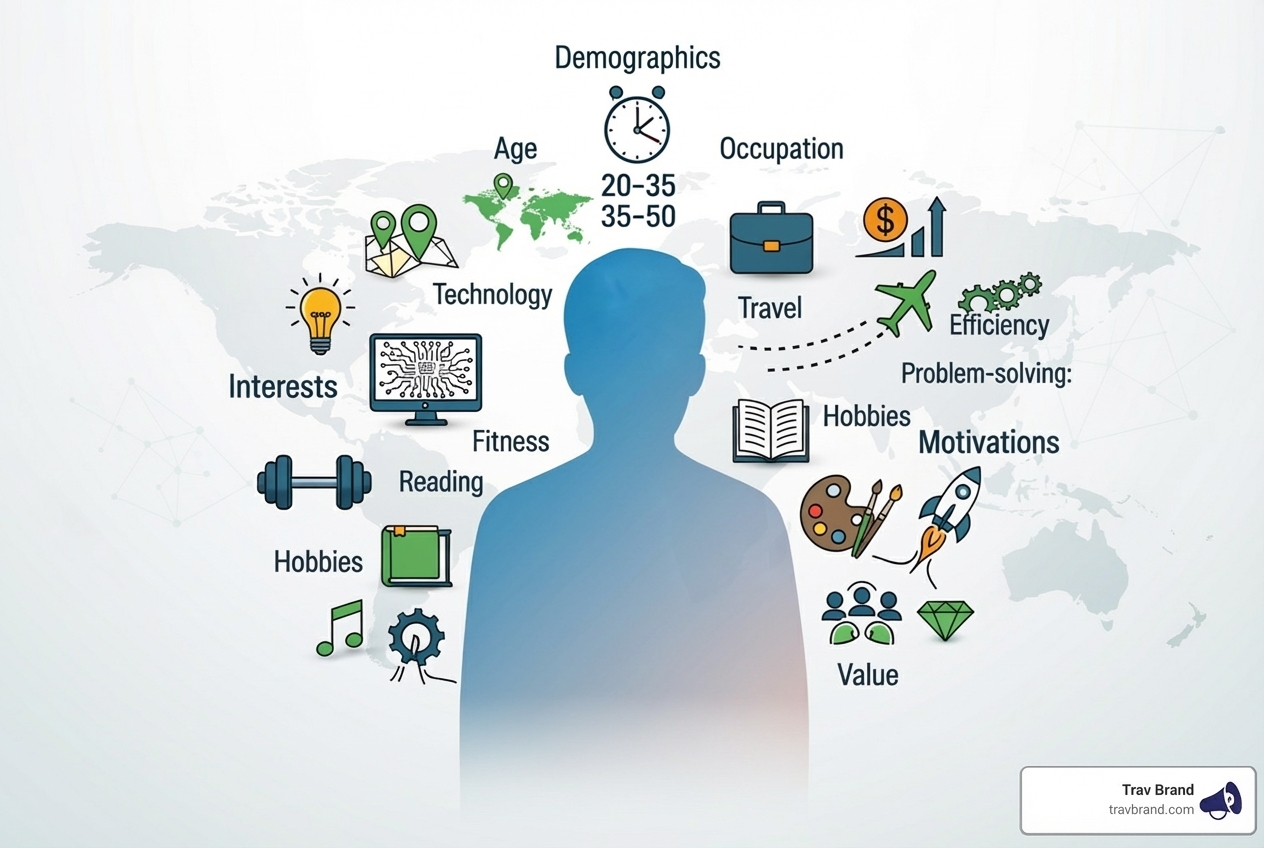
Creating content for everyone means creating content for no one. A cornerstone of strategic marketing content is deeply understanding who we’re trying to reach. We do this by creating detailed buyer personas. These are semi-fictional representations of our ideal customers, based on market research and real data. They include:
- Demographics: Age, location, job title, income.
- Psychographics: Interests, values, motivations.
- Pain points: Challenges they face that our products or services can solve.
- Goals: What they aspire to achieve.
- Content consumption habits: Where do they get their information? What formats do they prefer?
Once we understand our personas, we map their customer journey. This involves identifying the different stages a potential customer goes through, from first becoming aware of a problem to making a purchase and becoming a loyal advocate. For each stage, we identify what questions they have, what information they need, and what kind of content would be most helpful. This allows us to tailor our strategic marketing content to meet them precisely where they are.
Step 3: The Role of SEO and Topic Clusters
Even the most brilliant content won’t be effective if no one can find it. This is where SEO (Search Engine Optimization) becomes a critical component of our strategic marketing content framework. We conduct thorough keyword research to understand what our audience is searching for and integrate these keywords naturally into our content.
Beyond individual keywords, we focus on developing topic clusters and pillar pages. A pillar page is a comprehensive piece of content that covers a broad topic (like “content marketing strategy”). Around this pillar, we create cluster content – individual blog posts or articles that dig deeper into specific sub-topics related to the pillar (e.g., “how to measure content marketing ROI,” “best content formats”). These cluster pieces then link back to the pillar page, establishing our authority on the overarching topic. This approach is similar to creating cornerstone content, which is foundational and evergreen.
We also perform competitor analysis to identify gaps in their content, understand what’s performing well for them, and find new opportunities. A content audit of our existing content helps us identify what’s working, what needs updating, and what can be repurposed to fit our new strategy.
Step 4: Weave in Your Brand Storytelling
Our brand isn’t just a logo or a product; it’s a narrative. The Power of Storytelling in Building a Strong Brand is immense. Effective strategic marketing content weaves our brand’s unique story into every piece, creating an emotional connection with our audience. This involves defining:
- Brand voice and tone: How we sound. Are we authoritative, friendly, humorous, or all three?
- Unique value proposition: What makes us different and better than the competition.
- Core messaging: The key ideas we want our audience to take away.
- Authenticity: In an age of hyper-personalization, audiences crave realness. Founder Storytelling and DTC Performance: Why Narrative Drives Conversion Better Than Discounts or Ads highlights how genuine narratives build trust and drive conversions more effectively than discounts.
By telling our story consistently and authentically, we not only inform but also inspire and build a loyal community around our brand.
From Plan to Action: Choosing Formats and Managing Workflow
With our blueprint in hand, it’s time to bring our strategic marketing content to life. This involves selecting the right formats and channels, then efficiently managing the entire content creation and distribution workflow.
Choosing the Right Content Formats and Channels
Our audience personas and customer journey maps will guide our choices here. Different content formats serve different purposes and resonate with audiences at various stages.
Here are some common types of content marketing formats and their best use cases:
- Blogs: Excellent for SEO, thought leadership, and in-depth exploration of topics. 16% of marketers say their blog posts generated the biggest ROI for their businesses in 2024.
- Videos: Highly engaging for product demos, brand storytelling, and capturing attention on social media. Short-form videos have seen strong results, with 17% of marketers reporting them as highly effective. We’ve seen how video can Navigating the Social Landscape: Choosing the Right Platforms to Tell Your Story and build trust.
- Ebooks: Great for lead generation, offering valuable, comprehensive information in exchange for contact details.
- Case Studies: Build credibility by showcasing how our products or services have helped real customers achieve success.
- Infographics: Visually compelling for presenting complex data or processes in an easy-to-understand way. Tools like Adobe Express make it easier to create quality infographics in less time.
- Podcasts: Ideal for building trust, long-form storytelling, and reaching niche audiences, especially when people are commuting or multitasking. The number of podcast listeners is growing, with a 6% year-over-year increase in U.S. podcast listeners in 2022.
- Social Media: Crucial for real-time engagement, community building, and content amplification. 90% of social media marketers say building an active online community is crucial to a successful social media strategy.
We choose distribution channels based on where our target audience spends their time. This might include our website, blog, email newsletters, various social media platforms (like Instagram or Facebook), YouTube, or industry-specific forums. The key is to adapt our content to each platform’s unique characteristics and audience expectations.
Leveraging Thought Leadership to Build Trust
Thought leadership is about being recognized as an authority in our industry. It’s not just about sharing information; it’s about offering unique insights, shaping conversations, and providing solutions. This type of editorial content is particularly powerful in B2B marketing.
The statistics speak volumes:
- 47% of decision-makers are using thought leadership to find new products.
- 55% of decision-makers at these companies also said that they read thought leadership content to vet partnerships with vendors and other organizations.
- Nearly 1 out of every 2 decision-makers has shared their contact information with an organization after reading a piece of thought leadership content.
By consistently producing high-quality, insightful content, we can establish ourselves as trusted advisors. This can involve writing in-depth articles, conducting original research, participating in industry discussions, or even guest posting on reputable publications. Collaborating with other experts or organizations, such as through Strategic Partnerships: How Collaboration Can Fuel Your Startup’s Growth, can also amplify our thought leadership efforts.
Creating a Content Calendar and Managing Workflow
A content calendar is the backbone of an organized strategic marketing content operation. It’s a detailed schedule that outlines what content will be created, when it will be published, who is responsible for each task, and which channels it will be distributed on. This ensures consistency and helps us maintain a steady cadence of releases.
Managing the workflow, especially with multiple team members and content types, can be complex. This is where project management tools become invaluable. They help us:
- Prevent overbooking: By tracking team capacity, we avoid overwhelming our creators.
- Ensure consistent releases: We can schedule different content types (e.g., a quarterly newsletter, monthly success stories, daily social media posts) and stick to them.
- Improve visibility and accountability: Everyone knows what’s due, by whom, and when. Leaders can See workloads in action in TeamGantt.
- Maintain flexibility: Plans change, and a good tool allows us to quickly adjust without disrupting the entire workflow.
We live in a world where How Brands Are Leveraging AI to Scale Smarter is becoming increasingly important. AI tools can assist with content ideation, drafting, optimization, and even repurposing, allowing our human teams to focus on strategy, creativity, and authenticity.
Measuring What Matters and Refining Your Approach
Creating strategic marketing content is not a “set it and forget it” endeavor. To ensure our efforts are truly impactful, we must continuously measure our performance and be prepared to refine our approach. This iterative process is what allows us to maximize our ROI and adapt to evolving market trends and audience needs.
We rely heavily on data and analytics tools (like Google Analytics, social media analytics, and CRM platforms) to track our KPIs. This data provides invaluable insights into what’s working, what’s not, and where opportunities lie for improvement. A/B testing different headlines, calls-to-action, or content formats can help us understand what resonates best with our audience.
How to Measure the ROI of Your Strategic Marketing Content
Measuring the Return on Investment (ROI) of strategic marketing content can sometimes feel like a dark art, but it’s crucial for justifying our efforts and securing future resources. We connect our content efforts directly to our business goals using a mix of metrics:
- Sales metrics: Direct sales attributed to content, lead-to-customer conversion rates.
- Lead quality: The number of qualified leads generated by content.
- Cost-per-acquisition (CPA): How much it costs to acquire a new customer through content efforts compared to other channels.
- Customer lifetime value (CLV): Content that fosters loyalty can significantly increase the long-term value of a customer. As Harvard Business Review notes, The value of keeping the right customers is immense, as acquiring new customers is far more expensive.
- Brand awareness metrics: Website traffic, social media reach and engagement (likes, shares, comments), brand mentions, and search rankings.
- SEO performance: Keyword rankings, organic traffic growth, backlink acquisition.
By consistently tracking these metrics, we can demonstrate how our strategic marketing content contributes to the bottom line and improves overall Maximizing Your Return on Ad Spend (R.O.A.S.): The Content Marketing Advantage.
How Often to Review and Update Your Strategy
The digital world moves fast – sometimes faster than a cat meme goes viral! Our strategic marketing content needs to be a living document, not something set in stone. While our core mission and business goals might remain consistent for longer periods, the tactical elements of our strategy should be reviewed and updated regularly.
We typically recommend:
- Quarterly reviews: To assess campaign performance, identify immediate opportunities for optimization, and make tactical adjustments. This helps us respond to market shifts and emerging trends quickly.
- Annual planning: A more comprehensive review where we revisit our audience personas, re-evaluate our goals, conduct a new content audit, and adjust our overall strategy for the coming year. This ensures our strategy remains aligned with evolving business objectives and provides a fresh perspective.
Regular performance analysis and market trend monitoring are essential. This allows us to pivot when necessary, capitalize on new opportunities, and continuously improve our strategic marketing content to deliver maximum value.
Conclusion: Build a Lasting Brand with Strategic Content
In today’s competitive landscape, simply creating content isn’t enough. The brands that truly stand out and achieve sustainable growth are those that accept strategic marketing content. We’ve seen that a documented strategy is not just a nice-to-have but a necessity, differentiating successful marketers from their less effective peers.
By setting SMART goals, deeply understanding our audience, leveraging SEO and brand storytelling, choosing the right formats and channels, and carefully measuring our results, we can transform our content efforts from random acts into a powerful growth engine. This strategic approach builds brand awareness, generates leads, fosters customer loyalty, and establishes us as trusted thought leaders in our industry.
At Trav Brand, we believe in building purpose-driven brands through a complete strategic ecosystem. We don’t just consult; we partner with you to develop and execute comprehensive digital marketing, e-commerce, and strategic marketing content strategies that deliver measurable results. Ready to open up your brand’s full potential? Explore our comprehensive brand marketing services and let’s build something amazing together.