B2C Inbound Marketing and Why It Matters for Your Brand
Why B2C Inbound Marketing Is the Smartest Way to Grow Your Brand
B2C inbound marketing is a strategy where you attract consumers to your brand by creating content and experiences they actually want — instead of interrupting them with ads they ignore.
Here’s the quick version:
| B2C Inbound Marketing | |
|---|---|
| What it is | Attracting consumers with valuable content, SEO, social media, and personalized experiences |
| How it works | Pulls customers toward your brand at each stage of their buying journey |
| Key channels | Blog content, social media, email, SEO, video, UGC |
| Why it works | Builds trust before the sale — 81% of shoppers research online before buying |
| Core goal | Turn strangers into loyal customers who buy again and again |
Most brands are still shouting at people. Running ads. Blasting promotions. Hoping something sticks.
But today’s consumers tune that out fast.
They search. They scroll. They read reviews. They watch tutorials. Then they decide to buy. If your brand isn’t showing up in those moments with something genuinely helpful, you’re invisible — and a competitor is taking your customer.
Inbound flips the script. Instead of chasing buyers, you become the brand they find on their own. That’s not just more effective — it’s significantly cheaper. Inbound marketing generates 54% more leads at over half the cost of traditional outbound tactics.
The brands winning right now aren’t the loudest. They’re the most useful.
I’m Trav Lubinsky — entrepreneur, brand builder, and founder of Trav Brand — and I’ve used B2C inbound marketing to help scale consumer brands like Poppi, HexClad, and FightCamp into high-growth businesses. Everything I share here comes from real experience building brands that attract, convert, and keep customers.
B2c inbound marketing helpful reading:
What is B2C Inbound Marketing and How It Differs from Outbound?
At its heart, b2c inbound marketing is about the “pull” rather than the “push.” If you’ve ever felt annoyed by a YouTube ad interrupting your favorite song or a telemarketer calling during dinner, you’ve experienced outbound marketing. It is interruption-based, often expensive, and increasingly easy for consumers to block.
Inbound marketing, conversely, is a methodology that brings prospective customers directly to you. We do this by creating targeted, custom content designed to meet potential customers’ needs during each step of their buying journey. Instead of shouting into a crowd, we’re answering the specific questions our customers are asking.
Inbound vs. Outbound: A Quick Comparison
| Feature | Inbound Marketing | Outbound Marketing |
|---|---|---|
| Approach | Pull: Attracts interested users | Push: Interrupts general audiences |
| Content | Educational, entertaining, helpful | Promotional, sales-heavy |
| Cost | High ROI, lower cost per lead | Higher costs, lower conversion rates |
| Customer Role | Active participant (seeks info) | Passive recipient (receives ads) |
| Longevity | Content remains an asset over time | Ads stop working when budget ends |
The financial argument for inbound is hard to ignore. Research shows that inbound marketing produces 54% more leads at over half the cost of traditional tactics. Why? Because you aren’t paying for “empty” impressions. You are investing in brand authority and search visibility that compounds over time.
While they are often used interchangeably, there is a real difference between content and inbound marketing. Think of content as the fuel and inbound as the engine. You need high-quality content to power the system, but inbound includes the SEO, the automation, and the conversion strategies that turn that content into revenue.
The Core Pillars of a B2C Inbound Marketing Strategy
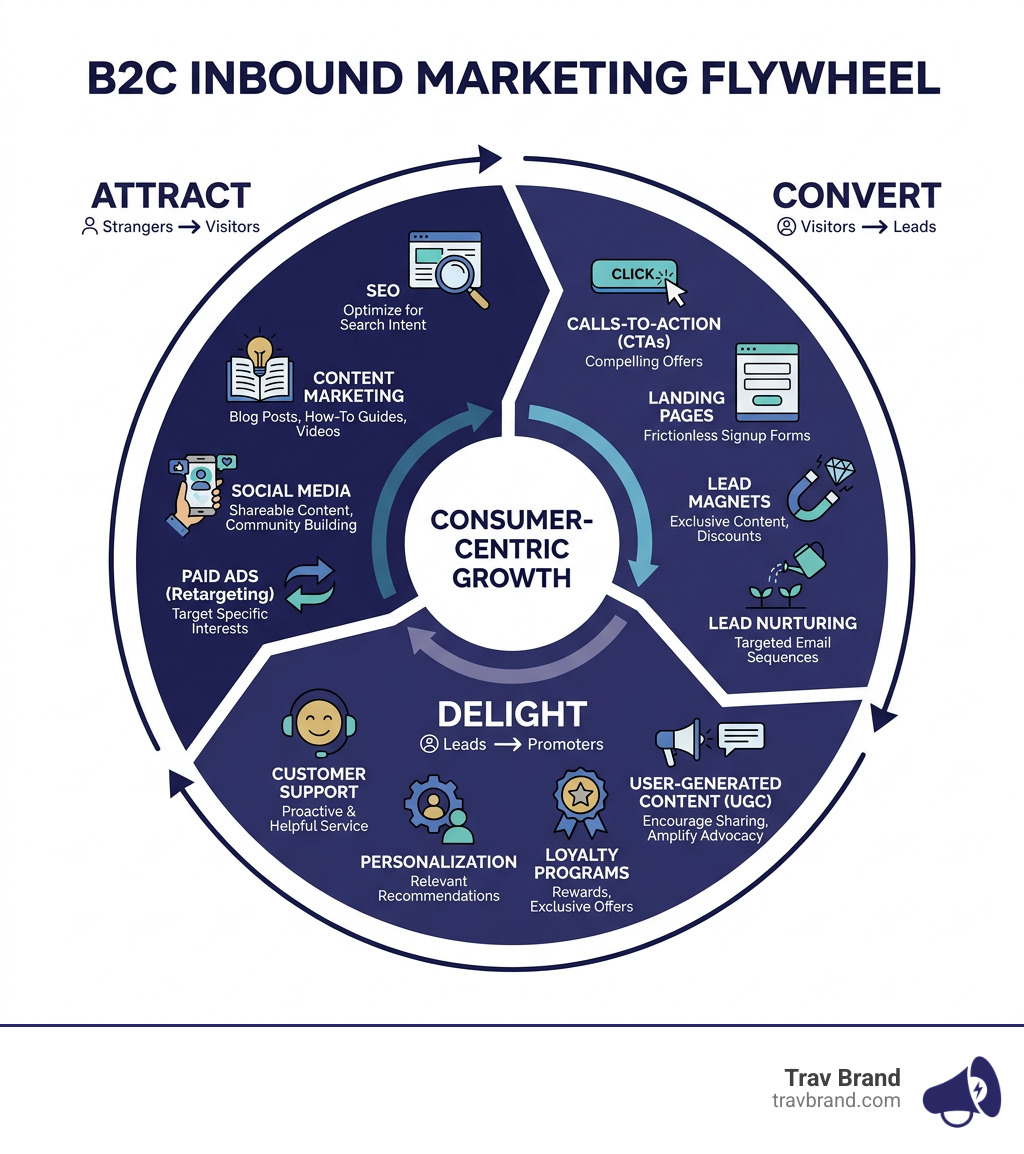
To build a “selling machine” that works while you sleep, we focus on three major pillars: Search Engine Optimization (SEO), social media engagement, and high-value content.
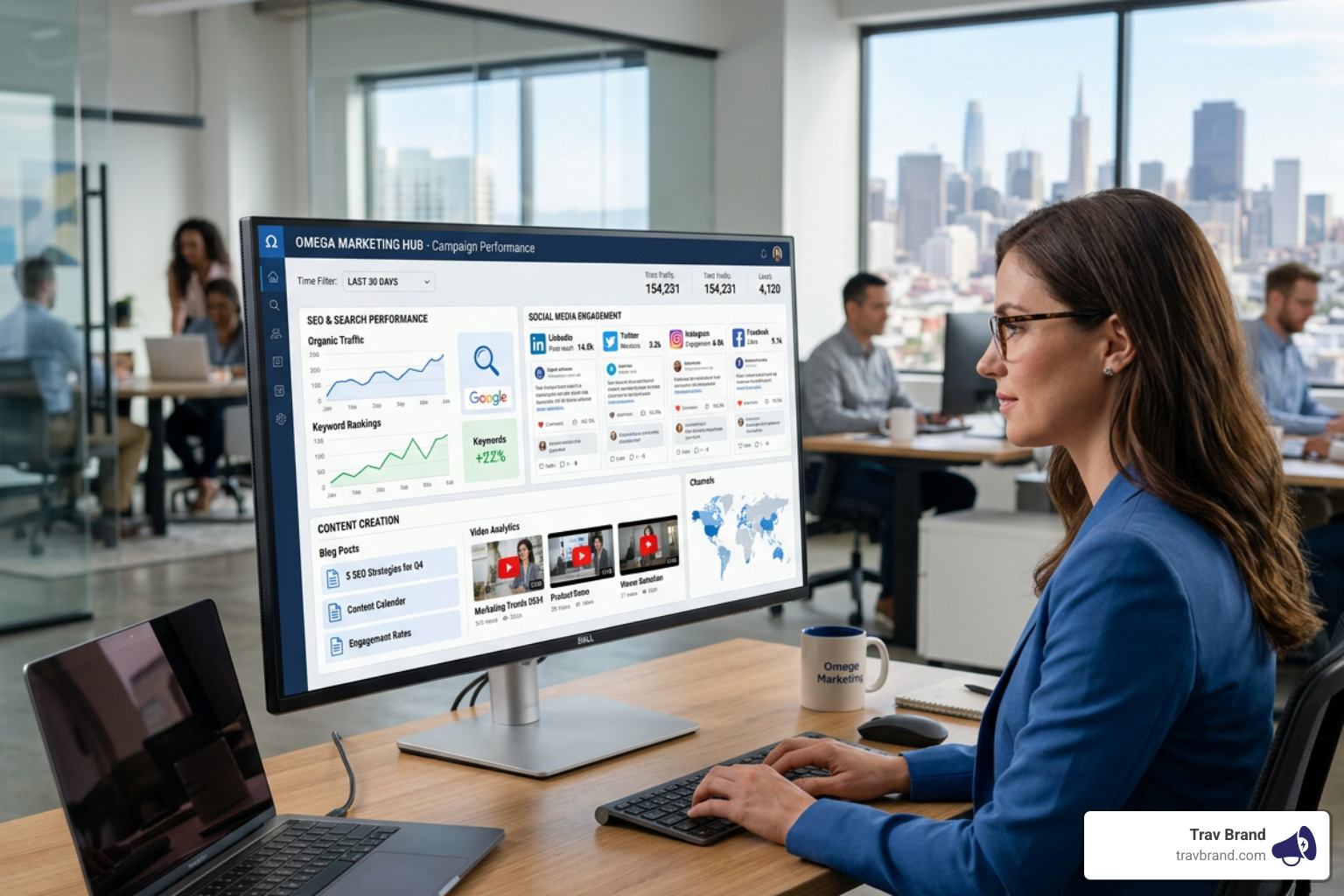
- Search Engine Optimization (SEO): This is the “holy grail” for organic traffic. Since 81% of shoppers conduct online research before making a purchase, being visible on Google is non-negotiable. SEO isn’t just about keywords; it’s about matching user intent.
- Social Media Engagement: Social platforms are today’s digital storefronts. It’s where first impressions happen in seconds. But it’s not just about posting; it’s about fostering a community.
- Content Marketing: This is the most widely adopted pillar, with 94% of B2C marketers using content marketing or planning to. Content is how we build trust and educate our audience.
Success begins with keyword analysis and content marketing working in tandem. We don’t just guess what consumers want; we use data to find out what they are searching for and then create the best possible answer to those queries.
Developing Buyer Personas for B2C Inbound Marketing
You can’t attract someone if you don’t know who they are. In B2C, decisions are often driven by emotion—how a product makes a person feel—rather than just cold, hard facts.
To develop a deep understanding, we look at the “5 Rings of Buyer Insight”:
- Priority Initiatives: What triggers the customer to start looking for a solution?
- Success Factors: What results does the buyer expect from the purchase?
- Perceived Barriers: Why might they choose not to buy from us?
- Buyer’s Journey: Who is involved in the decision, and where do they go for info?
- Decision Criteria: Which specific features or emotional benefits matter most?
By analyzing demographics and behavioral patterns, we can map out customer pain points and create content that speaks directly to their purchasing motivations.
Content Marketing as the Fuel for B2C Inbound Marketing
If inbound is the engine, content is the gasoline. But not just any content—it has to be “remarkable.” In the B2C space, this often means leaning into storytelling. We aren’t just selling a product; we’re selling a lifestyle, a solution to a frustration, or a moment of joy.
One of the most powerful tools in our arsenal is User-Generated Content (UGC). Statistics show that 77% of consumers trust brands using UGC more than traditional polished ads. When a real customer shares a video of your product in action, it provides social proof that money can’t buy.
A modern web content strategy must also account for the dominance of short-form video. With consumers spending hours daily on social media, video is the fastest way to grab attention. Remember: nearly 47% of prospects view at least three pieces of content on a product before they even think about clicking “buy.”
Navigating the B2C Buyer Journey with Inbound Tactics
The buyer journey isn’t a straight line; it’s a series of emotional and logical checkpoints. B2c inbound marketing addresses each of these stages specifically.
1. Awareness Stage
The consumer realizes they have a problem or a desire. They might search for “how to fix dry skin” or “best workout for busy moms.” At this stage, we don’t sell. We educate. We use blog posts, social media tips, and infographics to show we understand their world. Since 81% of shoppers conduct online research, this is our chance to make a stellar first impression.
2. Consideration Stage
Now the consumer is comparing options. They know they need a moisturizer, but which one? This is where we provide deeper value—buying guides, comparison charts, and detailed “how-to” videos. We show them how to write e-commerce content marketing that converts by focusing on the benefits, not just the features.
3. Decision Stage
The “bottom of the funnel.” The customer is ready to pull the trigger. They are looking for trust signals: reviews, return policies, and “unboxing” videos.
4. Fulfillment and Loyalty
Inbound doesn’t end at the checkout. We use post-purchase emails, “how-to” guides for their new product, and loyalty programs to turn a one-time buyer into a brand advocate. 89% of customers say they would make a repeat purchase if they had a positive first experience.
Enhancing the Decision Stage with B2C Inbound Marketing
The decision stage is where “showrooming” happens—consumers browsing in a physical store while checking prices and reviews on their phones. In fact, 63% of shoppers prefer reading online reviews on their smartphones even when standing right in front of a retail staff member.
To win at this stage, we focus on:
- Social Proof: Highlighting five-star reviews and testimonials.
- Trust Signals: Clear shipping info and easy returns.
- Conversion Rate Optimization (CRO): Ensuring the checkout process is frictionless.
Mastering content commerce means blending the shopping experience with the content experience so seamlessly that the customer feels guided, not pushed.
Advanced Tactics: Personalization, Mobile, and AI
As we look toward the future of b2c inbound marketing, the “standard” experience is no longer enough. Consumers expect Amazon-level personalization.
The Mobile-First Mandate
With 55% of all web traffic coming from smartphones, your inbound strategy must be mobile-first. This means fast load times, intuitive navigation, and content that looks great on a small screen. If your site is hard to use on a phone, you are losing more than half of your potential revenue.
Personalization and AI
72% of customers prefer engaging with marketing campaigns personalized to their needs. We use AI-powered predictive analytics to determine what a customer might want next.
- Did they just buy running shoes? Send them a guide on marathon recovery.
- Did they abandon their cart? Send a personalized SMS reminder.
Automation allows us to scale these “1-to-1” conversations. Using a web content marketing services guide, brands can set up automated nurture workflows that trigger based on real-time behavior. This isn’t just “creepy” tracking; it’s providing utility. If someone is looking for winter coats in October, we shouldn’t be showing them swimsuits.
Frequently Asked Questions about B2C Inbound Marketing
How do you measure the ROI of B2C inbound campaigns?
Measuring success goes beyond just “likes” or “shares.” We look at:
- Customer Acquisition Cost (CAC): Inbound typically lowers this over time as organic traffic grows.
- Lifetime Value (LTV): Because inbound focuses on the whole journey, it often attracts higher-quality customers who stay longer.
- Conversion Rates: Tracking how many people move from a blog post to a product page.
- Attribution Modeling: Understanding which touchpoints (an Instagram reel, a Google search, an email) actually led to the sale.
What are the biggest challenges in B2C inbound marketing?
The biggest hurdle is often “noise.” The digital space is saturated. To overcome this, brands must focus on authenticity and quality over quantity. Another challenge is data privacy; with changing regulations, first-party data (info customers give you directly via email signups or loyalty programs) is becoming the most valuable asset a brand can own. Finally, discerning meaningful insights from “vanity metrics” is crucial—don’t get distracted by a viral post if it doesn’t lead to brand growth.
How can small businesses compete with larger brands using inbound?
You don’t need a Super Bowl budget to win at inbound. Small businesses can win through:
- Niche Authority: Become the absolute expert in one specific, narrow topic.
- Micro-Influencers: Partner with creators who have smaller but highly engaged, loyal followings.
- Agility: Small brands can respond to trends and customer feedback much faster than corporate giants.
- Personalized Connections: Use your size as an advantage to build real, human relationships with your community.
Conclusion
B2C inbound marketing isn’t just a trend; it’s a fundamental shift in how people buy. By putting the consumer’s needs first, providing genuine value, and leveraging modern tools like AI and personalization, you build a brand that people don’t just buy from—they believe in.
At Trav Brand, we don’t just consult; we build and scale. We focus on creating a complete digital ecosystem for purpose-driven brands that want measurable results. Whether it’s through maximizing your return on ad spend or crafting a world-class content strategy, we are here to help you turn your brand into a growth engine.
Ready to stop shouting and start attracting? Maximize your growth with Trav Brand services and let’s build something remarkable together.