


Agency Alchemy: Crafting a Winning Strategy for Creative Success
Why Creative Agency Strategy Defines Modern Marketing Success
Creative agency strategy is the foundation that transforms good ideas into measurable business results. It’s the blueprint that defines how agencies position themselves, deliver value, and drive growth for their clients in an increasingly competitive landscape.
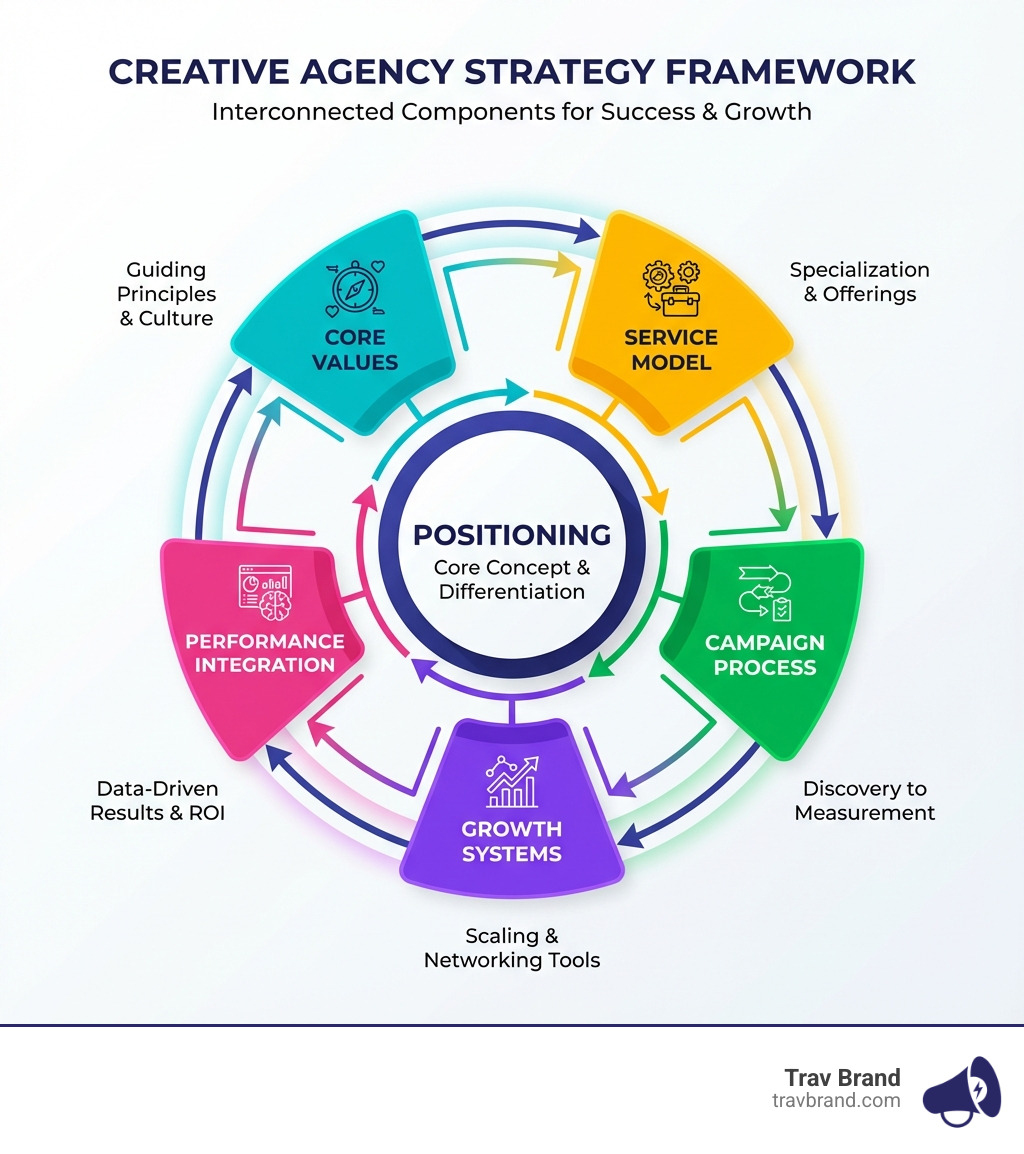
Key Elements of a Winning Creative Agency Strategy:
- Positioning – How your agency is perceived in clients’ minds and what makes you different
- Core Values – The principles that guide decisions, client selection, and team culture
- Service Model – Whether to offer full-funnel services or specialize in specific niches
- Campaign Process – Clear phases from findy through measurement
- Growth Systems – Tools, thought leadership, and networking to scale your agency
- Performance Integration – Bridging creative excellence with data-driven results
The stakes are high. About 70% of companies with strong creative strategies experience above-average revenue growth. Yet many creative agencies struggle with their own marketing and positioning—the very services they offer clients.
The modern creative agency faces a unique challenge: balancing artistic vision with business outcomes. Creative is now the largest factor driving ROI on platforms like Facebook, Instagram, and TikTok (47% according to Nielsen). Meanwhile, 41% of agencies are leaning more heavily into brand-building, and 39% say AI is now core to their workflow.
Without a clear strategy, agencies risk creating fragmented campaigns, diluted brand equity, and wasted resources. They struggle to differentiate, attract ideal clients, or build teams aligned around a shared vision.
I’m Trav Lubinsky, founder of Trav Brand. Having built and advised brands from startups to billion-dollar enterprises like Flex Watches, HexClad, and Star Wars, I’ve seen what separates thriving agencies from those that merely survive.
A creative agency is a specialized firm that crafts inspired campaigns through compelling visuals, storytelling, and messaging. Unlike traditional agencies focused on media buying, creative agencies emphasize the “craft” of branding, design, and communication. Our role is to be the engine of innovation and emotional connection, focusing on the “why” and “how” of a brand’s message to ensure it resonates deeply and cuts through the noise.
The Blueprint: Core Components of Your Creative Agency Strategy
A robust creative agency strategy is built on a clear foundation: defining who you are, what you stand for, and how you deliver unique value. This blueprint guides every decision, helping you stand out in a crowded marketplace. Your core values are the principles that guide decisions, client selection, and team culture, creating a distinct agency brand. Authenticity in storytelling is a powerful differentiator that builds trust, as explored in our guide on The Power of Storytelling in Building a Strong Brand.
This foundation is key to building lasting success, a topic we cover in Innovative Brand Building Strategies to Stand Out in a Competitive Market.
What is Positioning and Why is it Critical?
Positioning is how your agency is perceived in clients’ minds compared to competitors. It’s the bedrock of your unique value proposition, differentiating you from rivals. Without clear positioning, you risk being seen as a generalist, making it hard to attract ideal clients. A strong strategy leverages internal strengths (skills, talent) to seize external opportunities (market trends).
This requires making trade-offs. You can’t be everything to everyone; strategy depends on consciously restricting what you offer to focus on what you do best. Specializing allows you to hone core competencies and become irreplaceable in a specific area.
Full-Funnel vs. Focused Expertise
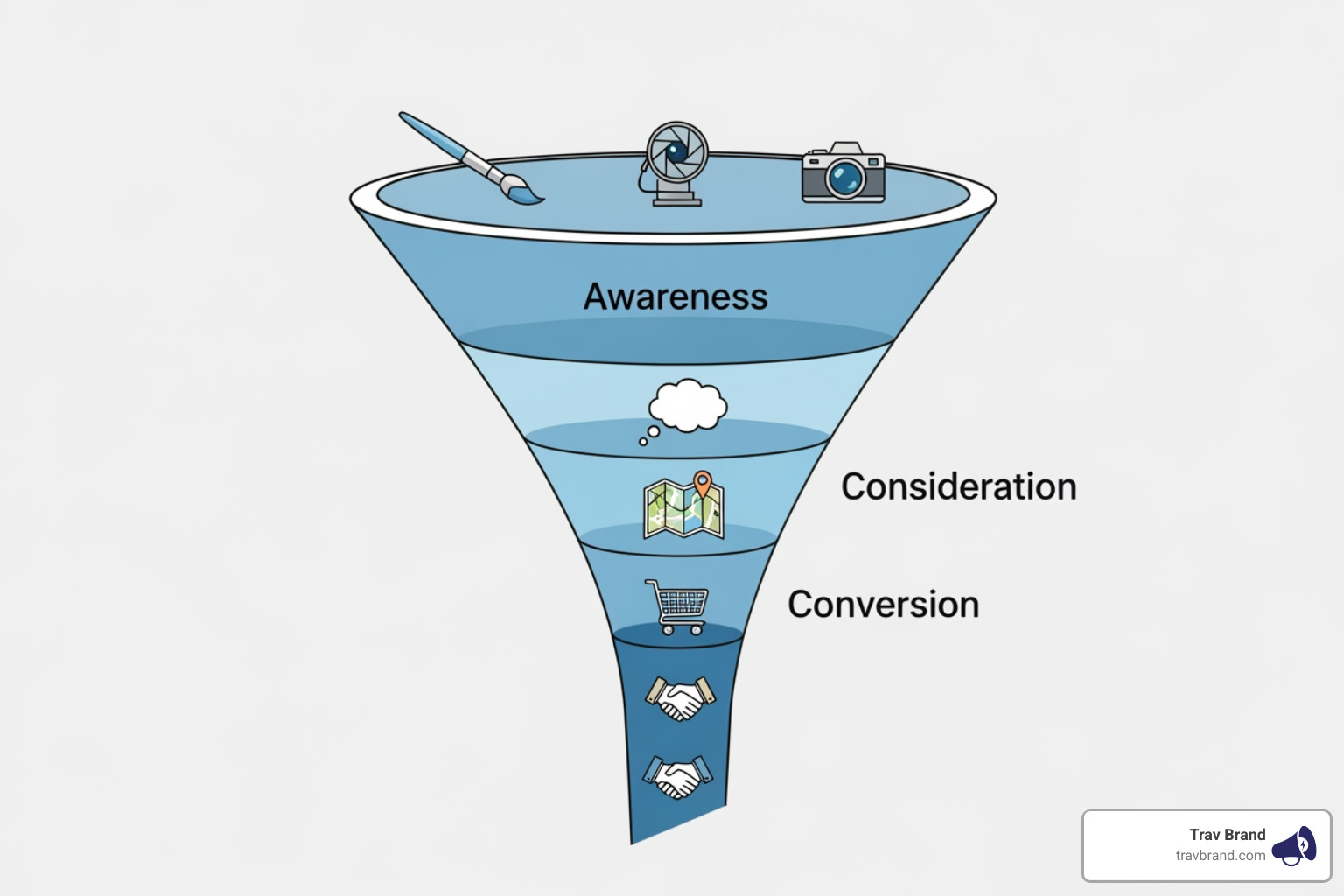
A critical decision is whether to offer a full-funnel approach or specialize in a niche. The right choice depends on your agency’s strengths and goals.
A full-funnel approach offers a comprehensive service across the customer journey, appealing to clients who want a single point of contact. This can facilitate the alignment of brand and performance goals, which makes agencies 20% more likely to report campaign satisfaction. However, it can be resource-intensive and risks diluting creative focus.
Alternatively, specializing in a niche (e.g., beauty, fashion) positions you as an expert. This deepens market understanding and allows for more precise marketing, making it easier to dominate a smaller space and deliver highly targeted campaigns.
| Feature | Full-Funnel Approach | Focused Expertise Approach |
|---|---|---|
| Pros | – Single point of contact for clients | – Positions agency as a specialist/expert |
| – Consistent brand messaging across channels | – Deeper understanding of niche market | |
| – Potential for larger, long-term retainers | – More precise and effective marketing efforts | |
| – Greater client convenience | – Easier to stand out in a crowded market | |
| – Broader revenue streams from existing clients | – Can command premium pricing for specialized services | |
| Cons | – Risk of diluted creative focus | – Potentially smaller client base |
| – Requires broader skill sets and resources | – Greater reliance on a specific industry’s health | |
| – May struggle to be “best-in-class” at everything | – May miss out on opportunities outside the niche | |
| – Can be harder to differentiate from other large agencies | – Requires strong networking within the chosen niche |
The choice depends on your agency’s unique vision and capabilities. You could even combine approaches, offering a full-funnel service within a specialized industry, like “a full-service creative agency for the beauty industry.”
From Ideation to Impact: The Creative Campaign Process
The journey from idea to impact requires a structured yet fluid process. A clear, repeatable methodology within your creative agency strategy ensures quality, efficiency, and measurable results. It aligns your team, eliminates silos, and helps manage client expectations, ensuring every decision is informed and credible.
The Essential Phases of a Winning Campaign
Our campaign process flows through these interconnected phases:
- Findy & Research: Immerse yourself in the client’s world. Conduct market research and competitor analysis to uncover deep insights that inform the strategy.
- Insight & Strategy: Develop a comprehensive strategy that defines campaign objectives, target audience, and key messages. This roadmap is crucial, as highlighted in The Essential Foundation: Why Your Brand Needs a Brand Guide.
- Ideation & Concepting: Brainstorm compelling creative concepts, exploring visual styles and storytelling approaches that align with the strategy.

- Execution & Production: Bring concepts to life by crafting high-quality content, from copywriting and design to video production, all aligned with the creative direction.
- Launch & Distribution: Deploy the campaign across chosen channels, including scheduling and media buying, to reach the target audience.
- Measurement & Optimization: Track KPIs, analyze campaign data, and make real-time adjustments to optimize performance and improve results.
Throughout these phases, transparent communication, regular check-ins, and clearly defined deliverables are paramount for aligning client expectations and fostering trust.
Showcasing Creativity in Case Studies
Case studies are your agency’s storytelling powerhouses. They should be dynamic showcases of your creative capabilities, strategic thinking, and tangible results. Focus on highlighting the creative process—the insights, “aha!” moments, and strategic decisions. Include behind-the-scenes glimpses like sketches or storyboards to illustrate the journey.
Crucially, tie creative brilliance to business impact. Use quantifiable metrics (ROI, engagement, sales) and compelling visuals to demonstrate how your campaigns moved the needle for clients. Our Reviving a Brand: The Flex Watches Case Study is a prime example of illustrating this journey from challenge to measurable success.
Growth Levers: Scaling and Establishing Your Agency
Scaling a creative agency isn’t just about taking on more clients; it’s about strategic growth that reinforces our unique value proposition. This involves establishing ourselves as thought leaders, building robust networks, nurturing client relationships, and leveraging the right tools and continuous learning to stay ahead.
Building Authority and Finding Clients
Establish yourself as a thought leader by sharing expertise through valuable blog content and industry events. This positions you as a trusted authority, attracting clients who seek expert guidance. Networking is also essential. Engage with peers and potential partners; as Webflow makes the interesting point, collaborating with complementary agencies can open doors to new service offerings. Focus on building relationships, not just chasing sales. Finally, be transparent in client relationships. Open communication and clear expectations build trust. Defining and publishing your “Ideal Clients Value Set” can attract clients with aligned values, leading to more productive partnerships.
Essential Tools for a Modern Creative Agency
The right tools are indispensable for streamlining workflows and focusing on creative work. Essential categories include:
- Project Management Software: Tools like Asana or Monday.com to organize tasks, track progress, and manage deadlines.
- CRM Systems: Vital for managing client communications, tracking leads, and nurturing relationships.
- Creative Suites: Industry-standard software like Adobe Creative Suite for high-quality content production.
- Analytics and Reporting Tools: Platforms like Google Analytics to measure performance and demonstrate ROI.
- Marketing Automation Platforms: To streamline email campaigns, social media posting, and lead nurturing.
Carefully selecting and budgeting for these tools is key to operational success and effective resource allocation, as highlighted in discussions on how to allocate resources effectively.
The Performance Engine: Creative in a Data-Driven World
In today’s digital landscape, a creative agency strategy must thrive at the intersection of artistic vision and data analysis. Creative is the number one lever for success on paid social platforms; Nielsen data shows it’s the largest factor (47%) driving ROI. This requires bridging the gap between analytical and creative teams, which historically operated in silos. A strong creative strategy connects them, aligning goals and using data to inform creative decisions. Agencies that align brand and performance goals are 20% more likely to report campaign satisfaction. This data-driven approach combines compelling visuals and storytelling to continuously refine ad creatives for better performance.
The Creative Strategy Flywheel for Performance Marketing
To consistently deliver high-performing creative, we employ a strategic flywheel model for performance advertising. This systematic approach ensures we’re always learning, adapting, and optimizing.
The flywheel includes these key components:
- Research: Deeply understand the customer journey by mining reviews, analyzing competitor strategies, and reviewing past creative performance.
- Ideate: Use research insights to brainstorm concepts, explore customer pain points, and develop angles for product presentation.
- Brief: Provide creators with a clear, comprehensive brief, including shot lists and storyboards, to ensure alignment with the vision.
- Create: Generate content quickly, aiming for new ads weekly. Use AI tools to speed up production and message testing.
- Launch: Deploy ads that align with your creative test hypotheses.
- Analyze: Use creative analysis tools to track key metrics (CTR, CVR, CPA, ROAS, video retention rates). Identify drop-off points and areas for iteration.
- Repeat: Feed insights from analysis back into the research phase to create a continuous loop of optimization.
This flywheel approach helps us focus on what truly drives results, moving beyond the “founders’ blindspot” where brand building is often overlooked as the real growth lever, as we discuss in The Founders Blindspot: Why Brand Building is the Real Growth Lever.
The Role of AI in a Modern Creative Agency Strategy
Artificial intelligence is becoming a core infrastructure for creative agencies, not to replace human creativity but to augment it. In fact, 39% of agencies now call AI a core part of their workflow, with deeper integration leading to stronger campaign performance.
Here’s how AI is changing creative agency strategy:
- AI in Research and Ideation: AI tools rapidly analyze data to identify trends, audience preferences, and competitor strategies, speeding up insight generation.
- AI in Content Production: AI-generated voices, talent, and automated editing accelerate content creation, allowing for more variations and faster testing.
- AI for Data Analysis and Optimization: AI-powered platforms process performance data in real-time, suggesting optimizations to adapt creatives and refine targeting.
- AI Adoption Statistics: High-performing agencies integrate AI for audience targeting, creative optimization, and predictive analytics, reshaping collaboration between teams, as detailed in reports from sources like Ascend2.
By leveraging AI, agencies can analyze data faster, personalize messaging at scale, and adapt strategies in real-time for stronger outcomes.
Frequently Asked Questions about Creative Agency Strategy
What is the difference between a creative strategy and a brand strategy?
While complementary, these strategies are distinct. Think of brand strategy as the foundational “who” and “why,” and creative strategy as the executional “how” and “what.”
- Brand Strategy: The long-term blueprint for a brand’s identity, defining its core values, mission, audience, and market positioning. It’s about who the brand is and why it exists. Learn more in our article on brand positioning.
- Creative Strategy: The plan for communicating the brand’s message through visuals, storytelling, and messaging to achieve specific goals. It’s about how the brand expresses itself and what it says in campaigns.
In short, brand strategy sets the stage, and creative strategy brings that stage to life. A strong brand strategy provides the guardrails for a brilliant creative strategy.
How can a creative agency ensure client expectations are aligned?
Aligning client expectations is paramount for successful projects. A proactive creative agency strategy can minimize friction through these steps:
- Clear Onboarding Process: Establish clear communication channels, roles, and working methods from the start.
- Detailed Creative Briefs: Collaboratively develop a comprehensive brief that articulates goals, audience, deliverables, timelines, and budget.
- Regular Communication and Reporting: Provide consistent updates and schedule frequent check-ins to keep clients informed.
- Defining Scope of Work: Clearly outline what is included (and what is not) to prevent scope creep.
- Value Alignment: Define and communicate your “Ideal Clients Value Set” to attract clients with aligned values, fostering better partnerships, as detailed in Why aligning with your ideal client’s values matters.
These strategies build trust and ensure creative efforts align with client objectives.
How do you balance planning with the need for adaptability?
Balancing meticulous planning with agile adaptability is a cornerstone of a successful creative agency strategy. You must be prepared to pivot.
- Set a Clear Strategic Direction: Your overarching strategy, guided by core values, should remain constant even as tactics change.
- Build in Agile Processes: Use agile methodologies for iterative development, frequent feedback, and rapid adjustments.
- Learn from Unexpected Situations: Adapt your approach based on unplanned events without compromising core values. High performers build systems to act on insights quickly.
- Foster a Culture of Testing and Iteration: Encourage continuous A/B testing and experimentation to stay ahead of the curve.
Planning with flexibility ensures your strategy remains effective in the dynamic marketing landscape.
Conclusion: Forging Your Path to Creative Excellence
Crafting a winning creative agency strategy is an ongoing journey, a continuous alchemy of art and science, intuition and data. We’ve explored how defining our positioning, core values, and service model forms the bedrock of our identity. We’ve digd into the essential phases of a campaign, emphasizing the power of storytelling in case studies and the critical role of aligning client expectations. We’ve also highlighted the growth levers of thought leadership, networking, and leveraging modern tools, all while balancing meticulous planning with agile adaptability.
The future of creative agencies demands a unique, authentic approach that balances artistic vision with strategic goals and measurable results. It’s about being purpose-driven, delivering not just consulting, but a complete ecosystem from strategy to execution.
At Trav Brand, we’re dedicated to building and scaling brands through comprehensive digital marketing, e-commerce, and content strategies. We understand that in this demanding environment, a smarter, more connected marketing strategy is what sets high-performing agencies apart. If you’re ready to transform your creative potential into tangible business growth, we invite you to explore a partnership with us.
Become our partner in comprehensive brand marketing


