
Content Commerce: How to Master E-commerce Content Marketing
Why Content Marketing for E-commerce Builds Brands That Last
Content marketing for e-commerce is the practice of creating and distributing valuable content—like blogs, videos, and guides—to attract, educate, and convert online shoppers into loyal customers. Here’s how it drives measurable growth:
Key Ways Content Marketing Drives E-commerce Success:
- Builds trust before the sale – Educational content positions your brand as an authority.
- Drives qualified organic traffic – SEO-optimized content captures customers actively searching for solutions.
- Increases conversion rates – Helpful content guides shoppers from findy to purchase.
- Reduces customer acquisition costs – Organic content performs long-term without ongoing ad spend.
- Creates lasting brand loyalty – Valuable content keeps customers engaged beyond a single transaction.
The numbers tell the story. According to HubSpot, 70% of marketers actively invest in content marketing because it works. Yet the average e-commerce conversion rate sits at just 1-3%, meaning most stores leave revenue on the table.
You can’t out-advertise Amazon or compete on price alone. But you can build a brand customers trust through strategic content that educates, inspires, and guides them to confident purchases.
Content marketing for e-commerce isn’t about churning out blog posts. It’s about creating a system that turns attention into revenue by answering real questions and building genuine relationships with your audience.
I’m Trav Lubinsky. With over a decade of experience in strategic content and growth marketing, I’ve built consumer brands and scaled e-commerce companies. Through my agency, Trav Brand, I’ve helped businesses from startups like Flex Watches to billion-dollar enterprises transform their stores into profitable brands with the right content strategy.
The Strategic Foundation: Planning Content to Drive Traffic and Sales
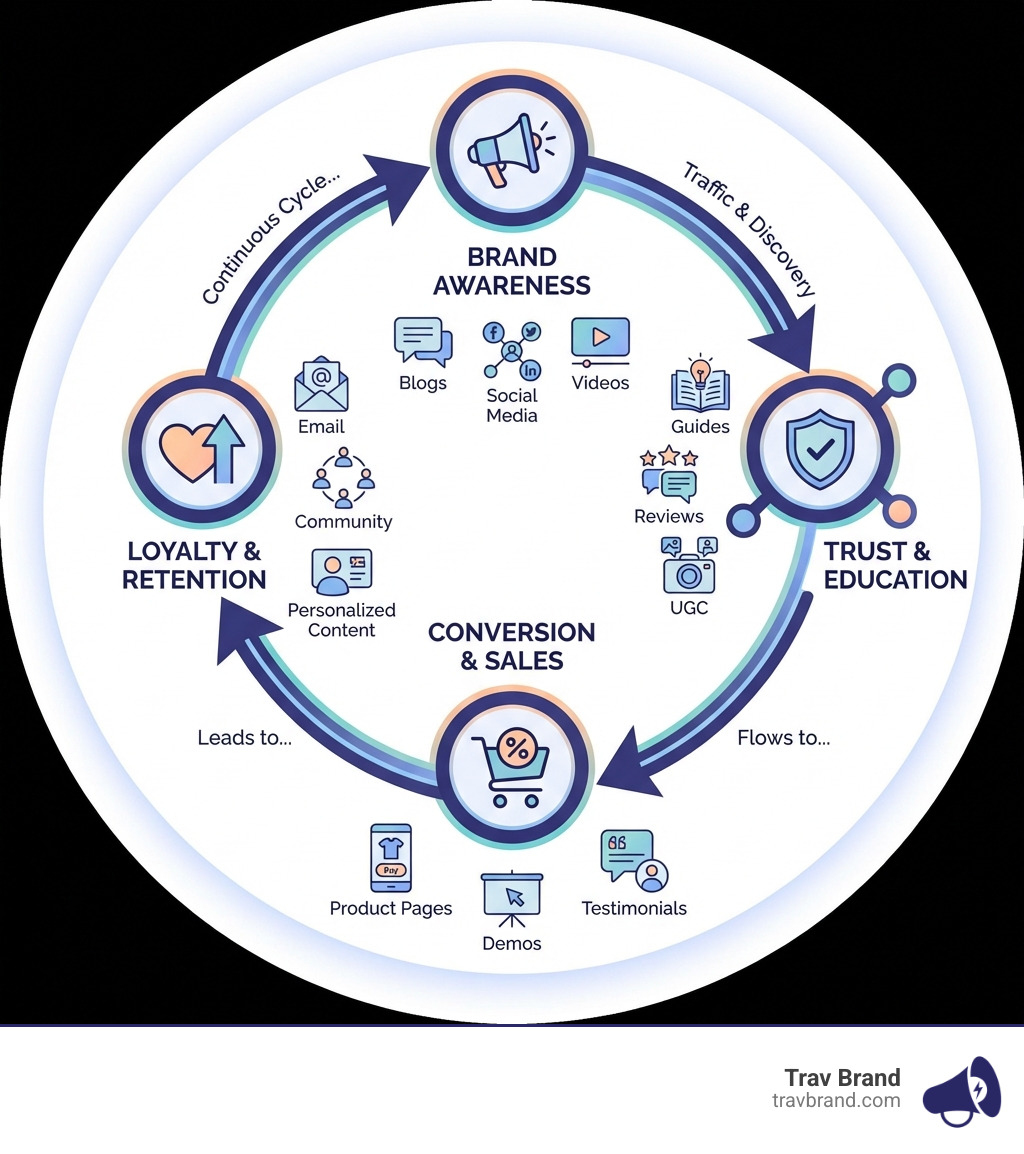
Before creating content, you need a solid plan. A strategic content plan for content marketing for e-commerce is a blueprint that guides every piece of content to ensure it serves a purpose in the customer’s journey and ultimately drives sales.
First, map your content to the sales funnel, understanding that customers have different needs at each stage.

Aligning Content with the Buyer’s Journey
The buyer’s journey has three main stages: Awareness, Consideration, and Conversion. Your content needs to address potential customers at each point.
Top-of-Funnel (Awareness Stage): Here, potential customers are realizing a need and looking for information. Content should be broad, educational, and easily findable.
- Blog posts: Answer common questions, discuss industry trends, or provide general advice related to your products. For instance, a beauty brand might write, “5 Skincare Habits for Glowing Skin.”
- Social media posts: Short, engaging posts, infographics, and quick tips on platforms like Instagram or TikTok can capture attention and introduce your brand.
- Podcasts & Influencer Content: Appearing on relevant podcasts or partnering with influencers can introduce your brand to new, targeted audiences.
Middle-of-Funnel (Consideration Stage): Customers are now actively researching solutions and comparing options. They need in-depth content to help them evaluate choices.
- Buying guides: These resources help customers make informed choices. A running shoe brand could offer a “Guide to Choosing the Right Running Shoe.”
- Quizzes & Interactive Tools: These personalize the experience, guiding shoppers to products based on their preferences. A beard care brand might use a quiz to help customers find products for their beard type.
- Email/SMS marketing: Nurture leads with targeted content, like a free guide or a discount code.
Bottom-of-Funnel (Conversion Stage): Customers are ready to buy and need reassurance, social proof, and clear calls to action.
- Customer reviews & testimonials: Authentic reviews, especially with photos or videos, provide powerful social proof. Encourage customers to share how they used a product.
- Product demos: Short videos showing how a product works can seal the deal.
- Product pages: These are crucial. They must be packed with SEO-rich information while clearly presenting the “Buy” button and addressing any final doubts.
Beardbrand’s video series is an excellent example of an educational content hub. It provides useful information on men’s grooming, building a loyal audience by offering value without a hard sell.
Integrating SEO into Your E-commerce Content Marketing Strategy
Content and search engine optimization (SEO) are essential partners in content marketing for e-commerce. Since organic search drives 53% of all website traffic, it’s a powerhouse for attracting customers.
- Keyword research: Use tools like Google Keyword Planner to find what your audience is searching for. Target both broad terms and long-tail keywords that indicate higher purchase intent (e.g., “best trail running shoes for pronation” instead of just “shoes”).
- On-page SEO: Weave keywords into your content, including headlines, subheadings, body text, image alt tags, and meta descriptions to help search engines understand your content.
- Technical SEO: Optimize your site’s technical aspects, such as site speed, mobile-friendliness, structured data (product schema), and internal linking. This is a huge opportunity, as many e-commerce sites overlook it.
- Link building: Earning high-quality backlinks from reputable websites signals to search engines that your content is valuable. This can be achieved through guest posting, collaborations, or creating compelling content that others naturally want to link to.
Aim for “10X content”—content that’s ten times better than anything else available on a topic. This means offering comprehensive guides and unique insights that establish your brand as the go-to resource.
How to Choose the Right Topics for Your Content
The right approach generates a steady stream of content ideas that resonate with your audience and drive results.
- Customer pain points: The most effective content solves real problems. Listen to customer service inquiries, read reviews, and engage on social media to understand their challenges. If fit is a common issue, create content on “how to find the perfect fit.”
- General market analysis: Keep an eye on industry trends and consumer conversations to create relevant, timely content.
- Keyword-driven topics: Use keyword research to find topics. Tools like BuzzSumo can show you what’s already performing well and help you identify gaps where you can create something better.
- Surveying existing customers: Ask your customers what questions they had before purchasing and what they’d like to learn more about. This direct feedback ensures your content is always valuable.
Creating Compelling Content That Converts
With a strategy in place, the next step is creating compelling content that informs, engages, and persuades. This is the art of content marketing for e-commerce.
Here are five top e-commerce content formats to focus on:
- Video Content: Product demos, how-to guides, brand stories.
- User-Generated Content (UGC): Customer reviews, testimonials, social shares.
- Educational Blog Posts: In-depth guides, articles, “how-to” content.
- Interactive Content: Quizzes, product finders, calculators.
- High-Quality Product Visuals: Images, 360-degree views, lifestyle shots.
Visual appeal is paramount. Since customers can’t physically touch products, high-quality images and videos are crucial for conveying texture, size, and functionality. Visuals should be informative and inspiring.
Storytelling connects with your audience on an emotional level. Instead of listing features, tell stories about how your products solve problems or align with customer values. A brand selling outdoor gear might share stories of adventurers using their products, making followers feel part of a community.
Authenticity builds trust. In an age of polished ads, genuine content—especially user-generated content—stands out. Be transparent and let your brand’s personality shine.

The Power of Video in E-commerce
Video is a must-have for content marketing for e-commerce. Marketers are incorporating video as a media format with a significant 50% margin for good reason: it increases average order values and conversion rates. Video allows you to:
- Product demos: Show products in action, highlighting features that static images can’t capture.
- How-to videos: Guide customers on how to use or care for products, reducing support inquiries.
- Brand stories: Share your brand’s mission and values to foster an emotional connection.
- Behind-the-scenes: Offer a glimpse into your production process or company culture to build transparency.
A men’s grooming brand, for example, built its success by creating videos showcasing barbers and providing useful hairstyle information. This educational content built a loyal following without hard-selling.
Leveraging User-Generated Content (UGC) to Build Trust
User-Generated Content (UGC) is gold for content marketing for e-commerce because it’s authentic, trustworthy, and highly persuasive. UGC helps you:
- Customer reviews & testimonials: Encourage customers to share their experiences and photos. Feature these prominently on product pages.
- Social media mentions: Monitor and reshare customer posts on social media to make them feel valued and amplify their endorsements.
- Photo galleries: Create curated galleries of customer photos on your website or social channels, showing real people using your products.
- Contests: Run contests that encourage customers to submit photos or videos, generating a wealth of UGC and boosting engagement.
A homewares company specializing in eco-friendly products, for example, effectively uses customer photos and reviews on its Amazon product pages to build trust and demonstrate product benefits.
Essential Written Content: From Blogs to Buying Guides
While visuals capture attention, well-crafted written content provides depth, answers detailed questions, and is critical for SEO.
- Educational blog posts: These are a reliable engine for SEO. Create posts that answer customer questions and position your brand as an authority.
- In-depth guides: Comprehensive guides, like a “Complete Guide to Sustainable Home Decor,” can be gated to capture leads or serve as evergreen resources that drive organic traffic.
- Case studies: For problem-solving products, case studies demonstrate real-world success stories and build credibility.
- Product descriptions: Go beyond feature lists. Explain how your products solve problems, highlight benefits, and infuse them with personality and clear calls to action.
- FAQs: A comprehensive FAQ section provides quick answers, reduces the burden on customer support, and boosts SEO.
Nike’s Running Shoe Finder is a prime example of an interactive buying guide. It asks users questions and provides personalized recommendations, guiding customers toward a confident purchase.
Amplifying Your Reach: Content Distribution and Promotion
Great content is useless if unseen. Effective distribution and promotion are crucial for content marketing for e-commerce. A successful omnichannel approach uses a mix of owned, earned, and paid media.
- Owned media: Channels you control, like your website, blog, email list, and social media profiles.
- Earned media: Content organically shared or featured by others, such as press mentions, customer reviews, or social shares.
- Paid media: Advertising to promote your content, like social media ads, search engine marketing, or sponsored content.
By combining these, you ensure your content reaches the right people at the right time on the right platforms.
The Role of Social Media in E-commerce Content Marketing
Social media is a massive channel for content marketing for e-commerce. With over 4.6 billion social media users worldwide, your customers are already there.
- Platform selection: Choose platforms where your target audience spends their time. Instagram and TikTok are great for visual products and short-form video, while YouTube is ideal for tutorials and brand storytelling.
- Content formats for social: Tailor content to each platform. Use short-form videos (Reels, TikToks), infographics, interactive polls, or behind-the-scenes content.
- Influencer marketing: Collaborate with relevant influencers to introduce your products to their engaged audiences, adding authenticity and trust.
- Community building: Use social media to foster a community. Engage directly with customers, respond to comments, and encourage user-generated content to build loyalty. A French DIY marketplace, for example, built an online community of experts who offer advice and earn commissions, fostering deep engagement.
A Japanese sword company is a great example of a brand that leveraged TikTok and Instagram with personality-driven content, reaching millions organically.
Driving Sales with Email Marketing
Email marketing remains one of the most powerful tools for content marketing for e-commerce. The average ROI for email marketing is $42 for every $1 spent, making it incredibly efficient.
- Content newsletters: Send regular newsletters with your latest blog posts, videos, and guides to keep your audience engaged and drive traffic.
- Abandoned cart sequences: These automated emails can include helpful content or a small incentive to encourage customers to complete their purchase.
- Personalized recommendations: Use customer data to send highly personalized product recommendations and content based on individual interests and past purchases.
- Segmentation: Segment your audience by demographics, purchase history, or interests. This allows you to send more relevant content, increasing engagement and conversions. For instance, an outdoors shop might create separate emails for customers interested in hiking versus hunting.
The Future of Content Marketing for E-commerce: Content Commerce and Measurement
As e-commerce evolves, content strategies must adapt. The line between content and commerce is blurring into “content commerce,” and measuring its effectiveness is critical for success.
| Feature | Traditional Content Marketing for E-commerce | Content Commerce |
|---|---|---|
| Primary Goal | Drive traffic, build brand, inform | Drive sales through content, create shoppable experiences |
| Content Role | Separate from product pages, supportive | Integrated directly into product findy & purchase flow |
| User Experience | Browse content, then steer to products | Find products within content, immediate purchase option |
| Technology | CMS + E-commerce Platform | Headless CMS, integrated content & commerce platforms |
| Focus | Awareness & Consideration | Entire customer journey, especially Conversion |
| Engagement Type | Informative, entertaining | Interactive, shoppable, inspirational |
| Measurement | Traffic, engagement, leads | Direct sales, conversion rates, AOV from content |
What is Content Commerce and Why Does It Matter?
Content commerce merges content and commerce so seamlessly that the content itself becomes the shopping experience. It involves publishing digital content to create captivating experiences that drive conversions.
This is important because shoppers want inspiration and information, not just products. Content commerce achieves this by:
- Creating shoppable experiences: Imagine a video tutorial where the products used are clickable for immediate purchase. Or a blog post where every item pictured is directly shoppable. This reduces friction in the buyer’s journey.
- Reducing friction: Content commerce streamlines the path from findy to purchase, making it shorter and more intuitive. This helps address cart abandonment, which affects 60-80% of online shoppers.
- Building trust and authority: By providing rich content within the shopping context, you answer questions, alleviate doubts, and build confidence. This can reduce return rates by ensuring customers are better informed.
Implementing content commerce can present technical challenges, as it requires deep integration between content and e-commerce platforms. A headless CMS is a valuable solution. It separates content management from frontend delivery, allowing content to be published to any channel—website, social media, apps—from a single source. This ensures a consistent, shoppable experience across all touchpoints.
Personalization and Measuring ROI
Personalization is key to standing out. It means delivering content custom to an individual’s preferences, behavior, and needs. This can be achieved through:
- Dynamic recommendations: Using AI and customer data to suggest products or content.
- Segmented email campaigns: Sending different content to different customer segments.
- Interactive tools: Quizzes and product finders that provide personalized results.
Measuring ROI is critical. Go beyond vanity metrics to focus on what impacts the bottom line.
Key Performance Indicators (KPIs) to track include:
- Traffic: Qualified traffic from specific content to product pages.
- Engagement rate: Time on page, scroll depth, comments, shares.
- Conversion rate: Direct sales attributed to content.
- Assisted conversions: Content that played a role in the customer journey.
- Average Order Value (AOV): Whether content leads to customers buying more.
- Customer Lifetime Value (CLTV): Whether content helps build loyalty and repeat purchases.
Use tools like Google Analytics to track these content marketing metrics and perform A/B testing. Consistently tracking data allows you to optimize your strategy and improve ROI.
Common Pitfalls to Avoid in Your Content Strategy
Even with the best intentions, it’s easy to stumble. Here are common mistakes in content marketing for e-commerce and how to avoid them:
- Expecting immediate results: Content marketing is a marathon, not a sprint. Building authority and ranking in search engines takes time. It can take many months of consistent investment before you start seeing significant results. Patience and persistence are key.
- Focusing only on sales: This is a huge mistake. If every piece of content screams “buy now!” it will turn off your audience. Your content should primarily educate, inspire, or entertain, with product promotion being subtle and secondary. Build relationships, not just transactions.
- Ignoring promotion: Creating great content isn’t enough. You must actively promote it across all relevant channels—social media, email, paid ads, and collaborations. If you don’t distribute it, your audience won’t find it.
- Creating low-quality content: In today’s saturated digital landscape, “good enough” content gets lost. Aim for “10X content”—content that is exceptionally valuable, well-researched, and engaging. This often means investing in high-quality writers, designers, and video producers.
- Not understanding the audience: Generic content attracts generic traffic that rarely converts. Invest time in developing detailed buyer personas to ensure your content speaks directly to the needs, pain points, and interests of your ideal customers.
Frequently Asked Questions about E-commerce Content Marketing
Here are some of the most common questions about content marketing for e-commerce and our expert answers.
What are the key differences between content marketing for B2C and B2B e-commerce?
While the core principles remain, there are distinct differences:
B2C (Business-to-Consumer):
- Focus: Emotion, lifestyle, immediate gratification.
- Content: Visually driven, aspirational, entertaining.
- Channels: Social media (Instagram, TikTok), lifestyle blogs, email.
- Sales Cycle: Shorter, with more impulse purchases.
- Decision-makers: Usually one individual.
B2B (Business-to-Business):
- Focus: Logic, ROI, efficiency, problem-solving.
- Content: Data-driven (case studies, whitepapers), educational, authoritative.
- Channels: LinkedIn, industry forums, email, gated content.
- Sales Cycle: Longer, involving more research and multiple touchpoints.
- Decision-makers: Often multiple stakeholders.
For B2C, a brand might showcase a lifestyle with its products. For B2B, a brand might offer a detailed industry report to generate leads.
How much should I budget for content marketing?
There’s no single answer, but a strategic approach is key. Your budget depends on your goals, industry, and resources.
- Percentage of marketing budget: A common guideline is to allocate 10-30% of your overall marketing budget to content. Some experts suggest this could grow in the coming years.
- Industry benchmarks: Research what similar businesses in your niche are spending.
- Starting small: If your budget is limited, start with one or two key content types (e.g., a blog and product videos) and a few primary distribution channels.
- Scaling with results: As your content generates ROI, reinvest those profits to scale your efforts. We advocate for a 60-40 rule: 60% towards long-term brand-building content (like SEO-optimized guides) and 40% towards conversion-focused performance content (like targeted ads).
Should I hire in-house or outsource content creation?
Both approaches have merits, and many successful brands use a hybrid model.
Hiring in-house:
- Pros: Deep brand understanding, consistent quality, easier collaboration.
- Cons: Higher overhead costs, limited access to diverse skills, can be slow to scale.
Outsourcing content creation:
- Pros: Access to specialized expertise, scalability, often more cost-effective for specific projects.
- Cons: Requires clear brand guidelines to maintain consistency, less direct control.
Hybrid models: Many businesses find success by keeping core strategy in-house while outsourcing tasks that require specialized skills or high volume. For example, a business might manage its content strategy internally but hire freelance writers for blog posts or a production team for videos.
The best choice depends on your budget, resources, and the volume of content you need.
Conclusion: Turn Your Content into a Revenue Engine
Content marketing for e-commerce is the engine that drives sustainable growth, builds trust, and fosters customer loyalty. We’ve covered how to plan, create, and distribute content that converts, from SEO integration to the future of content commerce and measuring ROI.
Content is a long-term asset. It’s about building relationships, educating your audience, and positioning your brand as a trusted authority. It requires patience, consistency, and a willingness to adapt.
At Trav Brand, we help businesses transform their content marketing for e-commerce into a powerful revenue engine. We build and scale purpose-driven brands with comprehensive strategies focused on measurable results.
Ready to open up the full potential of your e-commerce business? Learn more about our complete branding services and let’s turn your content into your greatest asset.