9 Actionable Strategies to Build a Successful Brand
Why a Brand Strategy is Your Blueprint for Success

Brand building strategies are the frameworks that define how your business presents itself to the world, differentiates from competitors, and creates lasting customer relationships. Without a clear strategy, even great products and services struggle to gain traction in today’s crowded marketplace.
Quick Answer: Essential Brand Building Strategies
- Define your purpose – Establish your mission, vision, and core values
- Know your audience – Research and understand who you’re serving
- Analyze competitors – Find gaps and opportunities in your market
- Position uniquely – Craft a clear statement of what makes you different
- Tell your story – Create compelling narratives that connect emotionally
- Design consistently – Develop recognizable visual identity
- Amplify digitally – Leverage content, social, and paid channels
- Stay consistent – Align all customer touchpoints
- Measure and adapt – Track performance and refine continuously
Your brand has seven seconds to make a first impression. In that brief window, potential customers form judgments that can determine whether they engage with you or move on to a competitor.
A recent survey of 1,800 brands found that 77% of consumers would not care if most of those brands disappeared tomorrow. That is not necessarily because products or services lack quality; it is often because many brands fail to create meaningful connections or clearly communicate why they matter.
A brand is more than a logo or tagline. It is the sum of every perception, experience, and emotion customers associate with your business. It is what people say about you when you are not in the room.
In a marketplace where consumers face endless choices, trust becomes the deciding factor. Over 80% of consumers need to trust a brand before they’ll consider buying. That trust does not happen by accident; it is built through strategic, consistent actions that demonstrate your values and deliver on your promises.
The good news is that building a strong brand is achievable for businesses of any size. It requires clarity, commitment, and a structured approach.
I am Trav Lubinsky, and over my career launching and scaling ventures like Flex Watches, working with global brands including Star Wars and HexClad, and advising high-growth consumer companies, I have learned that effective brand building strategies are the difference between businesses that struggle and those that dominate their markets. The principles I share here are the same ones that have helped billion-dollar enterprises and emerging startups alike create brands that resonate, convert, and endure.
The Foundation: Defining Your Brand’s Purpose and Audience
This section covers the fundamental “why” and “who” of your brand, which are critical for building an authentic connection with customers. A strong foundation ensures all subsequent strategies are aligned and effective.
Strategy 1: Define Your Core Purpose, Mission, and Values
Before you even think about logos or ad campaigns, you need to understand the very heart of your brand. This involves defining your purpose, mission, and values.
Your brand purpose is the fundamental reason your brand exists beyond making a profit. It is the problem you are solving, the change you want to see in the world, or the impact you aim to make. As Simon Sinek said in his TED talk, “People dont buy what you do; they buy why you do it.” This “why” is what truly connects with customers on an emotional level. For example, a local organic grocery store might exist to promote healthy, locally sourced foods and foster community wellness.
Your mission statement explains what you are doing right now to fulfill that purpose. It is a concise, action-oriented statement of your business’s current objectives and approach. LinkedIn’s mission statement, for instance, is “Connect the worlds professionals to make them more productive and successful.”
A vision statement explains what you hope to achieve in the future, painting a picture of your long-term aspirations. LinkedIn’s vision statement is “Create economic opportunity for every member of the global workforce.” Together, your mission and vision provide a guiding light for every decision.
Finally, your core values are the fundamental beliefs and principles that guide your brand’s behavior, decisions, and culture. They are what your brand stands for. For instance, Patagonia’s brand strategy is deeply rooted in environmental sustainability and ethical manufacturing, reflected in their products, marketing, and corporate practices. These values are crucial because 77% of customers said they prefer to buy from brands with the same values as them. Aligning with customer values builds trust and loyalty, making your brand more resilient.
Defining these elements provides an internal guiding light for your employees and a clear message for your customers, ensuring authenticity and consistency across all operations.
More info about Trav Brand’s Brand Development Services.
Strategy 2: Identify and Deeply Understand Your Target Audience
Once you know why your brand exists, the next crucial step in your brand building strategies is to understand who you are serving. Generic targeting often leads to a generic brand that struggles to stand out.

Target audience research goes beyond basic demographics like age and location. It digs into psychographics such as your customers’ values, beliefs, interests, lifestyles, and personalities. What are their aspirations? What challenges do they face? What are their pain points that your product or service can solve? Nearly 60% of consumers think businesses need to understand and address their needs better, highlighting the critical importance of this step.
To truly grasp your audience, we recommend creating buyer personas. These are semi-fictional representations of your ideal customers, complete with names, career histories, hobbies, and even typical objections they might have when considering a purchase. For example, a persona might be “Tech-savvy Tina,” a 30-year-old professional looking for efficient, innovative solutions. A well-crafted persona helps you visualize your customer, making it easier to tailor your messaging and offerings.
Understanding your audience also involves exploring brand archetypes. These are universal, mythic characters that resonate deeply with human psychology (for example, The Hero, The Sage, or The Rebel). Identifying one or several archetypes that align with your business goals can help you create memorable personas and define how your brand communicates and even designs its products. Understanding your audience is a crucial part of a comprehensive brand strategy and lays the foundation for other aspects of brand development, like brand archetype.
By deeply understanding your target audience, you can craft messaging that truly resonates, develop products that meet their needs, and choose marketing channels where they are most active. This specificity is what transforms casual interest into loyal advocacy.
More info about Trav Brand’s Audience Research Services.
Strategic Positioning: How to Stand Out in a Crowded Market
With your foundation in place, the next step is to carve out a unique space in the market. This involves understanding your industry landscape and clearly articulating what makes you different and better.
Strategy 3: Analyze Your Industry Landscape to Find Your Edge
In today’s competitive world, simply having a great product is not enough. You need to know where you fit, or where you can fit, within the existing market. This requires thorough industry research and competitive analysis.
We start by identifying trends within your market. What new technologies are emerging? What are consumer preferences shifting towards? What regulatory changes might impact your business? Staying ahead of these trends can reveal significant opportunities.
Next, we rigorously assess your competitors. What are their strengths and weaknesses? What are they doing well, and where are they falling short? A SWOT analysis (Strengths, Weaknesses, Opportunities, Threats) is an excellent tool for this. For instance, in the long-running Apple versus Android debate, both brands continue to differentiate themselves through strong branding, campaign messaging, and product offerings, despite competing in the same space.
By understanding the competitive landscape, you can spot market gaps such as unmet needs or underserved segments that your brand can uniquely address. This helps you define your differentiation opportunities, allowing you to offer something truly distinctive. Maybe it is a superior customer experience, a unique product feature, or a more sustainable manufacturing process.
This strategic analysis is about more than just knowing your rivals; it is about understanding the entire ecosystem to carve out a defensible and profitable niche for your brand.
More info about Trav Brand’s Content Marketing Competitive Analysis.
Strategy 4: Develop a Unique Brand Positioning Statement
After thoroughly understanding your purpose, audience, and competitive landscape, the next critical step in your brand building strategies is to articulate your unique position in the market. This is where your brand positioning statement comes into play.
Your positioning statement is a concise declaration of what makes your brand distinctive and why your target audience should choose you over the competition. It is the answer to the question, “What do we do differently or better?”
It typically highlights your value proposition (the unique benefits you offer) and your Unique Selling Proposition (USP) (what makes you singularly better). For example, Apple’s USP is not just about its products; it is also found in its overall user experience. Googles USP might be how it connects people with information, and Amazons could be providing whatever product you need efficiently and at low cost.
A strong positioning statement helps to define your brand essence, the core characteristic that defines your brand. It should be clear, credible, and compelling. When you can articulate your unique value in plain language, you know exactly what you are selling and why it matters.
Here are key questions to help us craft your positioning statement:
- Who is our target audience?
- What is our product or service?
- What is the greatest benefit or impact of our product?
- What do our competitors do?
- What do we do differently or better?
- How would customers perceive our product or brand?
Using these answers, we can construct a positioning statement that follows a structure like this: “For [target audience], [your brand] is the [category/industry] that [unique value proposition/differentiator] because [reason to believe].” This clarity ensures everyone in your organization understands what you stand for and how you stand out.
More info about Trav Brand’s Positioning Services.
Crafting Your Identity: The Art of Brand Storytelling and Design
This is where your brand’s personality comes to life. A compelling narrative and consistent visual identity create an emotional connection that transforms customers into loyal advocates.
Strategy 5: Craft a Compelling Brand Story, Message, and Voice
Humans are wired for stories. A compelling brand story is one of the most powerful brand building strategies you can employ. It is not just about what you sell, but the narrative behind it such as your origins, your struggles, your triumphs, and the values that drive you.

Consider your founder story and how the idea sparked. What problem were you passionate about solving? For example, TOMS Shoes centers its brand story on giving back, resonating deeply with socially conscious consumers. This narrative creates an emotional connection, making your brand relatable and memorable. When customers understand and resonate with your brands values, they are more likely to feel a connection. In fact, 57% of customers will spend more with a brand they feel connected to, while 76% will buy from that brand over a competitor.
Your messaging framework translates this story into consistent communication. It defines your core messages, ensuring they align with your brand’s purpose and values. This framework guides all your content, from website copy to social media posts.
Crucially, you need to define your brand voice and tone of voice. If your brand were a person, how would it speak? Is it authoritative, witty, empathetic, or playful? For instance, a finance management app might adopt an innovative, proactive, and confident personality, while a blog about sustainable living might use a friendly, informative, and encouraging tone. This consistency in communication builds trust and familiarity, making your brand instantly recognizable and relatable.
By crafting a compelling narrative and maintaining a consistent voice, you move beyond transactional interactions and build a lasting emotional connection with your audience. This connection transforms customers into advocates who are eager to share your story with others.
More info about The Power of Storytelling in Building a Strong Brand.
Strategy 6: Develop a Memorable and Consistent Visual Identity
While stories capture hearts, your visual identity is often the first thing people notice, and it is a cornerstone of effective brand building strategies. Humans are highly visual; our brains process images much faster than words, influencing judgments and behavior. A strong visual identity makes your brand instantly recognizable and helps convey its personality and values at a glance.
Key elements of your visual identity include:
- Logo design: Your logo is the face of your brand. It should be unique, memorable, and reflective of your brand’s essence. Think of Nike’s iconic Swoosh, originally designed for just $35. It is a simple, dynamic mark that has come to symbolize movement, achievement, and aspiration.
- Color psychology: Colors evoke emotions and associations. A craft beer brand might use rustic, earthy colors to convey authenticity, while a cloud storage service might use cool, airy colors to reflect the idea of “cloud” and simplicity.
- Typography: The fonts you choose communicate personality. A luxury brand might use neat serifs, while a tech startup might opt for clean, modern sans-serifs.
- Imagery style: The type of photos, illustrations, or videos you use should be consistent and align with your brand’s voice and values.
The most critical aspect here is consistency. Every visual element, from your website to your packaging, social media posts, and even employee uniforms, should adhere to a unified style. This is why brand guidelines (often compiled in a brand style guide) are indispensable. They provide definitive instructions on logo usage, color palettes (hex codes, RGB, CMYK), typography, imagery, and even accessibility considerations. Without clear guidelines, your brand can appear disjointed, confusing customers and diluting your message.
By developing a memorable and consistently applied visual identity, you create a powerful, non-verbal language that reinforces your brand story and strengthens customer recognition and trust.
More info about why your brand needs a brand guide.
Execution and Evolution: Implementing Your Brand Building Strategies
A strategy is only as good as its execution. This final phase focuses on bringing your brand to the world, ensuring consistency, and adapting over time to stay relevant and effective.
Strategy 7: Leverage Digital Channels to Amplify Your Reach
Effective brand building strategies must leverage the vast potential of online channels. This is where your carefully crafted brand comes alive for your audience.
- Content marketing: By creating valuable, educational, or entertaining content (blogs, videos, infographics), you attract your target audience, establish authority, and increase visibility. Content marketing is particularly effective because it simultaneously builds reputation and visibility.
- Social media marketing: Over 90% of marketers use social media for brand awareness, making it an essential channel. Whether it is creating content for specific platforms like Instagram or Twitter, using hashtags to increase engagement, or running targeted ads, social media allows you to connect directly with your audience. For example, a brand targeting Gen Z might track TikTok engagement and trends, adapting its content to the vertical video format.
- Email marketing: Building an email list allows for direct, personalized communication. You can nurture leads, share brand stories, announce new products, and foster loyalty through segmented campaigns.
- SEO (Search Engine Optimization): While SEO is often seen as a demand capture channel, it plays a vital role in brand building by increasing your mental availability. By appearing consistently in non-branded searches, you build familiarity and preference over time. When users repeatedly see your brand as a helpful resource for their queries, it builds trust and positions you as an authority.
- Paid media: Targeted advertising on platforms like Google (display ads, search ads) and social media (Facebook, Instagram ads) allows you to reach specific demographics with precision. Remarketing campaigns, for instance, can create an impression of omnipresence, keeping your brand top of mind for users who have previously interacted with you.
By strategically deploying these digital channels, we can amplify your brand’s message, reach a broader audience, and deepen engagement, turning casual interest into active participation.
More info about Trav Brand’s Digital Marketing Strategy Guide.
Strategy 8: Ensure Consistency Across All Touchpoints
Consistency is the bedrock of trust and recognition in brand building strategies. Imagine a restaurant that switches themes and cuisines monthly; it would struggle to retain loyal patrons. The same principle applies to your brand. Every interaction a customer has with your brand, known as a customer touchpoint, contributes to their overall perception.
An omnichannel experience means ensuring a seamless, cohesive brand presence across all these touchpoints, whether online (website, social media, email, ads) or offline (packaging, in-store experience, customer service). This consistency reinforces your brand’s message, values, and visual identity, preventing confusion and building familiarity.
- Internal branding and employee advocacy: Consistency starts from within. When employees understand and embody the brand strategy, they become powerful brand advocates. Internal alignment ensures that every team member, from sales to customer service, communicates the brand message coherently. A strong brand strategy offers internal benefits by improving internal alignment and strengthening internal brand advocacy.
- Brand consistency benefits: Consistent branding leads to increased brand awareness, builds trust, fosters customer loyalty, and ultimately drives business growth. Inconsistent branding, on the other hand, can dilute your brand’s value, erode trust, and lead to missed marketing opportunities.
To maintain consistency, have clear brand guidelines (as discussed in Strategy 6) and centralize all brand assets in a brand portal, making them easily accessible to everyone in the organization. Regular audits (every one to two years) are crucial to keep brand assets and guidelines up to date and relevant.
By diligently ensuring brand consistency across all customer touchpoints, you solidify your brand’s identity, build unwavering trust, and create a reliable, recognizable presence in the market.
More info about Innovative Brand Building Strategies.
Strategy 9: Continuously Analyze, Refine, and Measure ROI
The journey of brand building strategies is never truly finished. Markets evolve, customer preferences shift, and competitors innovate. To remain effective, your brand strategy must be dynamic, continuously analyzed, refined, and measured.
We track success using a combination of Key Performance Indicators (KPIs). These go beyond simple sales figures to encompass:
- Brand awareness: Metrics like website traffic, social media mentions, search volume for branded terms, and media coverage indicate how visible and recognized your brand is.
- Brand equity: This refers to the perceived value and strength of your brand. It can be measured through surveys that gauge brand perception, preference, and willingness to pay a premium. Positive brand equity is associated with increased profitability, sales, and market share.
- Customer loyalty: This is crucial. Metrics include customer retention rates, repeat purchase rates, and the Net Promoter Score (NPS), which asks how likely customers are to recommend your brand.
- Trust: Since many customers are willing to spend more on brands they trust, measuring this directly or indirectly is vital. New research approaches like First-Fast Response (FFR) capture immediate cognitive associations consumers make with a brand and can be more predictive of future sales than traditional awareness metrics.
Gathering customer feedback is invaluable for refinement. This can be done through direct surveys (using tools like SurveyMonkey or Typeform), online reviews, social listening, and usability tests to understand how customers interact with your brand. We also monitor competitor positioning and market trends using tools like Google Trends and Google Alerts to stay informed.
By regularly evaluating these metrics and feedback, we can identify what is working, what is not, and where adjustments are needed. This iterative process allows us to calculate the Return on Investment (ROI) of our brand building efforts and ensure that every strategic decision contributes to your long-term growth and success.
More info about Trav Brand’s Brand Audit Services.
Frequently Asked Questions about Brand Building Strategies
What is the difference between a brand strategy and a marketing strategy?
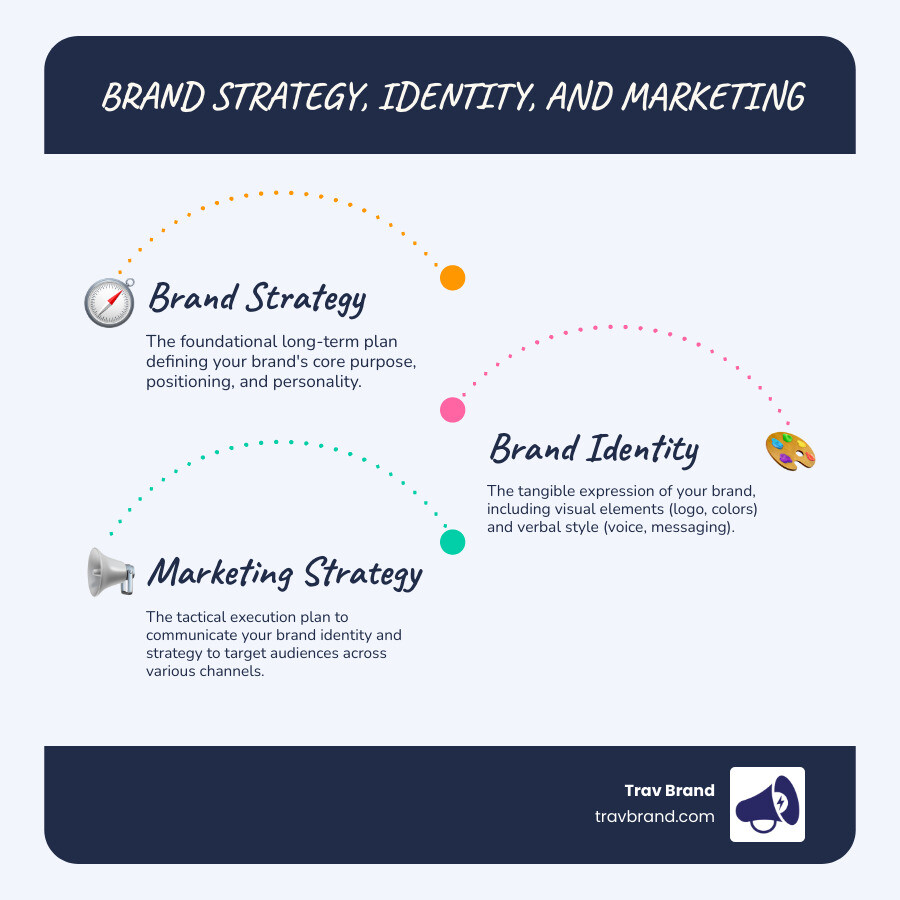
A brand strategy is the long-term plan for how you want your brand to be perceived; it is the “why” behind your business. It defines your core purpose, values, and unique positioning in the market. Think of it as the blueprint for your brand’s identity and reputation.
A marketing strategy, on the other hand, consists of the specific tactics you use to achieve short-term goals and communicate your brand strategy, like campaigns and promotions. It deals with the implementation and execution of your brand strategy to achieve more immediate business objectives, such as increasing sales or website traffic. While brand strategy focuses on shaping perception and emotional connection, marketing strategy focuses on executing campaigns to achieve measurable results.
How do you measure the success of a brand strategy?
Measuring the success of a brand strategy involves a mix of qualitative and quantitative metrics:
- Brand Awareness: Track website traffic, social media mentions, search volume for branded terms, and media coverage.
- Brand Equity: Assess perceived value, brand preference, and willingness to pay a premium through surveys and market research.
- Customer Loyalty: Monitor retention rates, repeat purchase rates, and the Net Promoter Score (NPS).
- Market Share and Profitability: These are key indicators of business success that are often driven by a strong brand.
- Internal Alignment: Measure employee understanding and advocacy of the brand.
New metrics like First-Fast Response (FFR) can also be used to detect early shifts in consumer associations with your brand and may provide a more predictive measure of future sales than traditional awareness metrics.
How often should a brand strategy be reviewed?
While your core purpose and values should remain stable, your brand strategy should be reviewed annually. This allows you to adapt to market changes, industry shifts, and evolving customer preferences, ensuring your brand remains relevant and effective. Regular audits (every one to two years) are crucial for updating brand assets and guidelines. Continuous monitoring of KPIs and customer feedback should happen even more frequently, allowing for agile adjustments and optimization of your brand building strategies.
Conclusion: Build a Brand That Lasts
Building a successful brand is not a one-time project; it is a continuous commitment to your purpose, your audience, and your promise. By implementing these nine actionable brand building strategies, you create a resilient brand that not only stands out but also builds lasting loyalty and trust. A well-executed brand strategy can transform businesses, turning products into beloved icons and organizations into trusted partners.
If you are ready to turn your vision into a powerful brand, the expert team at Trav Brand can help you build and scale with a comprehensive, purpose-driven approach that connects strategy to day-to-day execution. Explore our complete guide to branding services.