Retail Conversion Hacks: 12 Tactics to Turn Browsers into Buyers
Why Retail Conversion Rate is Your Most Powerful Growth Lever
Ways to increase conversion rate in retail are essential for any business owner looking to maximize revenue from existing foot traffic. Here are the most effective strategies:
Quick Win Tactics:
- Optimize store layout with a clear decompression zone and power wall to the right of entrance
- Eliminate checkout queues using mobile POS systems or strategic register placement
- Train staff to engage every customer with open-ended questions, not “Can I help you?”
- Display social proof like customer reviews and testimonials prominently
- Create bundle deals and time-limited promotions to drive urgency
Foundational Improvements:
- Use ambient factors (lighting, music, scent) to increase dwell time
- Staff based on traffic peaks, not sales peaks
- Implement people counting technology to track true conversion rate
- Offer multiple payment options including digital wallets
- Build loyalty programs that reward repeat customers
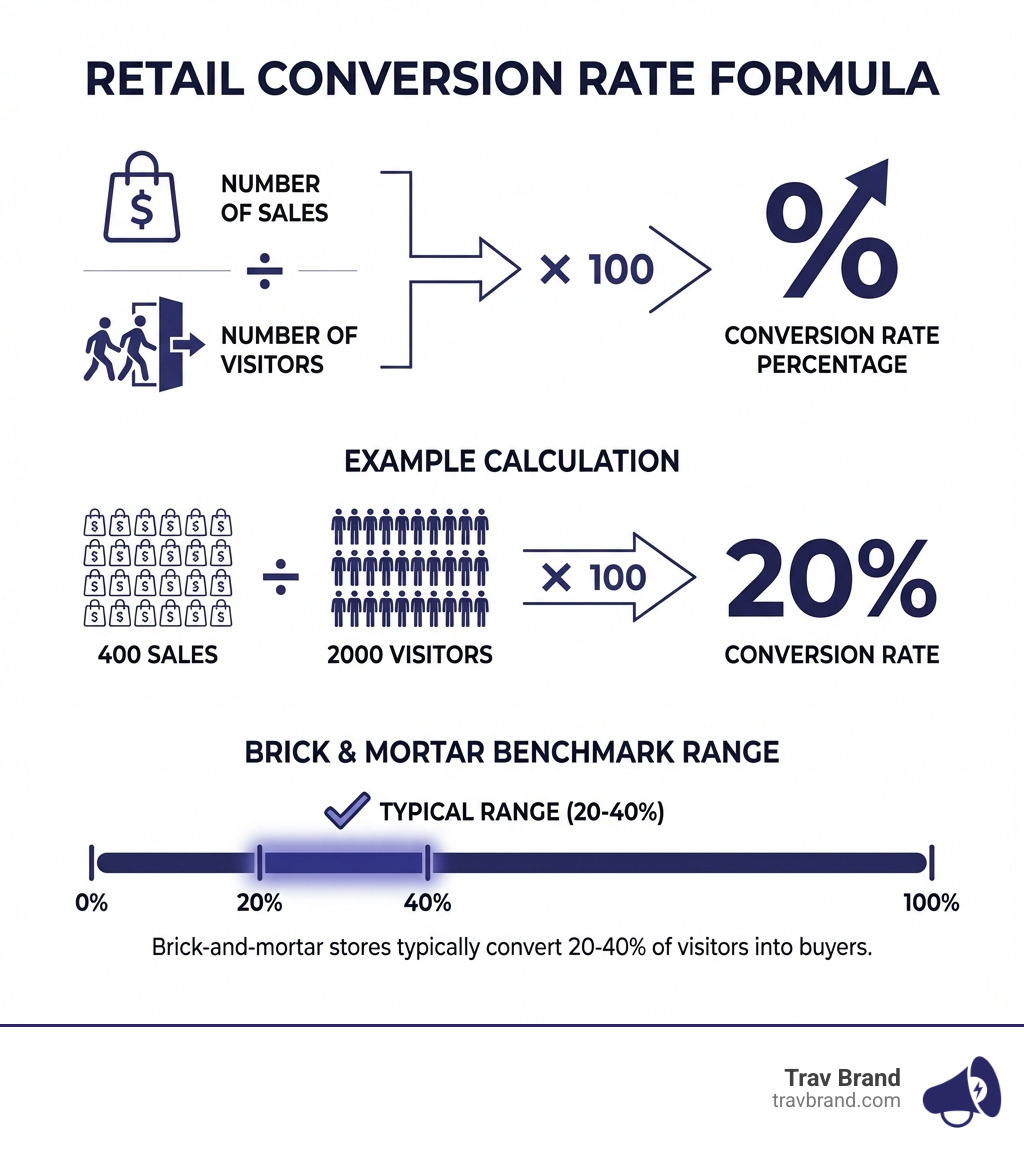
The reality? Brick-and-mortar stores typically convert 20-40% of visitors into buyers—that’s 10-20x higher than the average e-commerce site. Yet most retailers don’t even track their conversion rate, let alone optimize it.
Here’s the math: If 2,000 people walk into your store this month and 400 make a purchase, you have a 20% conversion rate. Increase that to just 25%, and you’ve added 100 sales without spending a dollar on new traffic. That’s the power of conversion rate optimization.
The challenge isn’t attracting browsers—it’s turning them into buyers. Long queues frustrate customers. Untrained staff miss sales opportunities. Poor layout confuses shoppers. Each friction point costs you money.
But there’s good news. Small, strategic changes can dramatically improve your conversion rate. We’re talking about optimizations backed by research showing that each 1% increase in dwell time can boost sales by 1.3-2%, and that 90% of shoppers turn right when entering a store, making that wall prime real estate for high-margin products.
I’m Trav Lubinsky, and I’ve spent nearly two decades building and scaling consumer brands—from launching Flex Watches to advising billion-dollar enterprises on growth strategy. Throughout my career, I’ve tested countless ways to increase conversion rate in retail across physical stores and e-commerce platforms, working with brands like Star Wars, Camping World, and Poppi to optimize every touchpoint of the customer journey. What I’ve learned is this: conversion rate improvement isn’t about tricks—it’s about removing friction and creating experiences that make buying easy.
Foundational Ways to Increase Conversion Rate in Retail: The In-Store Experience
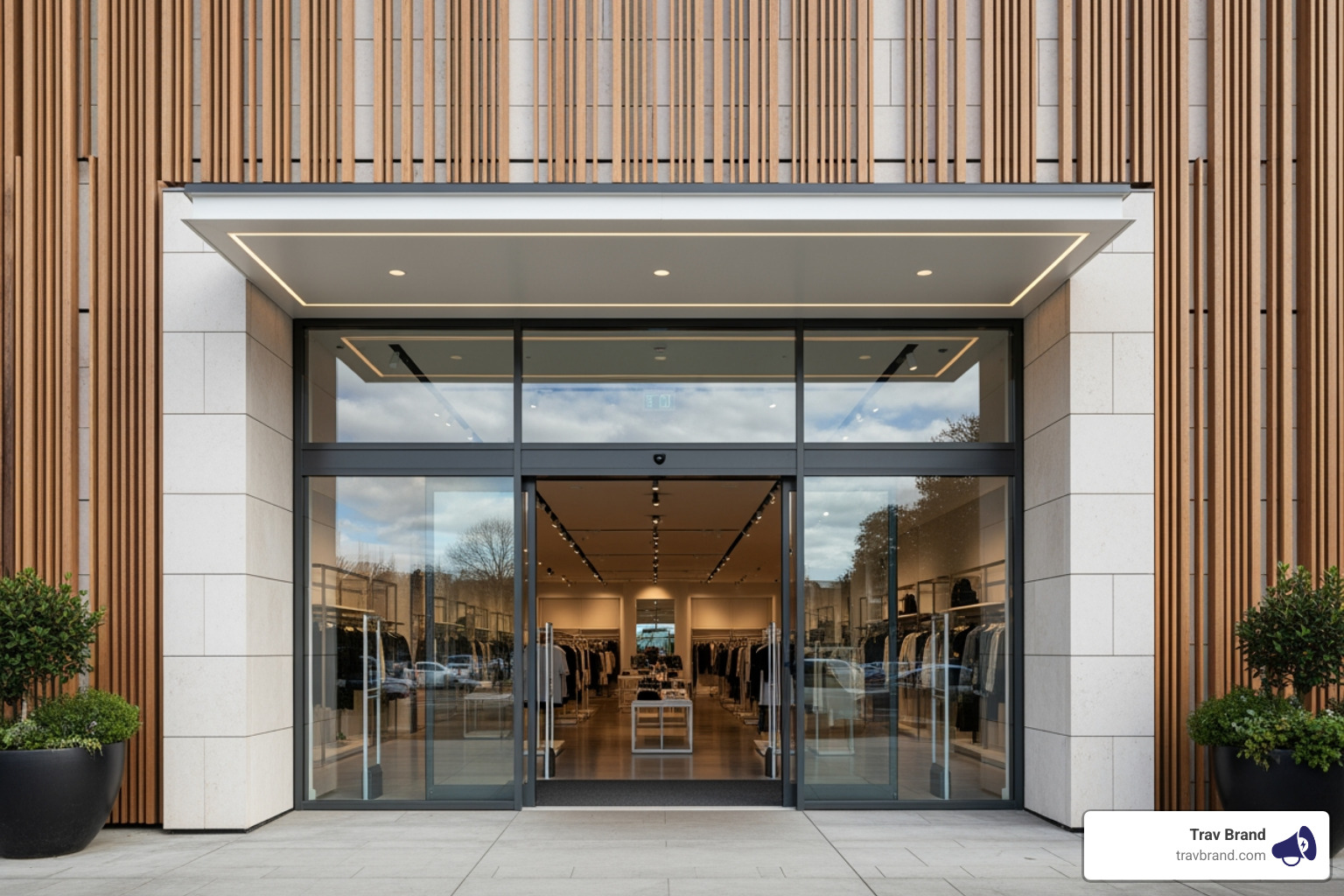
Before we dive into the nitty-gritty, let’s set the stage. The physical environment of your retail store is your first and most powerful conversion tool. It’s where the customer journey begins, and every element, from the layout to the ambient music, plays a role in whether a browser becomes a buyer. Optimizing these foundational elements is among the most effective ways to increase conversion rate in retail.
1. Master Your Store Layout and Flow
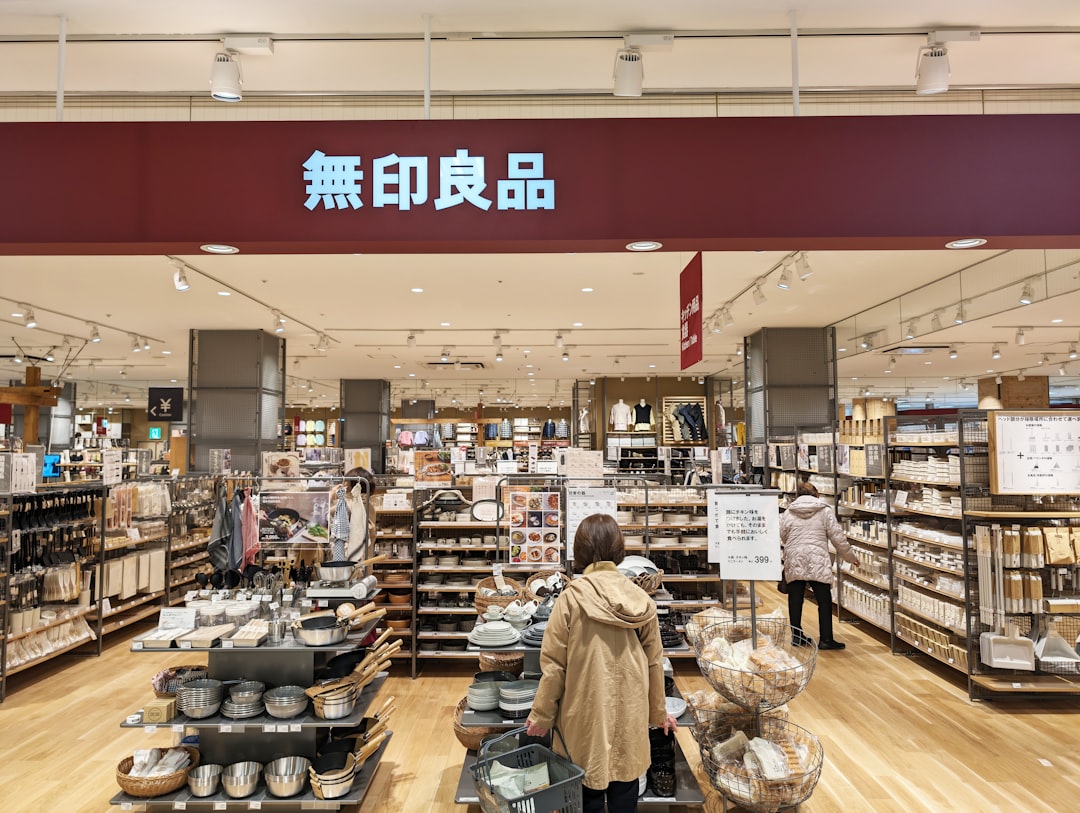
Think of your store’s layout as a carefully choreographed dance. You want to guide your customers seamlessly through the space, encouraging findy and engagement. One crucial element is the “decompression zone,” the first five to fifteen feet upon entering your store. This area should be kept simple and uncluttered, allowing customers to survey the space and transition from the outside world. They’re often prone to distractions here, so don’t overwhelm them.
Once past this zone, shoppers in the US typically turn right and tend to move in a counterclockwise direction through the store. This makes the area immediately to the right of your entrance prime real estate, often referred to as the “power wall.” This is where you should place your high-margin products or new arrivals. Studies reveal that most shoppers, in fact, 90 percent of them, turn to the right when they walk into a store.
Beyond the entrance, ensure your aisles are clean, wide, and easily navigable. Cluttered or confusing pathways can lead to frustration and a quick exit. Product placement also matters: group complementary products together to encourage cross-selling and make it easier for customers to find everything they need for a particular use case.
2. Create an Immersive Atmosphere
The ambiance of your store—the subtle sensory cues—can profoundly influence buying behavior and significantly impact your dwell time, which directly correlates with conversions. This is where sensory marketing truly shines as one of the most powerful ways to increase conversion rate in retail.
Consider your store lighting. Soft lighting can create a cozy and inviting mood, making customers feel more comfortable and encouraging them to linger. The music you play also sets the tone; upbeat tempos can energize shoppers, while calmer melodies might encourage a more relaxed browsing experience. And let’s not forget the power of scent. Certain aromas can evoke feelings of comfort or luxury, subtly influencing a customer’s mood and perception of your brand. As Forbes highlights, the ambiance of a store plays a subtle yet powerful role in influencing buying behavior, with factors like lighting, music, and even aroma creating a mood that encourages spending.
The goal here is to increase “dwell time” – the amount of time a customer spends in your store. The more time they spend, the more likely they are to find something they love and make a purchase. Recent 2024–2025 research indicates that each 1% increase in dwell time can boost sales by approximately 1.3–2%, with some retailers seeing even higher lifts through targeted strategies.
3. Use Signage and Displays to Guide and Inspire
Clear and compelling signage is your silent salesperson. It guides customers, informs them, and highlights promotions, making it a critical component among ways to increase conversion rate in retail.
Navigational signs help customers find specific product categories or departments, reducing frustration and ensuring they don’t give up before finding what they’re looking for. Promotional displays, especially engaging window displays, are crucial for attracting passersby and drawing them into your store. Once inside, well-designed displays can showcase products, suggest uses, and communicate value.
Consider incorporating interactive displays where appropriate. These can engage customers more deeply with your products, perhaps allowing them to virtually try on clothes or customize items. Simple QR codes can also be leveraged to provide more detailed product information, videos, or customer reviews, enriching the in-store experience without cluttering physical space.
The Human Touch: Staffing and Service Excellence

While layout and ambiance set the stage, your staff are the stars of the show. The human element of retail remains incredibly powerful, and exceptional customer service is consistently among the top ways to increase conversion rate in retail. Our team at Trav Brand believes that a well-trained, well-deployed, and genuinely engaged staff can transform a browsing experience into a memorable purchase.
4. Align Staffing with Shopper Traffic, Not Just Sales
It’s a common mistake: scheduling staff based solely on historical sales peaks. However, to truly optimize your conversion rate, you need to align staffing with shopper traffic peaks. There might be busy browsing periods that don’t immediately translate to sales, but these are crucial opportunities for engagement.
By analyzing traffic data, we can ensure adequate floor coverage during these high-footfall times. This means more associates are available to assist customers, answer questions, and build rapport. During peak periods, it’s vital that staff prioritize customer service over routine tasks like restocking or cleaning. A customer looking for help won’t wait for an associate to finish counting inventory. This strategic deployment is a key element among ways to increase conversion rate in retail.
5. Invest in Staff Training and Product Knowledge
Your employees are your brand ambassadors. Their knowledge and enthusiasm can make or break a sale. Investing in comprehensive staff training and skills development is paramount. This goes beyond just knowing where products are located; it’s about developing consultative selling techniques.
Train your staff to ask open-ended questions that uncover customer needs and preferences, rather than simply asking, “Can I help you?” (which often elicits a “No, thanks, just looking”). For example, “What are you looking for today?” or “What brings you into our store?” can open up a conversation. Empower them with problem-solving skills, encouraging them to go above and beyond to address concerns or find solutions. When staff are passionate about improving conversion rates and are equipped with the right skills, it makes a significant difference. We’ve seen how setting clear conversion goals for staff, coupled with role-playing exercises, can boost both confidence and results.
6. Encourage Personalized Customer Interactions
In an age of digital overload, genuine human connection stands out. Personalized customer experiences are incredibly effective ways to increase conversion rate in retail. It starts with a warm, authentic greeting for every customer who walks through your door.
Moving beyond generic inquiries, encourage your staff to engage in meaningful conversations. This can involve gathering customer feedback directly through casual chats, which provides invaluable insights into their needs and desires. Based on these interactions, staff can make personalized recommendations, acting more like trusted advisors than salespeople. This approach, sometimes called clienteling, builds rapport and makes customers feel valued, significantly increasing the likelihood of a purchase.
Frictionless Purchasing: Checkout and Technology
We’ve all been there: a great shopping experience ruined by a frustrating checkout process. Long queues and complicated transactions are conversion killers. Streamlining the final steps of the customer journey is one of the most critical ways to increase conversion rate in retail. Here, technology becomes your best friend.
7. Eliminate Queues with Smart Checkout Strategies
Queues are a major source of customer frustration and abandoned sales. Effective queue management is crucial. One strategy is to place registers at the back of the store. This encourages customers to browse more products as they make their way to the checkout, rather than being confronted by a line immediately upon entry.
Alternatively, consider implementing a system of multiple queues leading to multiple checkouts rather than a single, long queue. Better yet, invest in mobile POS (Point of Sale) systems. These handheld devices allow your staff to serve customers anywhere on the floor, processing transactions, checking inventory, and even offering product information. This eliminates the need for traditional checkout lines altogether, creating a seamless and modern shopping experience.
| Queue System | Pros | Cons |
|---|---|---|
| Single-Serpentine Queue | Fairer (first-come, first-served), always moving | Appears longer, can feel slow, customers may choose “wrong” line |
| Multiple-Checkout Queues | Appears shorter, faster for some, choice for customers | Can be unfair (some lines move faster), customers get frustrated if they choose the “wrong” line |
| Mobile POS | No queues, ultimate convenience, personalized service, staff mobility | Initial investment, staff training, potential for device issues |
8. Leverage Technology for Data and Efficiency
To truly understand and improve your conversion rate, you need data. This is where retail technology becomes indispensable. People counting systems, often installed at store entrances, accurately track the number of visitors, providing the “denominator” for your conversion rate calculation. Integrate this with your POS data to get real-time insights into your conversion performance.
Beyond basic counting, technology can reveal much more. Wi-Fi analytics can track customer movement patterns within the store, highlighting popular areas or bottlenecks. Inventory management software ensures that desired products are always in stock, preventing disappointment and lost sales. By leveraging these tools, we can gain a comprehensive understanding of customer behavior and identify specific conversion barriers, allowing us to implement targeted solutions.
9. Simplify the Final Step: The Checkout Process
The checkout is the last hurdle; make it as smooth as possible. Reducing the number of steps in the checkout process can significantly decrease abandoned sales. Every extra click or field requested creates friction.
Offering multiple payment methods is also key. Beyond traditional cards, digital wallets like Apple Pay and Google Pay are increasingly preferred by mobile shoppers for their speed and convenience. We also see the benefits of offering “Buy Now, Pay Later” (BNPL) options like Klarna. A $50 dress might seem like a splurge, but if a customer can spread payments over months, they may be more likely to convert. For online checkouts, enabling guest checkout for first-time buyers can also reduce friction, allowing them to create an account after their purchase.
Advanced Conversion Tactics: Psychology and Promotions
Now that we’ve covered the fundamentals, let’s explore some more advanced ways to increase conversion rate in retail by tapping into psychological triggers and smart promotional strategies. These tactics are designed to nudge customers towards a purchase, build trust, and foster long-term loyalty.
10. Build Trust and Urgency with Social Proof and Scarcity
Humans are social creatures; we often look to others for cues on how to behave. This is “social proof,” and it’s incredibly powerful in retail. In-store, you can display customer reviews or testimonials prominently. Imagine a product tag with snippets of positive online reviews—Amazon’s physical locations already do this effectively. Research shows that testimonials alone can increase conversion rates by up to 34% when used properly.
Creating a sense of scarcity or urgency also encourages immediate purchases. This can be done subtly: reduce the amount of merchandise on the floor to make items seem more exclusive, or train staff to mention when an item is the “last one in stock” in a customer’s size. Limited-time offers, like “doorbuster” sales or flash promotions, are classic examples of creating urgency that prompts shoppers to act now rather than later.
11. Create Irresistible Offers with Bundles and Promotions
Strategic pricing and promotions are powerful ways to increase conversion rate in retail. Product bundling, where you offer several related items together at a slightly reduced price, can increase the perceived value and encourage customers to buy more. Think of an electronics store bundling a laptop with a case and headphones at a discounted rate.
Cross-selling and upselling are also effective. Train staff to suggest complementary products (e.g., “Would you like a matching scarf with that sweater?”) or higher-value alternatives. Sales promotions and discounts, such as “Buy One, Get One” (BOGO) deals or a gift with purchase, can create an immediate incentive to buy. Just remember to balance these with your profit margins.
12. Foster Loyalty with Rewards Programs and In-Store Events
Converting a customer once is great, but retaining them for repeat purchases is even better. Loyalty programs are excellent ways to increase conversion rate in retail by rewarding repeat customers with points, discounts, or exclusive access. This builds a sense of community and encourages them to return.
In-store events and workshops can drive foot traffic and create memorable experiences. Hosting a product demo, a DIY workshop, or a local artist showcase makes your store a destination, not just a place to buy things. Offering free samples, nibbles, or drinks also taps into the psychological principle of reciprocity: when you give something freely, customers often feel a desire to give back, often through a purchase. These events build engagement and deepen the customer’s connection with your brand.
Frequently Asked Questions about Retail Conversion
What is a good conversion rate for a retail store?
A good retail conversion rate typically falls between 20% and 40%, but this varies by industry, location, and product type. For example, a high-end luxury boutique might have a lower conversion rate but a higher average transaction value, while a discount retailer might have a higher conversion rate with smaller purchases. The most important goal is to focus on continuous improvement of your own benchmark rather than just hitting an industry average. Track your own performance over time and strive for consistent growth.
How can I accurately track the number of visitors to my store?
Accurately tracking visitors is fundamental to calculating your conversion rate. You can use technology such as electronic door counters (also known as people counters), which provide reliable footfall data. More advanced options include Wi-Fi tracking systems that detect mobile devices, or AI-powered video analytics that can count people and even analyze their movement patterns within the store. These methods are far more reliable than manual counts or estimations based solely on sales transactions, which can often be inaccurate.
What is the single biggest factor that hurts in-store conversion rates?
While many factors contribute, a poor checkout experience—specifically long queues—is often cited as one of the biggest conversion killers in brick-and-mortar retail. It’s the final hurdle in the customer journey, and friction at this stage directly leads to abandoned sales and significant customer frustration. After a positive shopping experience, a long wait to pay can sour the entire interaction and cause customers to leave without their intended purchases. Streamlining the checkout process is therefore paramount.
Conclusion: Turning Insights into Sustainable Growth
We’ve explored a comprehensive range of ways to increase conversion rate in retail, from optimizing your store’s physical environment and empowering your staff to leveraging technology for efficiency and employing psychological tactics and smart promotions. The key takeaway is that boosting your retail conversion rate isn’t about isolated tricks; it’s about adopting a holistic approach that focuses on understanding and enhancing every aspect of the customer journey.
By continuously testing, analyzing data, and refining your strategies, you can transform browsers into loyal buyers and drive sustainable growth for your business. At Trav Brand, we specialize in building and scaling brands through comprehensive digital marketing, e-commerce, and content strategies. We understand that the future of retail lies in seamlessly integrating the physical and digital, creating exceptional experiences that convert.
Explore how a comprehensive e-commerce strategy can amplify your in-store success.