
Can AI Really Write Your Copy? The Truth About AI Copywriting
Why AI Copy is Changing How Businesses Create Content
AI copy is written content generated by artificial intelligence tools like ChatGPT, Jasper, or Copy.ai that can produce marketing materials in seconds. Here’s what you need to know:
Quick Answer: What is AI Copy?
- Definition: Content created by AI tools using large language models (LLMs) trained on vast amounts of text
- Speed: Generate blog posts, ads, emails, and social media content 10x faster than manual writing
- Usage: 85% of marketers now use AI writing tools
- Best For: First drafts, idea generation, A/B testing variations, and overcoming writer’s block
- Human Input Required: AI-generated content needs editing, fact-checking, and brand voice refinement
Facebook is a crowded space, and your content needs to cut through the noise fast. That’s where AI copy comes in—but it’s not a magic button that replaces human creativity.
The reality? AI copywriting tools are everywhere in 2025, and they can be your creative sidekick if you know how to use them right. They can draft content in seconds, suggest variations you’d never think of, and help you scale your content production without sacrificing quality.
But here’s the catch: AI doesn’t replace strategy. It doesn’t understand your brand’s soul, your customers’ deepest pain points, or the emotional arc that turns a reader into a buyer. Gathering feedback is easy, but interpreting it—and turning it into compelling copy—is where the real value lies.
The brands winning in 2026 are those that balance automation with authenticity. They use AI to handle the heavy lifting while keeping humans in charge of creativity, fact-checking, and brand voice.
As Creative Director, I’ve helped brands from Star Wars to FightCamp scale their content by integrating AI into their workflows. Through our agency Trav Brand, I’ve seen how to use AI strategically without losing the human touch that builds customer relationships.
This guide will show you exactly how to use AI copywriting tools effectively, avoid common pitfalls, and create content that actually converts.
What is AI Copywriting and How Does It Work?
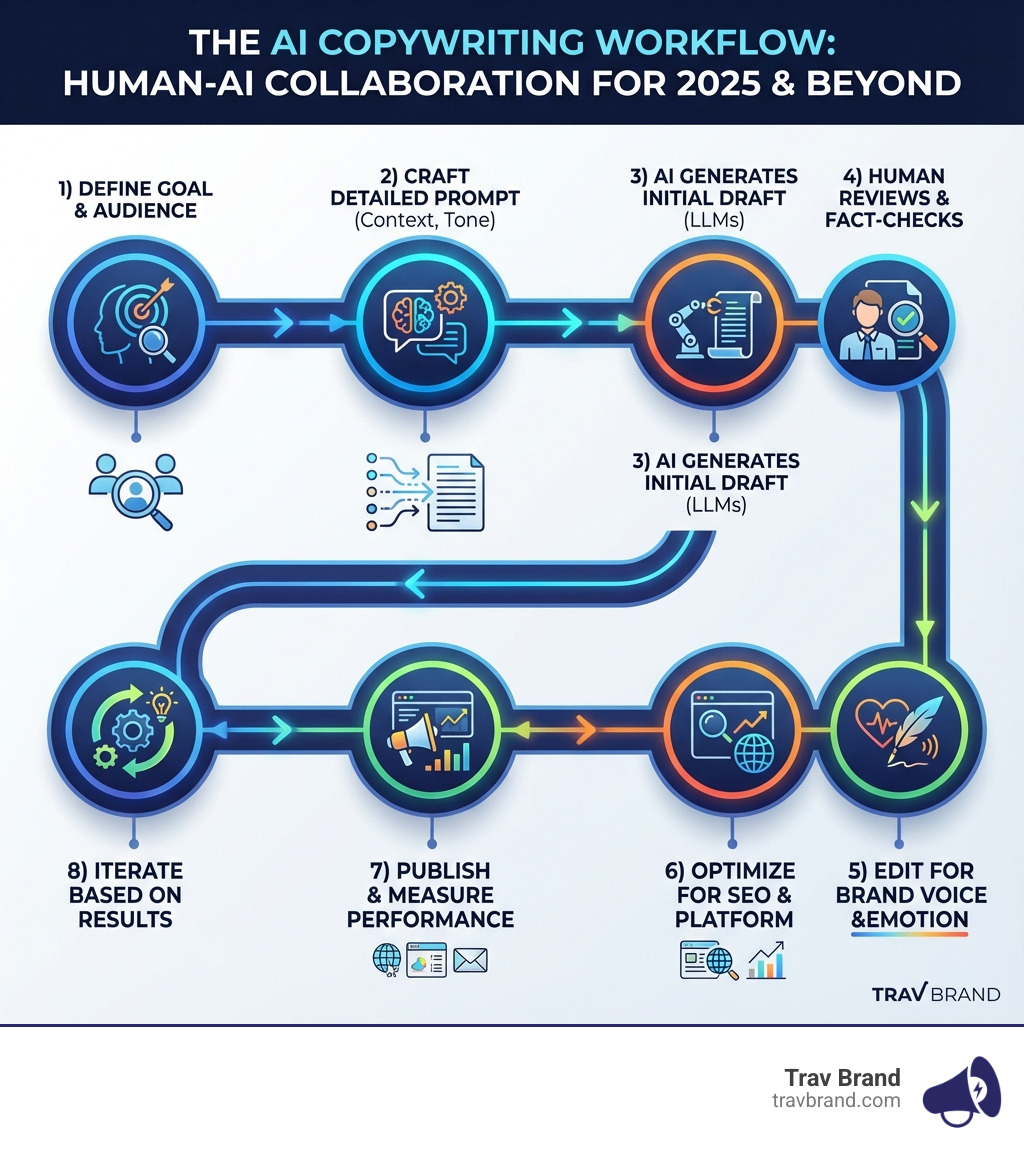
At its core, AI copywriting uses artificial intelligence software to generate or assist in creating written content. These tools are powered by Large Language Models (LLMs) like OpenAI’s GPT-4, which are trained on vast internet datasets to learn patterns, grammar, and style. When you give an AI tool a prompt, it uses Natural Language Processing (NLP) to understand your request and predicts the most probable sequence of words to generate relevant text. It’s like an incredibly advanced autocomplete that can write entire articles.
The beauty of these tools is their speed, which translates into improved efficiency, time savings, and a powerful engine for idea generation. Instead of staring at a blank page, you get a solid starting point in seconds.
The Main Benefits for Businesses and Marketers
One of the most immediate and impactful benefits of AI copywriting is overcoming writer’s block. AI tools can generate content 10x faster, changing weeks of work into mere minutes.
But it’s not just about speed. AI tools empower us to:
- Overcome Writer’s Block: They provide instant drafts, outlines, or ideas, giving us a springboard when creativity wanes.
- Generate A/B Testing Variations: Need five different headlines for an ad campaign? AI can whip them up in a flash, allowing us to test and optimize quickly.
- Scale Content Production: Whether it’s product descriptions for an e-commerce store or social media updates for multiple platforms, AI helps us produce a high volume of content without a massive team.
- Maintain Consistency: With features like brand voice training, AI can help ensure our messaging remains consistent across all content, a huge win for brand identity.
- Democratize Content Creation: Small businesses and individuals can leverage these powerful tools without needing a large marketing budget.
It’s no wonder that a whopping 85% of marketers now use AI writing tools. We’re embracing this technology because it fundamentally changes how we approach content creation, making us more efficient and effective.
Types of Content You Can Create
The versatility of AI copy tools is truly impressive. They aren’t limited to one type of content; instead, they’re like a Swiss Army knife for all our writing needs. We can use them to generate a vast array of content, including:
- Blog Posts: From brainstorming topics and outlines to drafting full articles, AI can kickstart our blogging efforts.
- Social Media Captions: Need engaging text for Instagram, Facebook, or LinkedIn? AI can generate options with different tones and lengths.
- Ad Copy: Crafting compelling headlines and body text for digital ads (like Meta ads) becomes much faster with AI, allowing for rapid A/B testing.
- Email Campaigns: Welcome sequences, promotional emails, newsletters – AI can draft effective copy that resonates with our audience.
- Product Descriptions: For e-commerce businesses, AI can generate unique, enticing descriptions for hundreds of products quickly.
- Landing Page Copy: We can use AI to write persuasive copy that guides visitors towards conversion.
- SEO Meta Titles and Descriptions: AI helps us create SEO-friendly metadata that improves search visibility.
- Video Scripts: Whether it’s for YouTube, TikTok, or explainer videos, AI can help structure narratives and write dialogue.
- Website Copy: Everything from “About Us” pages to service descriptions can get an AI boost.
Essentially, if it involves written words, there’s a good chance an AI copywriting tool can help us create it.
How to Generate High-Quality AI Copy: A Practical Guide
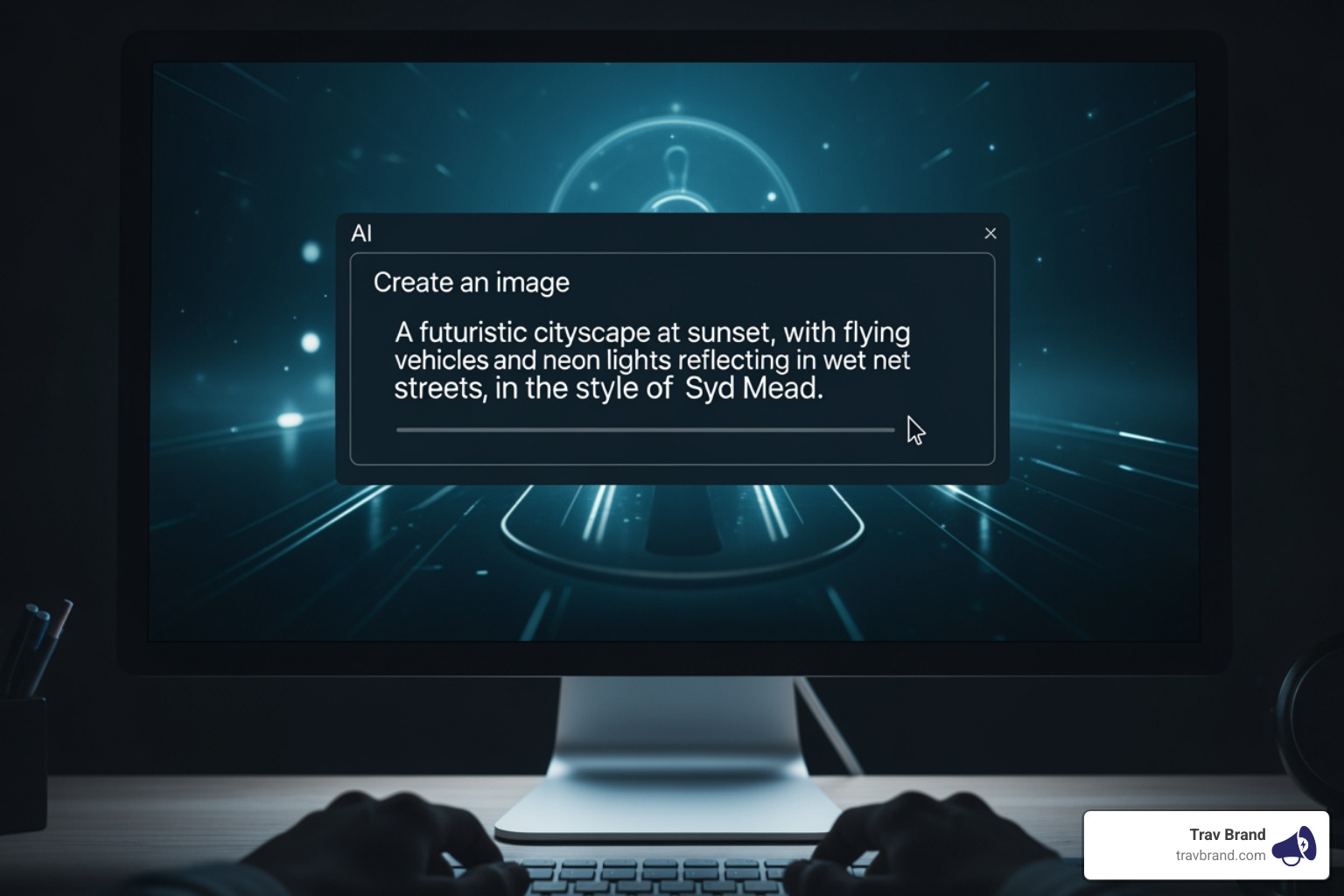
While AI copy tools are powerful, they’re not magic. The quality of their output heavily depends on the quality of our input. Think of AI as a highly skilled but literal-minded assistant. We need to guide it with clear, precise instructions, and then refine its work. This is what we call a “human-in-the-loop” workflow, where AI acts as a creative sidekick, not a replacement. The key to success lies in prompt engineering and iterative refinement.
Step 1: Crafting Effective Prompts
This is arguably the most crucial step. If we put “garbage in,” we’ll get “garbage out.” To get the best results from our AI copywriting tools, we need to be masters of the prompt. Here’s how we approach it:
- Specificity is King: Instead of “Write about marketing,” try “Write a 200-word engaging blog post introduction about the benefits of AI in e-commerce content marketing for small business owners.” The more detail we provide, the better the AI can understand our intent.
- Provide Context: Give the AI background information. Who are we, what’s our brand about, what’s the purpose of this content? For example, if we’re generating social media posts for a new eco-friendly skincare line, we’d tell the AI about the brand’s values and target audience.
- Define Your Audience: Who are we writing for? Are they busy parents looking for convenience or tech enthusiasts who value innovation? Understanding our target audience helps the AI tailor the tone, messaging, and language.
- Set the Tone of Voice: Do we want the copy to be casual and playful, or professional and polished? Explicitly state the desired tone (e.g., “Write in a witty, encouraging, yet informative tone”). Some tools even allow us to train them on our specific brand voice by providing existing copy examples.
- Provide Examples: If we have a style guide or previous content we like, we can include snippets as examples for the AI to emulate. For brand voice training, Copy.ai recommends inputting at least 300 words of existing content (social media posts, blog posts, emails) for the AI to analyze.
- Ask for Structure: Don’t just ask for an article; ask for an article with an introduction, three main points with subheadings, and a conclusion. This helps the AI organize its thoughts.
- Iterative Refinement: Our first prompt might not yield perfect results. That’s okay! We treat it as a conversation. If the output isn’t quite right, we give follow-up instructions: “Make it shorter,” “Add a call to action,” “Focus more on the benefits for busy entrepreneurs.”
By mastering prompt engineering, we transform the AI from a simple text generator into a powerful content creation partner.
Step 2: Editing and Humanizing the Output
Once the AI has generated its draft, our work isn’t over. In fact, this is where the human touch becomes indispensable. We always remember that AI synthesizes data; it doesn’t truly “think” or understand the big picture, emotion, or truth.
- Fact-Checking is Non-Negotiable: AI models can “hallucinate” or invent facts. For example, studies found that AI-generated fake scientific abstracts fooled human reviewers 32% of the time. We must verify every statistic and claim to protect our brand’s reputation.
- Verifying Statistics: If the AI provides numbers, we trace them back to their source. If no source is given, we find a credible one or remove the statistic.
- Adding Brand Voice: Even with brand voice training, AI’s output might still feel a bit generic. We inject our unique brand personality, specific jargon (or lack thereof), and stylistic nuances. This is where we make the AI copy unmistakably “us.”
- Injecting Emotion and Storytelling: AI struggles with genuine empathy and deep emotional resonance. Human copywriters excel at this. We review the copy to ensure it connects with our audience on an emotional level, tells a compelling story, and addresses their pain points and desires authentically.
- Improving Flow and Readability: AI-generated text can be clunky or repetitive. We smooth out transitions and vary sentence structure to ensure the copy flows naturally. Since 79% of Shopify’s traffic is mobile, easy-to-read content is crucial.
Our goal isn’t just to accept the AI’s output; it’s to polish it like we would a human draft: cut the fluff, check the tone, and add brand-specific flair. We start with the AI, and we finish with our voice.
Step 3: Integrating AI into Your Content Workflow
The true power of AI copy emerges when we seamlessly integrate it into our existing content creation workflows. It’s not about replacing steps, but enhancing them. Here’s how we do it:
- Ideation and Brainstorming: We kick off projects by asking AI to generate blog topics, video ideas, or campaign angles based on keywords and audience insights. This helps us defeat writer’s block and explore new creative avenues.
- Research Assistance: AI can summarize long articles, reports, or customer feedback, giving us quick access to information. For example, we can drop 50 customer reviews into an AI tool and ask it to cluster and summarize themes, providing actionable insights for our marketing.
- Drafting Outlines and First Drafts: Instead of starting from scratch, we use AI to create detailed outlines or generate initial drafts for blog posts, email sequences, or landing pages. This provides a solid foundation for our human writers to build upon.
- Optimizing for SEO: AI can help us integrate keywords naturally, suggest SEO-friendly titles and meta descriptions, and even analyze content for readability. Some tools can turn keywords into well-researched, SEO-optimized articles, streamlining our SEO efforts.
- Repurposing Content: We leverage AI to transform long-form content (like a webinar transcript) into short-form social media posts, email snippets, or video scripts. This maximizes the reach and longevity of our content assets.
- Social Media Management: AI can generate captions for every social media network, suggest content ideas, and even help us craft timely posts for holidays or events. Tools like Hootsuite’s OwlyWriter AI use AI to create ready-to-publish social media content in minutes.
By strategically weaving AI into each phase of our content lifecycle—from ideation and creation to optimization and distribution—we streamline our processes and free up our creative team for higher-value work.
The Human vs. AI Debate: Finding the Perfect Balance

The rise of AI copy has sparked a lively debate: will AI replace human copywriters? Our answer is a resounding “no.” We see it not as a competition, but as a collaboration. The optimal balance lies in leveraging AI for its incredible efficiency while preserving and amplifying human creativity and strategic thinking. It’s about using AI to lift our work, not diminish it.
Overcoming the Limitations of AI Copy
While AI tools are powerful, they come with inherent limitations that we must acknowledge and actively overcome. They are fantastic at processing data and generating text based on patterns, but they don’t possess true consciousness or understanding.
- Lack of True Creativity and Originality: AI can generate novel combinations of words, but it doesn’t “invent” in the human sense. Its creativity is derivative, based on its training data. It can’t spontaneously come up with a truly groundbreaking campaign concept or a deeply emotional narrative that hasn’t been seen before.
- No Emotional Intelligence or Empathy: AI doesn’t feel. It can mimic emotional language, but it doesn’t understand the nuances of human emotion, cultural sensitivities, or the subtle subtexts that drive human connection. This is why AI-generated content can often sound generic or robotic.
- No Strategic Understanding: AI can follow instructions to generate content, but it doesn’t grasp the overarching marketing strategy, the long-term brand vision, or the complex psychology of the target audience in the same way a human strategist does. It’s a tool, not a strategist.
- Potential for Generic Output: Without careful prompting and human editing, AI tends to produce safe, middle-of-the-road content. It lacks the distinctive voice, personality, and daring that often make human-written copy stand out.
- Fact-Checking is Essential: As we’ve discussed, AI can “hallucinate” facts. Relying on its output without rigorous fact-checking is a recipe for disaster and can severely damage brand credibility.
We often think of AI as a highly knowledgeable but literal-minded intern. It can draft quickly, but it lacks human-level understanding of strategy, emotion, or truth. Our role is to provide the strategic direction, the emotional intelligence, and the critical oversight.
Why Human Copywriters are Irreplaceable
Despite the incredible advancements in AI copy, human copywriters remain the indispensable architects of compelling brand narratives. Their unique abilities cannot be replicated by algorithms:
- Empathy and Emotional Connection: Humans understand humans. We can tap into the hopes, fears, and desires of an audience, crafting messages that resonate deeply and forge genuine emotional connections. This is crucial for building loyalty and trust.
- Brand Storytelling and Voice: A brand isn’t just products; it’s a story, a personality, a set of values. Human copywriters are master storytellers who can articulate this unique brand voice, ensuring every piece of content reflects the brand’s soul and builds a consistent narrative over time. This foundational work is part of our Brand Creation Strategy at Trav Brand.
- Building Audience Relationships: Effective copy isn’t just about selling; it’s about building relationships. Humans can understand nuances, respond to feedback with genuine insight, and adapt communication in ways that foster long-term engagement. Even the world’s most powerful AI can’t replace a human’s relationship-building power.
- Strategic Planning and Nuanced Creativity: Human copywriters bring strategic thinking, market insights, and a deep understanding of human psychology to the table. They can conceive innovative campaign ideas, adapt to unforeseen market shifts, and inject the kind of nuanced creativity that drives truly impactful results. They define the “why” and the “what” before AI handles the “how.”
AI is a fantastic tool for efficiency, but it’s the human mind that provides the vision, the heart, and the strategic brilliance that differentiates a truly great brand.
Navigating the Risks and Future of AI Copywriting
The landscape of AI copy is evolving at a breakneck pace, bringing with it both exciting possibilities and significant challenges. As we accept these tools, we must also be mindful of the ethical considerations, potential risks, and the trajectory of their future development.
Ethical and SEO Risks of AI-Generated Content
While AI offers immense benefits, we must tread carefully to avoid pitfalls that could harm our brand and our audience.
- Plagiarism and Originality: Although AI tools don’t technically plagiarize in the traditional sense, their output can, by chance, match existing content, leading to accusations of unoriginality. We must always use plagiarism checkers and ensure our AI copy is unique.
- Transparency and Trust: Misleading audiences by presenting AI-generated content as purely human-created can erode trust. Transparency, especially in sensitive contexts, is crucial. We consider whether using AI for a particular piece of content aligns with our brand’s values and ethical guidelines.
- Data Security and Privacy: When inputting information into AI tools, especially online services, we must be cautious about sensitive or proprietary data. We choose tools with robust privacy policies and understand how our data is used.
- Google’s Stance on Helpful Content: Search engines, particularly Google, are constantly refining their policies to weed out “low-quality content.” Google is actively looking to determine if pages contain unedited AI content or feel like they were created solely for search engines rather than people. This means that relying on low-quality, unedited AI content is an SEO risk. Our focus must always be on creating helpful, high-quality, and authentic content, regardless of the tools we use.
- Brand Reputation: The consequences of AI “hallucinating” facts, generating off-brand messaging, or creating discriminatory language can be severe. A single misstep can damage a brand’s reputation, which takes years to build and moments to shatter.
Our responsibility is to ensure that AI is used ethically, transparently, and in a way that always serves our audience and upholds our brand’s integrity.
The Future of AI Copy and Content Marketing
The future of AI copy is not just about generating text; it’s about deeply integrating AI into every facet of our content and marketing ecosystems. We’re moving towards a world where AI is the backbone of efficient, data-driven systems.
- Full Workflow Integration: We’ll see AI evolve from standalone tools to full-fledged workflow components. This means AI-native Go-To-Market (GTM) platforms that unify data, connect teams, and codify best practices across prospecting, content creation, lead processing, and more. The idea is to eliminate “GTM bloat” caused by fragmented point solutions and achieve true “velocity.”
- Hyper-Personalization and Real-time Optimization: AI will enable us to deliver hyper-personalized content experiences at scale. By analyzing vast amounts of customer data, AI can tailor messages, offers, and even entire content journeys to individual preferences in real-time, leading to significantly higher engagement and conversion rates.
- AI-Powered Community Management: AI will play an increasing role in fostering brand loyalty through community building. It can analyze discussions, identify key sentiment, and even help moderate conversations, allowing brands to create more engaging and responsive community spaces.
- AI for Customer Feedback Analysis: As we’ve learned, AI can transform raw customer feedback into actionable insights. In the future, this will become even more sophisticated, with AI continuously analyzing reviews, surveys, and chat logs to identify buying triggers, objections, desired outcomes, and emotional tones, allowing us to adapt our marketing strategies in real-time.
The brands that will thrive in this future are those that view AI not as a threat, but as a powerful amplifier for human ingenuity, enabling us to scale our efforts while maintaining authenticity and strategic depth.
Frequently Asked Questions about AI Copy
Is AI going to replace human copywriters?
This is the million-dollar question, and our answer is a firm no. While AI copy tools are incredibly powerful and can handle a lot of the grunt work, they aren’t replacing human copywriters. Instead, they are augmenting our skills. Smart marketers and copywriters use AI software to take care of smaller tasks—like idea generation, research summarization, and initial drafting—so they can focus on higher-value activities.
This includes crafting engaging narratives, injecting true emotional intelligence, ensuring brand voice consistency, and devising overarching content strategies. AI is a tool that improves productivity and creativity, allowing human experts to focus on the strategic and empathetic aspects that only humans can provide.
Is using AI for copywriting legal?
Yes, generally speaking, using AI for copywriting is legal. However, there are important caveats we must always consider. The content generated by AI is based on patterns learned from vast datasets, which means it can, by chance, produce text that is very similar to existing copyrighted material. This is why we always recommend running AI-generated content through a plagiarism checker.
The responsibility for the content’s originality and adherence to copyright laws lies with the user. We must also be mindful of data privacy regulations when inputting information into AI tools and ensure we’re not infringing on anyone else’s rights.
How do I choose the right AI copywriting tool?
With so many AI copy tools flooding the market, choosing the right one can feel overwhelming. Here’s what we look for:
- Features and Templates: Does it offer the specific content types we need (e.g., ad copy, blog posts, product descriptions)? Some tools boast over 90 templates, while others might offer fewer but more specialized options.
- Brand Voice Customization: Can the tool be trained on our specific brand voice to ensure consistency? This is a huge differentiator for maintaining brand identity.
- Integrations: Does it integrate with our existing workflow tools (e.g., social media schedulers, SEO platforms, CRM)? A tool that works seamlessly with our tech stack is invaluable.
- Language Support: If we operate in multiple markets, does it support the necessary languages (some tools support over 25 or even 60 languages)?
- Ease of Use: Is the interface intuitive and user-friendly? We want a tool that improves efficiency, not complicates our lives.
- Security and Privacy: How does the tool handle our data? Do they have robust security measures and clear privacy policies?
- Pricing and Free Trials: Many tools offer free plans (like Copy.ai’s 2,000 words/month or Rytr’s 10,000 characters/month) or free trials (Jasper offers a 7-day trial, Writesonic and QuillBot also offer free plans). This allows us to test them out before committing.
By evaluating these factors, we can select an AI copywriting tool that truly meets our needs and helps us scale our content efforts effectively.
Conclusion: Using AI to Scale Your Content Strategy
The journey into AI copy reveals a powerful truth: artificial intelligence is not here to replace human creativity, but to amplify it. We’ve explored how AI copywriting tools work, their incredible benefits in accelerating content generation, and the diverse types of content they can produce. We’ve also highlighted the critical importance of human oversight—from crafting effective prompts and rigorous fact-checking to injecting brand voice and emotional resonance.
The future of content marketing is one where we strategically balance automation with authenticity. AI handles the heavy lifting, allowing our human teams to focus on the nuanced creativity, strategic planning, and relationship-building that truly differentiate a brand. This synergistic approach gives us a significant strategic advantage, enabling us to scale our content efforts, engage our audience more effectively, and drive measurable results.
At Trav Brand, we specialize in helping businesses integrate these powerful strategies, ensuring their content not only cuts through the noise but also builds lasting connections. Ready to transform your content creation?
Explore our content marketing services