
Walk the Talk: Elevating Your Creative Agency’s Social Media Game
Why Your Creative Agency Needs a Social Media Strategy That Actually Works
A creative agency social media strategy is no longer optional—it’s the difference between being a well-kept secret and a client acquisition engine. Too many agencies treat social media as a portfolio dump, but the ones winning have built systems that turn their social presence into measurable business growth.
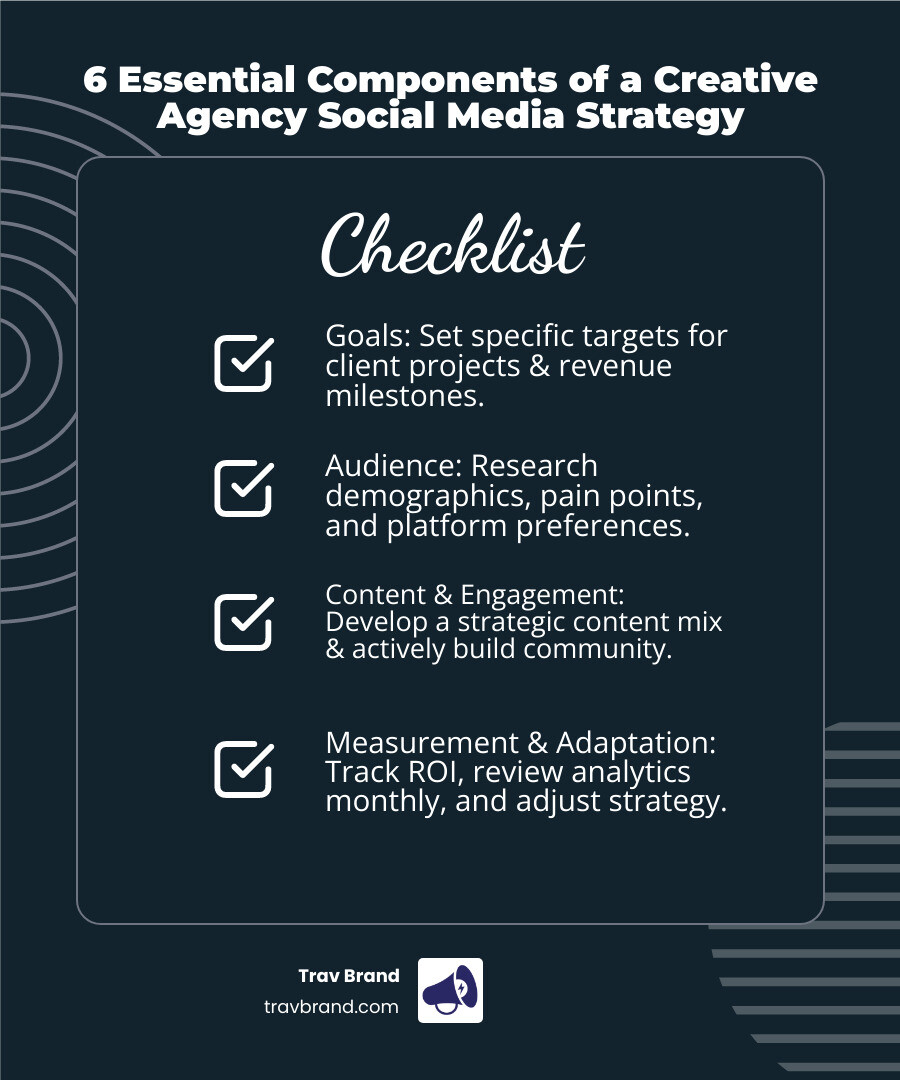
Here’s what an effective creative agency social media strategy includes:
- Clear Business Goals – Revenue targets, lead generation quotas, and brand awareness benchmarks
- Deep Audience Understanding – Customer personas, pain points, and platform preferences
- Strategic Platform Selection – Choosing where your ideal clients actually spend time (usually LinkedIn and Instagram)
- Content Blueprint – The 50/30/20 mix (educational/culture/promotional) with a consistent calendar
- Community Engagement – Active responses and relationship-building, not just broadcasting
- Performance Tracking – Real metrics tied to business outcomes, not just vanity numbers
With 71% of consumers relying on social media for purchasing decisions, this gap is critical. Most agencies know how to create stunning work for clients but fumble when it comes to their own presence.
The gap isn’t talent. It’s strategy.
I’m Trav Lubinsky, and I’ve spent over a decade building and scaling brands through strategic marketing—from launching Flex Watches to advising billion-dollar enterprises on their creative agency social media strategy. At Trav Brand, we help creative agencies transform their social presence from a cost center into a growth driver.
Laying the Strategic Foundation
Before posting, a rock-solid foundation is essential. This means strategically positioning your agency to attract the right clients, showcase creative excellence, and drive growth—like building a blueprint before pouring concrete.
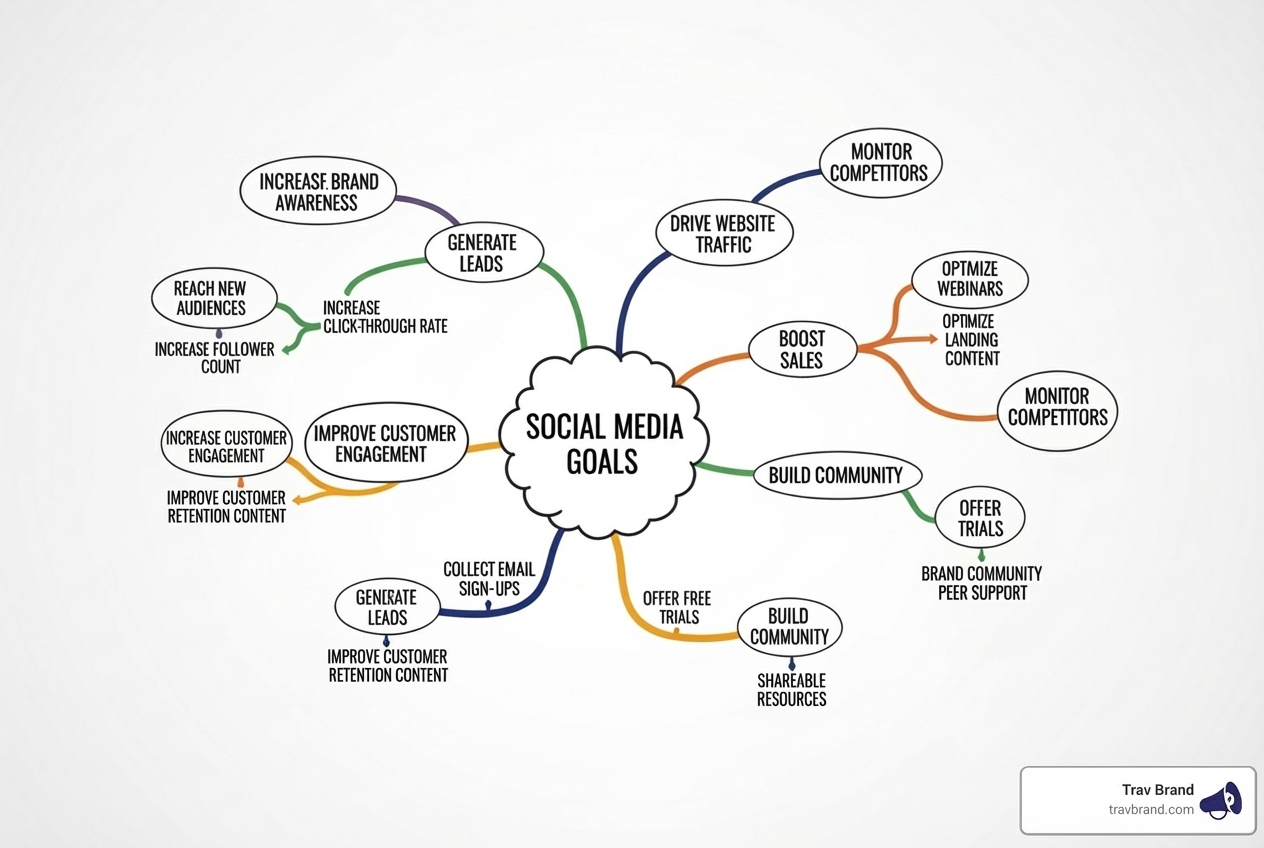
At Trav Brand, we know that a powerful creative agency social media strategy starts with clear objectives. Vague goals like “increase engagement” won’t cut it. Instead, we define SMART goals: Specific, Measurable, Achievable, Relevant, and Time-bound. For a creative agency, common primary goals include:
- Increasing Brand Awareness: Getting your agency’s name and unique creative style in front of more potential clients.
- Driving Website Traffic: Directing social media users to your portfolio, case studies, and services page.
- Generating Leads: Converting engaged social media followers into qualified prospects for your sales pipeline.
- Enhancing Customer Engagement: Building a vibrant community around your brand, fostering loyalty and advocacy.
- Establishing Thought Leadership: Positioning your agency as an authority in your niche, sharing insights and trends.
- Boosting Sales and Revenue: Directly attributing new client wins and project growth to your social media efforts.
- Conducting Market Research: Using social listening to understand industry trends and client needs.
Once we know what we want to achieve, we need to know who we’re talking to. This is where audience understanding comes in. We create detailed audience personas, delving into demographics, buying motivations, common objections, and emotional needs. 74% of people use social media when making a purchasing decision, so understanding their journey is paramount.
This deep dive into your audience will inform your platform selection. We don’t believe in being everywhere just for the sake of it. It’s far more effective to be consistently active on one or two platforms where your ideal clients are most active. For creative agencies, this often means focusing on LinkedIn for B2B connections and Instagram for visual portfolio showcasing.
Finally, we define your agency’s unique brand voice. This isn’t just about what you say, but how you say it. Your brand voice should resonate with your target audience, creating an emotional response and clearly communicating who you are and what you do. We help you develop a Brand Creation Strategy to ensure consistency across all your communications. For deeper audience insights, we often recommend looking at audience research tools.
Defining Your Goals and Audience
Let’s dive a bit deeper into setting those primary goals and truly understanding your audience. For a creative agency social media strategy, our goals should be crystal clear and tied directly to business growth. This means setting specific quarterly targets for client projects sourced through social media, defining clear revenue milestones for each service offering, and tracking conversion rates from social engagement to paid projects.
For example, a brand visibility metric might be targeting a 25% increase in engagement rates over six months. Client acquisition targets could involve defining monthly lead generation goals per social channel and establishing target conversion rates from social visitors to consultations. We track cost-per-lead across different platforms to ensure our efforts are efficient.
To know your audience, document their pain points, decision-making journeys, and platform preferences. We analyze engagement patterns to tailor our approach. This means understanding different decision-makers: Marketing Directors focus on ROI, while Creative Directors care about your design process. Your content must speak to both.
Niche specialization is also key. The more we understand the industry-specific focus of our ideal clients, the more targeted and effective our content can be. This allows us to create sector-specific content strategies and targeted case studies highlighting industry-specific wins.
Choosing Your Platforms and Defining Your Voice
Which social media platforms are most effective for creative agencies, and why? The answer isn’t “all of them.” It’s about strategically positioning your agency where your ideal clients are already spending their time. Each platform has unique strengths we can leverage:
- LinkedIn: This is your B2B powerhouse. It’s excellent for connecting with decision-makers, establishing thought leadership, and sharing detailed case studies. LinkedIn Sponsored Content can jump engagement rates by 25% when sharing detailed case studies and portfolio pieces.
- Instagram: A visual portfolio powerhouse. It’s perfect for showcasing stunning visuals, behind-the-scenes content, and connecting with art directors or potential clients looking for creative inspiration. Instagram thrives on high-quality posts and engaging Stories.
- Pinterest: While often overlooked, Pinterest drives significant traffic for design inspiration. If your agency specializes in visual branding, interior design, or product design, Pinterest can be a powerful channel for showcasing your work and driving traffic to your portfolio.
We’ve seen that design agencies typically see the strongest ROI by focusing on Instagram for visual storytelling and LinkedIn for business development. Raw user numbers don’t tell the whole story; what matters is where your target clients spend their professional time.
Once we’ve chosen our battlegrounds, we need to develop a unique tone and consistent brand voice. This means creating a brand voice guide that outlines the personality, values, and messaging style of your agency. Consistency in your brand voice and messaging across all social media platforms is crucial. It helps your audience understand who you are and builds trust. Nobody remembers the agency that says what every other agency says. Let your unique personality shine!
The Content Blueprint: From Ideation to Execution
With the strategic groundwork laid, let’s focus on the heart of your creative agency social media strategy: your content. This requires a strategic approach blending artistry with systematic execution to create compelling content that captivates clients, not just pretty pictures.

Our content strategy is built around “content pillars” – key themes that align with your agency’s expertise and your audience’s interests. This provides focus but also allows for experimentation. We then optimize your content mix using a tested formula: the 50/30/20 rule. This means roughly:
- 50% Educational Content: Sharing insights, tips, trend analyses, and thought leadership that establishes your authority.
- 30% Portfolio Highlights and Measurable Results: Showcasing your best work, client success stories, and the tangible impact you’ve made.
- 20% Culture and Behind-the-Scenes Glimpses: Humanizing your brand, sharing team spotlights, and giving a peek into your creative process.
This balanced approach provides immense value, not just self-promotion. To manage this, we advocate for content batching and a robust content calendar for consistency. We integrate this with our Strategic Marketing Content approach for maximum impact.
Developing a Content Strategy for Your Creative Agency Social Media Strategy
A successful content strategy for creative agencies combines stunning visuals with strategic storytelling. The most effective content demonstrates expertise, builds trust, and showcases results. Here are some high-impact ideas:
- High-Impact Portfolio Showcases with Strategic Storytelling: Don’t just post a final design. Tell the story behind it. What was the client’s challenge? What was your creative process? What measurable results did it achieve? Case studies featuring measurable client success metrics build immense trust.
- Before-and-After Changes: People love to see the journey! Before-and-after changes typically see 2-3x higher engagement than standard posts. Show the problem, then your brilliant solution.
- Behind-the-Scenes (BTS) Content: This humanizes your brand and builds authentic connections. Agencies typically see 3x higher engagement when showcasing behind-the-scenes content compared to finished work alone. Think time-lapse videos of your team collaborating, quick snippets of your creative director explaining a concept, or a peek into your brainstorming sessions.
- Design Process Reveals: Transform complex projects into digestible stories. Break down a branding project into key phases (mood boards, client feedback, final design) and present it as a series of posts or a carousel. This demonstrates your expertise and transparency.
- Video Content: Video consistently delivers 20-30% higher engagement rates across platforms. Use short videos to share insights, showcase capabilities, or explain a design concept. Motion design studios often find their groove on Instagram Reels or TikTok.
This diverse content approach ensures a rich and engaging feed that consistently attracts and converts high-value clients.
Balancing Your Content and Planning Your Calendar
Balancing promotional content with educational and engaging content is crucial for a thriving social media presence. The 50/30/20 rule (50% educational, 30% culture/process insights, 20% service promotion) helps us establish authority and build trust first, then strategically promote our services. This approach allows us to convert engagement into client relationships naturally.
A robust content calendar is key to effective planning. It ensures consistent messaging and reduces stress. Here’s how we approach it:
- Smart Posting Frequency: Consistency is more important than sheer volume. We recommend:
- Instagram: 4-5 thoughtfully crafted posts per week, paired with 1-2 engaging Stories daily.
- LinkedIn: 2-3 substantial posts weekly. LinkedIn audiences respond best to quality over quantity.
- Facebook: 3-4 well-timed weekly posts.
- X (formerly Twitter): 3-4 strategic tweets daily to maintain visibility in its environment.
- TikTok: 1-4 posts per day if it’s a core platform for your audience, leveraging short-form video.
- Optimal Posting Times: While general benchmarks exist (e.g., LinkedIn posts peak Tuesday-Thursday, 9 am-2 pm; Instagram sweet spots tend to be 6 pm-9 pm), we always test and adjust based on your specific audience’s activity.
- Content Batching: We encourage creating content in batches. Dedicate specific days to content creation, photography, or video editing. This streamlines your workflow and ensures a steady supply of high-quality posts.
- Scheduling Tools: Use social media management tools to schedule posts in advance. This frees up your team’s time for real-time engagement and creative work.
By planning your content carefully and adhering to a consistent schedule, you avoid sending mixed messages and ensure your creative agency social media strategy maintains its momentum.
Mastering Your Creative Agency Social Media Strategy: Engagement, Amplification, and Partnerships
Creating brilliant content is only half the battle. The other half is ensuring it reaches the right people, sparks conversations, and ultimately drives business. This section focuses on how we amplify your message through genuine community engagement, strategic paid advertising, and powerful partnerships.
At Trav Brand, we believe in turning your social media channels into vibrant communities, not just broadcasting stations. We also leverage the power of paid amplification to ensure your message cuts through the noise. And sometimes, the best way to grow is to partner with others who share your vision. This comprehensive approach aligns with our philosophy of Maximizing Your Return on Ad Spend (ROAS): The Content Marketing Advantage.
Community Engagement and Paid Amplification
What are the best practices for community engagement on social media for creative agencies? It’s all about genuine interaction. We encourage daily engagement practices that build relationships:
- Protect the First Hour: The hour after you post is critical. Dedicate it to replying to comments and messages. This sends strong quality signals to algorithms and keeps your post alive longer. We’ve seen that replying to comments on Threads can lead to up to 42% higher engagement, LinkedIn around 30%, and Instagram around 21%.
- Timely Response Protocols: Aim to address comments and messages within four hours during business hours. This shows you value your audience.
- Spark Conversations: Don’t just answer questions; ask follow-up questions. Use polls, quizzes, and open-ended questions related to design trends or creative challenges to fuel meaningful discussions.
- Turn Comments into Content: Repeated questions in your DMs or comments section are gold. Turn them into new posts, FAQs, or quick video explainers.
Now, let’s talk about paid social advertising. While organic reach is vital, paid amplification is how we strategically amplify your reach and generate leads. Here’s how we leverage it:
- Smart Budget Allocation: For B2B-focused creative agencies, we often recommend allocating around 60% of your paid social budget to LinkedIn, 30% to Instagram, and 10% for experimental platforms. Starting with $20-50 daily per platform allows for data gathering and optimization.
- Laser-Focused Targeting: We build custom audiences around specific job titles (e.g., Marketing Directors, Brand Managers, Creative Directors), company sizes (50+ employees), and industry verticals (Technology, Retail, Professional Services).
- Platform-Specific Ad Formats:
- LinkedIn Sponsored Content: Perfect for sharing detailed case studies, thought leadership articles, and portfolio pieces to a professional audience. These can jump engagement rates by 25%.
- Instagram Stories Ads: Gives glimpses into your creative process, showcases quick before-and-afters, or promotes time-sensitive offers.
- A/B Testing Creatives: We continuously test different ad creatives, copy, and calls-to-action to identify what resonates best with your target audience and drives the highest ROI.
The Role of Influencers and Strategic Partnerships
What role does influencer marketing play in a creative agency’s social media strategy? It’s not about mega-influencers; it’s about niche influencers who genuinely connect with your target clients. Think industry experts, marketing podcasters, or respected design bloggers whose audience aligns with your ideal client profile. The goal is storytelling and credibility building, not overt self-promotion. We collaborate with industry pros on LinkedIn to break down case studies and trends, or engage marketing voices on X to spark viral conversations.
The benefits for a creative agency to partner with a specialized social media agency like Trav Brand are immense. Managing social media in-house often starts as a reasonable approach—until you realize the complexity involved. Creating engaging social content demands 10-15 hours per week, and that’s before diving into strategy development or analytics.
At Trav Brand, we bring:
- Unrivaled Expertise: Our team has deep knowledge of platform algorithms, trending content styles, and data-driven strategies that go far beyond just posting content.
- Efficiency and Scale: We streamline your social media operations, allowing your creative team to focus on what they do best: creating exceptional work for clients.
- Fresh Perspectives: We offer an outside-in view, identifying opportunities and avoiding costly guesswork.
- Measurable Growth: We focus on delivering tangible results, changing your social presence into a powerful client acquisition engine.
We pride ourselves on being more than just a vendor; we become an extension of your team. Explore our full range of Services to see how we can lift your social media game.
Measuring What Matters: Proving ROI and Adapting Your Strategy
Setting goals, crafting content, and engaging your audience are crucial, but proving effectiveness is what matters. In a creative agency social media strategy, measurement isn’t an afterthought; it’s the engine for continuous improvement. As the saying goes, “You can’t improve what you don’t measure.”
The reality is, 71% of consumers rely on social media to guide purchasing decisions, so your efforts are influencing real business outcomes. We approach social media performance with the same rigor we apply to all our client work, ensuring that every effort translates into demonstrable value. Our Case Studies show how we achieve this.
Key Metrics to Monitor for Social Media Success
To demonstrate ROI, creative agencies must track performance beyond vanity metrics like follower count alone. We focus on what truly impacts your bottom line. Here are the key metrics we monitor:
- Engagement Rate: This includes post saves, quality comments, strategic shares, and profile visits. We aim for 3-5% on Instagram and 2% on LinkedIn, as these indicate genuine interest.
- Website Traffic: Track how many users are clicking through from your social media posts to your website. We use UTM parameters in all social links to accurately measure traffic quality and source.
- Lead Generation: Monitor profile visit patterns, website click-through rates, and inquiry form completion rates that originate from social media.
- Conversion Tracking: This is where we connect social efforts to business outcomes. We track lead progression through sales stages, platform-specific conversion rates, and ultimately, ROI per social channel.
- Audience Growth Rate: While not purely a vanity metric, consistent, organic growth indicates your content is resonating.
- Click-Through Rates (CTR): Especially important for posts designed to drive traffic or leads, indicating how compelling your call-to-action is.
These metrics allow us to assess social media success and understand what resonates with your audience.
Measuring the ROI of Your Creative Agency Social Media Strategy
Demonstrating ROI for a creative agency social media strategy requires a sophisticated approach. We use attribution modeling to connect every social touchpoint to a measurable business outcome. This involves:
- Connecting Social Efforts to Business Outcomes: We link social media engagement and lead generation directly to new client acquisitions and project value. This means tracking leads from their first social interaction all the way through to signed contracts.
- Client Lifetime Value (CLTV): We calculate the CLTV generated from social media-acquired clients against your social media investment. This provides a long-term view of profitability.
- Cost-Per-Lead (CPL): We continuously optimize our paid social efforts to reduce the CPL, ensuring efficient lead generation.
- Reporting to Stakeholders: We provide clear, data-driven reports that highlight the business impact of your social media strategy, not just superficial metrics. This helps explain your social media efforts to higher-ups and secure continued investment.
How can creative agencies adapt their social media strategy in response to changing trends and platform algorithms? Our strategy is a living document. We perform monthly data analysis to reveal peak audience activity windows, top-performing content categories, and platform-specific engagement trends. This allows us to implement adjustment protocols, such as:
- Content Mix Optimization: Shifting the 50/30/20 balance based on what’s performing best.
- Posting Schedule Refinement: Adjusting times and frequencies based on audience behavior.
- Audience Targeting Improvements: Fine-tuning who we’re reaching with both organic and paid efforts.
We also engage in growth optimization, balancing proven tactics with strategic experimentation, including A/B testing new content formats and early adoption of platform innovations. In today’s digital environment, success comes from vigilant metric monitoring, swift strategic adjustments, and a commitment to data-driven improvement.
Frequently Asked Questions about Creative Agency Social Media
We often hear similar questions from creative agencies looking to lift their social media game. Here are some of the most common, answered with our strategic insights:
How often should a creative agency post on social media?
Consistency is key, but the exact frequency varies by platform and audience. It’s better to be consistently active on one or two platforms than sporadically on all. Our recommendations are:
- Instagram: Aim for 4-5 high-quality posts weekly, paired with 1-2 engaging Stories daily. This keeps your visual portfolio fresh and maintains visibility.
- LinkedIn: Focus on 2-3 substantial, strategic business updates per week. LinkedIn audiences value quality over quantity, so thought leadership and detailed case studies perform well.
- Other Platforms (e.g., Facebook, X, TikTok): If these are relevant to your target audience, adjust accordingly (e.g., 3-4 strategic tweets daily, 1-4 TikToks daily).
Monitor your analytics and adjust based on when your specific audience is most active and engaged. The goal is to create a sustainable rhythm that you can maintain, as algorithms reward stable posting behavior.
What type of content performs best for creative agencies?
The content that performs best for creative agencies is a blend of showing expertise, humanizing your brand, and demonstrating tangible results. Based on our experience and industry data:
- Behind-the-Scenes (BTS) Content: This consistently sees higher engagement. Agencies typically see 3x higher engagement when showcasing behind-the-scenes content compared to finished work alone. It builds authentic connections and shows your creative process.
- Video Content: Video consistently delivers 20-30% higher engagement rates across platforms. Short-form videos showcasing your work, explaining concepts, or sharing insights are highly effective.
- High-Impact Portfolio Showcases with Storytelling: Don’t just post a pretty picture. Tell the story behind the project – the client’s challenge, your solution, and the measurable impact.
- Case Studies with Measurable Results: Detailed case studies that highlight client success metrics are powerful. For B2B, LinkedIn Sponsored Content engagement rates can jump 25% when sharing these.
- Before-and-After Changes: These are incredibly engaging, typically seeing 2-3x higher engagement than standard posts. They visually demonstrate your value.
How can agencies balance promotional content with educational content?
The key to a successful creative agency social media strategy is not to be constantly selling. We recommend the 50/30/20 content mix optimization rule:
- 50% Educational Content: This builds your authority and provides value to your audience. Share design tips, industry trend analyses, creative insights, and thought leadership pieces. This establishes trust and positions your agency as a go-to resource.
- 30% Culture and Process Insights: This humanizes your brand. Share behind-the-scenes glimpses, team spotlights, creative process reveals, and insights into your agency’s culture. This fosters connection and makes your brand relatable.
- 20% Service Promotion: This is where you subtly promote your services, highlight portfolio work with calls-to-action, share client testimonials, and announce new offerings. This content is strategic and aims to convert the trust and engagement you’ve built into client relationships.
By focusing on providing value first, you build a loyal audience that is more receptive when you do promote your services. It’s about building trust and demonstrating expertise before asking for the business.
Conclusion
Walking the talk on social media isn’t just a catchy phrase; it’s a strategic imperative for every creative agency looking to thrive in today’s digital landscape. Your creative agency social media strategy should be a dynamic, data-driven engine that fuels client acquisition, builds brand authority, and showcases your creative brilliance to the world.
We’ve explored how a blend of strategic precision, compelling content, genuine engagement, and continuous adaptation can transform your social presence. From setting SMART goals and understanding your audience intimately, to crafting a balanced content blueprint and leveraging paid amplification, every step is designed to drive measurable results.
At Trav Brand, we believe that outstanding agencies combine creativity with strategic precision. We don’t just advise; we partner with you to implement and optimize your social media efforts, ensuring your digital footprint is as impactful as your creative output. Ready to stop guessing and start growing? Find how Trav Brand can be your comprehensive brand marketing partner and lift your social media game.
Welcome to Trav Brand: Your Comprehensive Brand Marketing Partner