Boost Your ROI: The Art of Optimizing Content for Sales and Leads
Why Traffic Without Conversions is Costing You Money
Optimize content for conversions means changing your existing blog posts, landing pages, and marketing materials into revenue-generating assets through strategic improvements to messaging, design, and user experience. Here’s what it involves:
- Target high-intent keywords that signal buying readiness (converting 2400% better than awareness-stage terms)
- Address customer pain points directly in your content and show how you solve them
- Optimize calls-to-action (CTAs) with clear, compelling copy and strategic placement
- Improve page speed and mobile experience to reduce bounce rates
- Use social proof like reviews and testimonials (visitors who engage with reviews are 58% more likely to convert)
- Test and refine continuously using A/B tests and analytics data
Most businesses focus on driving traffic. They invest thousands in ads, SEO, and social media to get visitors to their site. But traffic alone doesn’t pay the bills.
The real challenge? Turning those visitors into customers.
If 1,000 people visit your site but only 10 take action, you’re leaving money on the table. The average website conversion rate sits at just 3.68%. That means for every 100 visitors, roughly 96 leave without converting.
Content optimization bridges this gap. It’s not about creating more content—it’s about making your existing content work harder. Small changes to headlines, CTAs, or page layout can dramatically impact your bottom line. HubSpot saw organic views grow by 106% on optimized posts and more than doubled monthly leads from older content.
I’m Trav Lubinsky, and over the past decade I’ve helped brands from billion-dollar enterprises to high-growth startups optimize content for conversions through strategic brand development and performance marketing. At Trav Brand, we’ve applied these principles across e-commerce, consumer products, and digital marketing to turn traffic into measurable revenue.
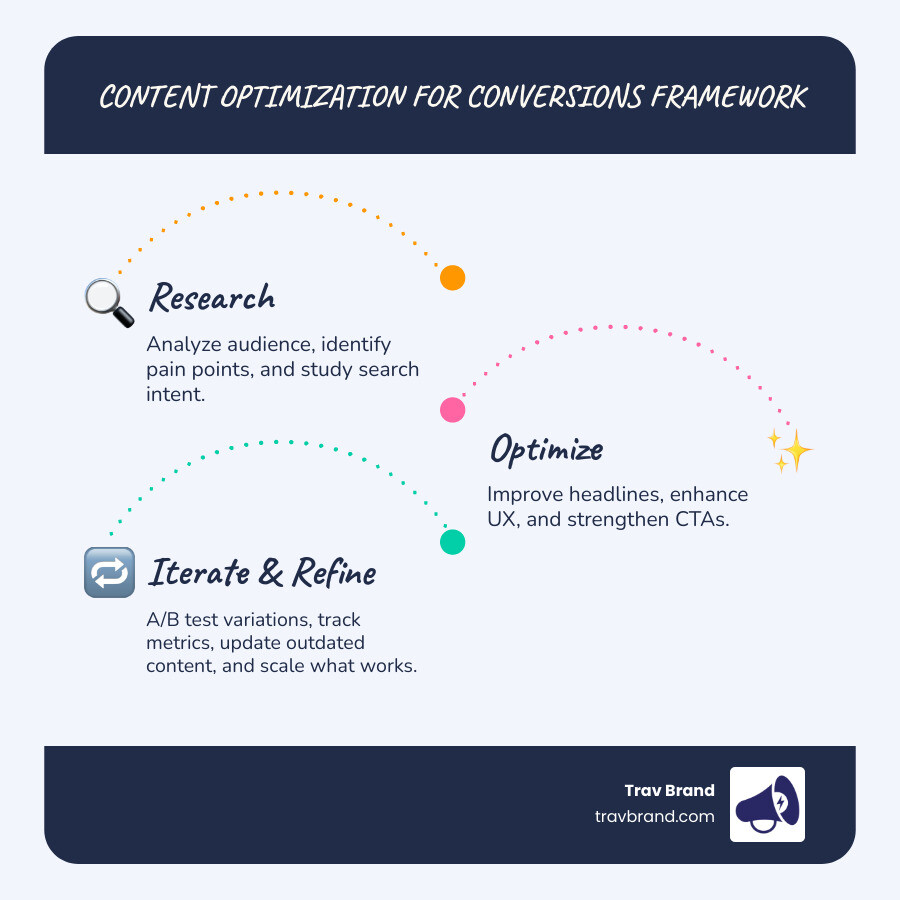
The Foundation: Aligning Content with Buyer Intent and Journey
Before we even think about tweaking a headline or changing a button color, we need to understand the fundamental purpose of our content: who is it for, what problem does it solve, and where are they in their journey? This is where strategic alignment becomes our North Star for successful content optimization.
The B2B buying journey, for instance, can be complex and span months, involving multiple stakeholders and touchpoints. To effectively optimize content for conversions, we must map our content to these stages, providing value at each step. This means understanding the different goals for content at the top, middle, and bottom of the funnel.
- Top of the Funnel (TOFU): Here, the goal is to attract a wide audience and increase site visitors. Content focuses on problem awareness and general education, often through SEO or PPC campaigns.
- Middle of the Funnel (MOFU): As prospects move into consideration, our content aims to nurture them. This might involve optimizing automated email campaigns to deliver relevant assets, like an e-book after a webinar.
- Bottom of the Funnel (BOFU): At this stage, content is designed to convert. We modify assets like case studies to highlight specific pain points and solutions, guiding prospects toward a purchase decision.
By aligning content with the buyer’s needs at each stage, we significantly increase the likelihood of a sale. It helps our sales teams provide the right content at the right time, leading to more relevant engagements.
How to identify and address customer pain points
Customers don’t buy products or services; they buy solutions to their problems. Identifying and addressing these “pain points” is crucial for content that converts. So, how do we get inside our customers’ heads?
- Keyword research: This isn’t just about finding popular terms; it’s about uncovering what problems people are actively searching for. What questions do they ask? What challenges do they describe? Tools like Ahrefs’ “parent topic” feature and Google’s People Also Ask (PAA) tool can reveal common concerns.
- Customer feedback: The best insights often come directly from our customers. We regularly review surveys, social media comments, and product reviews to identify recurring issues. We also encourage our sales and customer service teams to share common questions and complaints they receive.
- Social media monitoring: Beyond our own channels, we browse forums and communities where our target audience discusses their problems. This helps us stay on top of trends and identify unmet needs.
- Using surveys: On-site surveys can capture feedback from visitors who might not convert, asking them why they didn’t find what they were looking for. Customer surveys, when thoughtfully crafted, can reveal underlying motivations and challenges.
- Problem-solving content structure: Once we know the pain points, our content needs to clearly articulate the problem, empathize with the reader, and then present our solution. This structure makes our content highly relevant and actionable.
Mapping content to the buyer’s journey
Think of the buyer’s journey as a roadmap, and our content as the signposts guiding them. Effective mapping means providing the right information, in the right format, at the right time.
-
Content types for each stage:
- Awareness (TOFU): Blog posts, guides, explainer videos, infographics. These introduce a problem and offer general information, like “What is X?” or “Signs you need Y.”
- Consideration (MOFU): Case studies, webinars, product comparisons, e-books. Here, we help prospects evaluate solutions, showing “How X solves Y” or “Why our solution is better than Z.”
- Decision (BOFU): Product pages, demos, free trials, consultations, testimonials. This content directly addresses purchase intent, focusing on “Buy X now” or “Get a demo of Y.”
-
Aligning CTAs with journey stage: A TOFU blog post shouldn’t push for a hard sale. Instead, its CTA might be “Download our free guide on X” or “Sign up for our newsletter.” For BOFU content, a CTA like “Request a Demo” or “Start Your Free Trial” is appropriate. Balancing CTA frequency is important; too often and we annoy, too seldom and we miss opportunities.
-
Personalization: Tailoring content to individual preferences and behaviors significantly boosts conversions. We preach personalization for consumer-facing content, but it’s equally vital for our strategies. By analyzing customer journey data, we can identify content that frequently leads to conversions and then personalize future interactions based on those insights. This might involve dynamic content delivery or targeted email sequences.
How to Optimize Content for Conversions: A Data-Driven Framework
Understanding our audience and their journey is step one. Now, we translate that understanding into actionable content improvements. This framework guides our efforts to transform content into a conversion powerhouse.
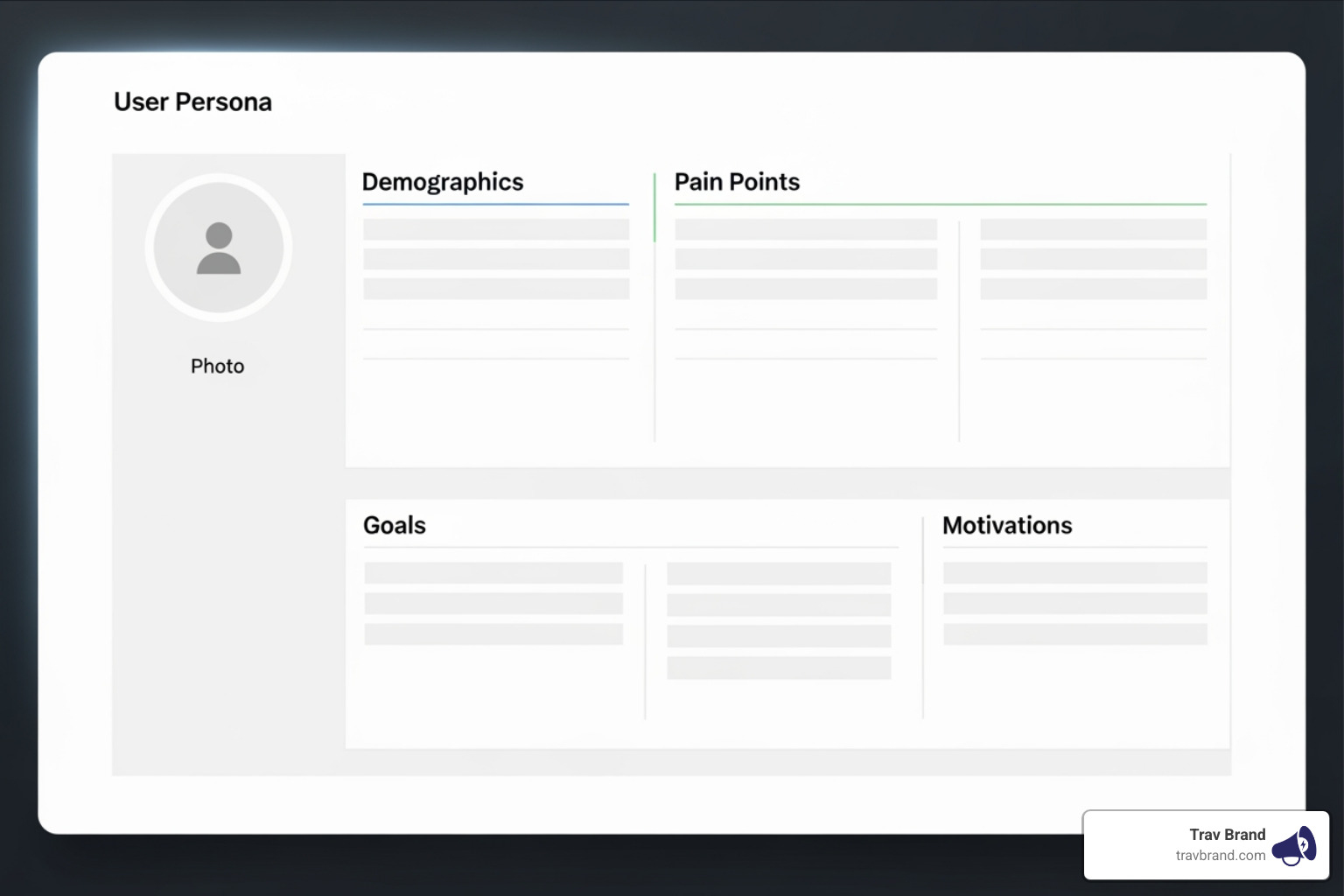
At Trav Brand, we often start by creating detailed user personas. This helps us visualize our audience, including their pain points, interests, and motivations. Once we have a clear picture, we can assess our existing content. Is it speaking to these personas? Is it answering their questions? Are we filling content gaps?
Writing compelling headlines is paramount. Industry expert Ted Nicholas once stated, “73% of consumer’s purchasing decisions are made at the point of the headline.” That’s a huge chunk! Our headlines must be clear, create curiosity, and include power words that resonate with our audience’s needs.
Beyond the headlines, we need to clearly showcase our unique differentiators (USPs). What makes us special? Why choose us over the competition? Marketing experiments recommend summarizing your USP in 10 words or less. This concise value proposition should be woven throughout our content, addressing how our product solves the end-user’s problem.
And remember that incredible statistic: content targeting high buying intent keywords converted 2400% better than lower-intent posts. This isn’t just a number; it’s a call to action for how we approach our content strategy.
How to write compelling sales copy to optimize content for conversions
For content to truly convert, it needs to do more than just inform; it needs to persuade. This means writing copy that connects, educates, and inspires action.
- Non-generic introductions: We’ve all seen them—the bland, forgettable intros that offer no hook. Instead, we craft introductions that immediately resonate with our audience’s pain points, drawing them in and promising a solution. This sets the stage for a conversion-focused narrative.
- Highlighting pain points: We revisit the pain points we identified earlier and explicitly articulate them in our copy. This shows empathy and establishes a clear problem that our audience needs solved. For example, asking about common problems or questions your target audience is searching for.
- Describing your solution: This is where we don’t shy away from our product or service. For buying-intent keywords, a significant portion of the content—50% or more—should describe features, benefits, and how our offering directly addresses the highlighted pain points. It’s a massive conversion mistake to avoid discussing your solution.
- Emphasizing unique features: What sets us apart? Is it a proprietary technology, exceptional customer service, or a unique approach? We highlight these unique differentiators to build a strong case for why our solution is the best fit.
- Building trust through copy: Trust is the bedrock of conversions. Our copy supports this by using verifiable facts, including endorsements from recognized sources, and providing clear policies (like privacy policies and terms of service). We ensure consistency in messaging at every stage, extending our brand messaging throughout the customer journey.
The role of keyword research in optimizing content for conversions
Keyword research is the compass that guides our content optimization efforts, especially when our goal is conversion.
- Targeting buying intent: This is the golden rule. We prioritize keywords that indicate a user is close to making a purchase. Think “best CRM software for small business” vs. “what is CRM?” The former has much higher buying intent. Our research shows posts targeting high buying intent keywords convert significantly better.
- Using long-tail keywords: These longer, more specific phrases often reveal higher purchase intent. For example, “black waterproof trail running shoes for men” is far more specific than “black running shoes.” Long-tail keywords convert 2.5x better than broader keywords because they attract users who are ready to make decisions.
- SERP analysis: We don’t just look at keywords; we analyze the Search Engine Results Pages (SERPs) for those keywords. What kind of content is ranking? What questions are featured in the “People Also Ask” section? This helps us identify content gaps and understand what searchers expect.
- Using tools for keyword findy: Tools like Ahrefs’ “parent topic” feature and Google Ads keyword planner are invaluable for identifying primary and secondary keywords. For content creation, tools like Clearscope and Dashword can help us optimize our draft against target keywords, gamifying the process with scoring systems.
- Topic clusters: Beyond individual keywords, we build topic clusters—groups of related content around a central theme. This establishes our authority on a subject, helping us rank for a wider range of keywords and provide a comprehensive resource for our audience.
Enhancing User Experience (UX) and Design for Maximum Conversions
Even the most compelling copy and perfectly targeted keywords can fall flat if the user experience (UX) is poor. A smooth, intuitive, and enjoyable website experience is critical for turning visitors into customers.
- Website Design Principles: Our website’s design isn’t just about aesthetics; it’s about guiding the user towards conversion. This means optimizing layouts of critical pages, ensuring visual hierarchy, and removing unnecessary distractions.
- Readability & Scannability: People don’t read online; they scan. We make our content easy to digest by using short sentences and paragraphs, clear headers, and occasionally bolding or underlining key findings. Using quotes within the text also breaks up the content. Tools like Hemmingway Editor can help ensure our content is at an appropriate grade level, making it accessible to a wider audience.
- Mobile-Friendliness: This is non-negotiable. Mobile visits have been outpacing desktop traffic since 2017, and mobile users often have higher bounce rates. Our sites are designed mobile-first, ensuring a seamless experience regardless of device.
- Simple Navigation: Visitors should never have to hunt for information or for a way to take action. We ensure our site navigation is simple and seamless, often including a prominent search feature.
- Form Optimization: Forms are often the final hurdle to conversion. We ruthlessly remove unnecessary fields—if we don’t need it, we don’t ask for it. We use directional cues to visually guide attention to the form and ensure plenty of whitespace for readability. Making profession selection mandatory and removing repeated fields, for example, increased form sign-ups by almost 17%.
- Page Load Speed: All the great content in the world won’t help if our pages take too long to load. Research shows we should aim for page load times of no longer than four seconds. Even within that range, the shorter the time, the better for conversions. A one-second page delay could cost an e-commerce site millions in lost sales annually, and 40% of visitors abandon a site that takes more than three seconds to load. We use tools like Google’s PageSpeed Insights to monitor and improve our loading times.
The Conversion Triggers: Mastering CTAs, Multimedia, and Social Proof
Once we’ve laid the groundwork with solid content and a great user experience, it’s time to pull the triggers that drive action. These elements are designed to prompt, persuade, and provide reassurance.

- Call-to-Action (CTA) Optimization: Our CTAs are the direct instructions we give our audience. They need to be clear, compelling, and strategically placed.
- CTA Language: The words we use matter. A variation with a changed CTA from ‘Contact us’ to ‘Inquire now’ improved clicks by 44.11%. We use clear, actionable language that tells visitors exactly what to do and what benefit they’ll gain.
- CTA Placement: We place CTAs strategically: above the fold, at the end of the content, and often interspersed throughout longer pieces. This ensures visitors have ample opportunity to act without feeling overwhelmed.
-
Using Multimedia: Engaging visuals and audio can significantly improve content and drive conversions.
- We break up lengthy text with interspersed images and relevant embedded videos. Photos, illustrations, and infographics engage readers, making complex information easier to understand.
- Video Engagement: Videos are a powerful way to drive engagement, especially if we have an active YouTube strategy. They can demonstrate products, explain concepts, or share testimonials, creating a more dynamic experience.
-
Social Proof: Humans are social creatures; we’re influenced by what others do and say. Social proof builds trust and reduces perceived risk.
- Customer Reviews & Testimonials: These are incredibly powerful. Visitors who interact with a review are 58% more likely to convert into paying customers. We prominently feature genuine customer reviews, testimonials, and case studies to build credibility and demonstrate the value of our offerings.
Measure, Refine, Repeat: Continuous Optimization for Lasting Results
Content optimization isn’t a one-and-done task; it’s an ongoing process of learning, adapting, and improving. We constantly measure our efforts, analyze data, and refine our strategies to ensure sustained growth.
- A/B Testing: This is our scientific method for optimizing content. We create two (or more) variations of a page or element—a headline, a CTA button, an image—and test them against each other to see which performs better. Tools like Google Optimize, AB Tasty, and Optimizely make this process efficient.
- Data Analysis: We track key performance indicators (KPIs) and analyze visitor data to understand what’s working and what’s not. This includes traffic sources, user behavior on pages, bounce rates, and click-through rates.
- Using Analytics Tools: Google Analytics is our go-to for tracking conversions, setting up funnels, and understanding user journeys. For deeper behavioral insights, tools like CrazyEgg, Hotjar, and Lucky Orange provide invaluable data.
- Heatmaps & Session Recordings: These tools allow us to visually see where users click, scroll, and spend their time on a page. Session recordings let us watch actual user journeys, revealing points of confusion or friction that quantitative data alone can’t capture. This helps us identify where readers engage, drop off, or get confused, highlighting sections that need optimization.
- Identifying Outdated Content: Content can decay over time. We regularly audit our content library to identify pieces that are no longer relevant, have outdated statistics, or whose performance has dropped. HubSpot analysis found a drop in performance for content more than 571 days old, suggesting an update is due when content approaches two years old.
- Content Refreshing Process: Outdated content doesn’t always need to be discarded. We often refresh it by updating statistics, links, and examples. This can rescue lagging rankings and boost visibility, with HubSpot seeing organic views on optimized posts grow by an average of 106%. We aim to keep bounce rates between 26% and 50%; if it’s higher, the content might need a rewrite or discard.
- Content Repurposing: High-performing content can often be transformed into different formats to reach a wider audience and drive more conversions. For example, a successful blog post can become an infographic, a video script, or a series of social media posts.
| Format | Description | Benefits |
|---|---|---|
| Blog Post | In-depth article, often 1000+ words, covering a topic comprehensively. | SEO value, establishes authority, detailed information. |
| Video | Short, engaging visual content for platforms like YouTube, TikTok, or Reels. | High engagement, easier to consume, reaches visual learners. |
| Infographic | Visually appealing graphic summarizing data, statistics, or complex concepts. | Shareable, digestible, good for quick understanding. |
| Social Post | Short snippets, questions, or images custom for social media platforms. | Wide reach, drives traffic, fosters community interaction. |
Frequently Asked Questions about Optimizing Content for Conversions
What is a good conversion rate for content?
This is the million-dollar question, and the answer is, “it depends!” While the average website conversion rate stands at 3.68% as of 2023, what constitutes “good” varies significantly. It’s largely agreed that a good conversion rate is between 1% and 4%, with anything above being great. However, this depends heavily on:
- Industry: E-commerce, B2B SaaS, lead generation, and content subscriptions all have different benchmarks.
- Audience demographics: Different audiences respond differently.
- Conversion goal: A newsletter sign-up will naturally have a higher conversion rate than a high-value product purchase.
- Niche and business goals: A niche B2B service might have fewer visitors but a higher conversion rate, while a broad e-commerce store might have high traffic but a lower percentage conversion.
The best benchmark is your own historical performance. Focus on continuous improvement rather than chasing an elusive industry average.
What are the most common mistakes to avoid?
We’ve seen our fair share of content mishaps. Here are some common pitfalls to steer clear of when trying to optimize content for conversions:
- Ignoring user intent: Creating content without understanding what the user really wants or expects after clicking a link is a recipe for high bounce rates. Message matching is crucial.
- Generic copy: Bland, uninspiring copy that doesn’t address specific pain points or showcase unique differentiators will fail to engage and convert.
- Weak or missing CTAs: If you don’t tell your audience what to do next, they won’t do anything. Vague or hard-to-find calls-to-action are missed opportunities.
- Poor mobile experience: With mobile traffic often outpacing desktop, a non-responsive or slow-loading mobile site will alienate a huge portion of your audience.
- Not tracking results: Without data, we’re flying blind. Failing to measure conversion rates, analyze user behavior, and conduct A/B tests means we can’t learn or improve.
How often should I update my content for conversions?
The frequency of content updates depends on several factors, but consistency is key. We consider it a living, breathing asset that needs regular attention.
- Performance-based updates: If a piece of content’s performance (traffic, rankings, conversions) starts to dip, it’s a strong signal for an update. If the bounce rate is too high (say, above 50%), it could indicate irrelevance.
- Annually for “best of” posts: Content that lists “best tools” or “top strategies” needs annual refreshers to remain accurate and relevant.
- When stats become outdated: Credibility takes a hit if your content cites old data. Regularly reviewing and updating statistics, links, and examples is crucial.
- When algorithms change: Google’s Helpful Content Update, for instance, emphasizes user experience and original, insightful content. This means we continuously adapt our content to align with evolving SEO best practices.
Conclusion
The journey to optimize content for conversions is a continuous one, deeply rooted in understanding our audience and relentlessly improving their experience. We’ve seen how shifting our focus from merely attracting traffic to actively converting it can dramatically boost ROI and drive sustainable growth.
From aligning content with the buyer’s journey and addressing pain points, to crafting compelling copy and enhancing user experience, every step plays a vital role. By mastering CTAs, leveraging multimedia, and building trust through social proof, we create content that not only informs but also inspires action. And through constant measurement, A/B testing, and thoughtful refinement, we ensure our content assets continue to perform at their peak.
At Trav Brand, we believe in building and scaling brands through comprehensive digital marketing, e-commerce, and content strategies. We focus on purpose-driven brands and measurable results, changing your content into a powerful engine for sales and leads.
Explore our e-commerce strategies