The Power of Pixels: How Web Marketing Video Can Transform Your Brand
Why Web Marketing Video is Your Brand’s Secret Weapon
Web marketing video is the strategic use of video content across digital channels to promote your business, engage customers, and drive measurable results. To use it effectively, you must define your goal, choose the right video type and distribution channel, optimize for each platform, and then measure and iterate based on performance data.
We live in a world where video is the dominant form of online communication. Facebook sees billions of video views daily, and tweets with video get 10x more engagement. The data is clear: 84% of conversions happen after customers watch a video, and 78% of marketers report that video has directly increased their sales.
But knowing video matters is one thing; creating a strategy that cuts through the noise and drives real business results is another. The shift to video is a fundamental change in how people consume information. Businesses that ignore video marketing risk becoming invisible in today’s digital landscape.
I’m Trav Lubinsky, and I’ve spent my career building brands through strategic marketing—from launching Flex Watches to working with billion-dollar enterprises and collaborating with creators like Jake Paul and Marcus Lemonis. I’ve seen how a clear and purposeful web marketing video strategy can transform brands from invisible to unforgettable.
Why Video is a Non-Negotiable Marketing Tool
You need to tell your story, connect with your audience, and build trust—and there’s no more compelling way to do that than through video. Web marketing video isn’t just a nice-to-have; it’s an essential tool for any business looking to thrive.
Video captivates by combining visuals, sound, and motion to create an immersive experience that static content can’t match. This engagement translates directly into tangible business benefits, from skyrocketing conversions to boosting your visibility in search engines.
The Undeniable Impact on Sales and ROI
Let’s talk numbers, because that’s where the true power of web marketing video becomes clear. Video is a powerful revenue driver:
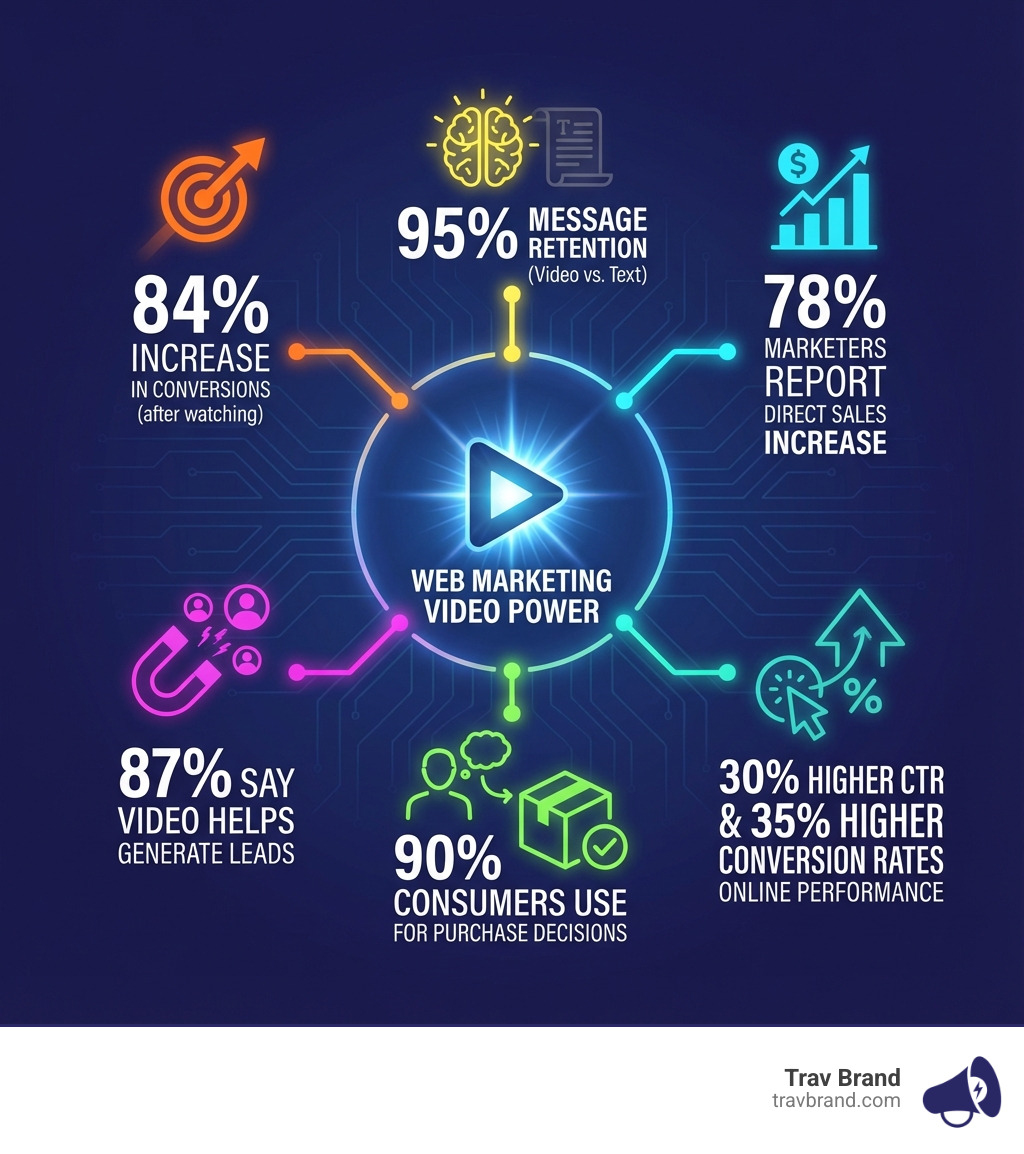
- Increased Conversions: A staggering 84% of conversions are generated after customers watch a video that convinces them to buy.
- Higher Sales: 78% of marketers report that video marketing has directly increased their sales, actively closing deals.
- Informed Purchase Decisions: 90% of consumers say video has helped them decide what to buy, highlighting its role as a crucial persuasive tool.
- Superior Message Retention: Viewers retain 95% of a brand’s message from video, compared to just 10% from text, building strong brand recall.
- Higher Engagement Rates: Video marketing sees almost 30% higher click-through rates and nearly 35% higher conversion rates online.
- Lead Generation Powerhouse: 87% of marketers claim that video has helped them generate leads, making it an indispensable tool for your sales funnel.
These statistics underscore a fundamental shift in consumer behavior. People are drawn to video because it’s easy to consume and emotionally engaging. By integrating web marketing video into your strategy, you’re meeting your audience where they are and speaking their language.
Boosting Your SEO and Online Visibility
Beyond direct sales, web marketing video plays a critical role in enhancing online visibility and search engine optimization (SEO). The longer someone stays on your webpage, the more valuable Google perceives that page to be. And what keeps people on a page longer than an engaging video?

Here’s how video gives you an edge in search rankings:
- Increased Time on Page: Adding a quality video to a page can significantly increase dwell time, which may lead to a boost in the search engine results pages (SERPs).
- Higher SERP Rankings: When Google sees users spending more time on your pages, it signals that your content is valuable, potentially leading to better rankings.
- Google Video Search Results: Google increasingly features videos directly in its search results, offering another pathway for customers to find you. One study found that when videos were indexed by Google, search traffic increased by over 10%.
- YouTube as a Search Engine: YouTube is the second-largest search engine in the world with over 1.5 billion users. A strong, optimized presence there can significantly expand your reach. Data shows that video, especially short-form, is increasingly dominating mobile search results.
By strategically incorporating web marketing video into your SEO efforts, you’re not just creating content; you’re building digital assets that work tirelessly to improve your brand’s findability and authority online.
From Explainers to Epics: A Guide to Video Formats
The beauty of web marketing video lies in its versatility. There isn’t a one-size-fits-all approach; instead, you have a rich palette of video formats to choose from, each suited for different objectives. The length of your video—long-form deep dive or snappy short-form clip—should depend on your business goals, audience, and the platform where it will live.
Choosing the Right Types of Web Marketing Video
To make the most of your web marketing video efforts, focus on these high-impact video types:
- Instructional/How-To Videos: Provide value by teaching viewers a relevant task. By showing how to use a product or solve a problem, you build trust and establish expertise.
- Product Videos: Act as digital storefronts, showcasing products or services in action. They highlight features and benefits, making them excellent for driving conversions.
- Brand Awareness Videos: Focus on your company culture, values, and mission. They help humanize your brand and make it more relatable to your target audience.
- Testimonial & Case Study Videos: Build trust by featuring satisfied customers. Real people explaining why they love your products builds immense credibility, as 84% of consumers trust online reviews as much as personal recommendations.
- Behind-the-Scenes Videos: Offer a peek behind the curtain at your team or production process. This transparency fosters connection and helps customers understand who they’re buying from.
- Webinars & Live Streams: Webinars are highly impactful for deep engagement and lead generation. Live streams create excitement and real-time interaction, with viewership outpacing other video types by 113%.
By strategically deploying these video types, you can address various stages of the customer journey, from awareness to post-purchase support.
Creative Ideas Inspired by TV Commercials (TVCs)
While the focus is on web marketing video, traditional TV commercials (TVCs) offer a treasure trove of creative inspiration. Many principles that make a TVC memorable can be adapted for digital campaigns.
Here are some TVC-inspired ideas for your web marketing video efforts:
- Customer-Centric “You” Approach: Make the customer the hero of your story. Focus on their needs and challenges to make them feel understood and build a deeper connection.
- Humor and Personality: Injecting humor can make your brand more relatable and popular, especially with demographics that share a similar sense of humor. Brands like Old Spice have mastered this.
- Emotional Storytelling: Create videos that evoke strong emotions—joy, nostalgia, or excitement. When viewers feel something, they remember your brand and your message.
- Using Trending Topics: Leverage trending ideas, memes, or slogans to create a current, friendly relationship with your audience. This shows you’re relevant and engaged.
- Memorable Jingles and Visuals: A catchy audio cue or a distinct visual style can make your brand unforgettable. Anything that looks good and melts the heart is sure to make a place in the viewer’s mind.
By borrowing these time-tested strategies, you can create web marketing video that not only grabs attention but also resonates deeply with your audience.
Crafting Your Winning Web Marketing Video Strategy
Creating a single viral video is often luck. Building a sustainable, impactful web marketing video presence, however, is the result of a well-thought-out strategy. This is about purpose-driven creation that aligns with your business goals.
An effective strategy involves setting clear goals, identifying each video’s purpose, choosing the right platforms, planning production, and constantly adjusting based on analytics. This framework ensures every video contributes meaningfully to your business objectives.
Phase 1: Pre-Production (The Blueprint for Success)
Pre-production is the architect’s blueprint for your web marketing video. Skipping this phase leads to inefficiency and a shaky outcome.
Key steps in pre-production include:
- Budgeting: Define your budget early. Video production costs can vary widely, so it’s wise to include a buffer for unexpected expenses. Many companies are increasing their video budgets, showing a growing commitment.
- Scripting & Storyboarding: A script or outline is crucial for a clear, professional message. For more complex videos, storyboarding visually maps out each scene to ensure flow.
- Finding Talent: Decide who will be in front of the camera—internal team members, actors, or customers. Also, consider who will handle the camera, sound, and lighting.
- Location Scouting: Find a location that is visually appealing, relevant, and has good acoustics with minimal background noise.
- Defining Your Audience: Understand your target audience’s demographics, interests, and pain points to inform every creative decision.
Careful planning in pre-production minimizes surprises, saving time and resources later.
Phase 2: Production (Lights, Camera, Action!)
This is where your blueprint comes to life. In production, you capture all the raw footage for your web marketing video. Attention to detail is paramount, as poor-quality source material cannot be fixed in editing.

Here’s what to focus on during production:
- Camera Choice: Modern smartphones can produce excellent quality, but DSLRs or dedicated video cameras offer more professional results. The key is knowing how to use your equipment effectively.
- Audio Quality: This is arguably more important than video quality. Poor audio seems unprofessional. Aim for clear sound using external microphones and monitor your audio levels carefully.
- Three-Point Lighting: Good lighting transforms a shot. A three-point setup (key, fill, and backlight) illuminates subjects evenly, reduces shadows, and creates a polished, professional look.
- Getting Good Footage: Ensure shots are in focus, well-composed, and stable. Capture plenty of B-roll (supplementary footage) to add visual interest and cover cuts.
Focusing on these elements ensures you capture high-quality assets for a great final product.
Phase 3: Post-Production (Where the Magic Happens)
Post-production is where you weave raw footage, audio, and graphics into a compelling web marketing video. This meticulous process requires patience and a keen eye for detail, and professionals rely on a suite of specialized editing and collaboration tools for this stage.
Our post-production workflow includes:
- Organizing Footage: Before editing, organize and label all files—footage, audio, graphics, and music. This saves time and prevents headaches.
- Editing: Assemble clips according to your script, trimming and arranging them to tell your story effectively. Focus on pacing to keep the viewer engaged.
- Sound Mixing: Balance dialogue, music, and sound effects for a clear listening experience. This includes noise reduction and volume leveling.
- Graphics & Transitions: Add motion graphics, text overlays, and visual effects to improve your message and brand identity. Use thoughtful transitions to move smoothly between scenes.
- Color Correction & Grading: Adjust colors and tones to ensure consistency and evoke the desired mood.
- Adding a Call-to-Action (CTA): Every marketing video needs a clear CTA, like “Visit our website” or “Subscribe now,” to guide viewers on what to do next. This turns passive viewing into active engagement.
Amplifying Your Reach: Distribution and Measurement
Creating an amazing web marketing video is only half the battle. The other half is ensuring it reaches the right audience and that you understand its impact. Effective distribution and robust measurement are critical for maximizing your return on investment.
Best Practices for Distributing Your Web Marketing Video
Employ a multi-platform distribution strategy to ensure your video gets seen by the right people.
1. Website Best Practices:
Your website is “owned land” where you control the user experience and can directly capture leads.
- Strategic Placement: Embed videos on relevant pages to answer questions or provide context.
- Hosting Choice: Avoid uploading large video files directly. Instead, embed from third-party hosts optimized for streaming and SEO.
- SEO Integration: Ensure videos are properly titled, described, and tagged with relevant keywords. Some platforms can even add structured data to help videos rank in search results.
2. Social Media Best Practices:
Social media is “rented land” that offers unparalleled reach. Adapt your videos for each platform:
- YouTube: Ideal for longer-form educational content, tutorials, and brand storytelling. Optimize everything for search findability.
- LinkedIn: Perfect for B2B content, thought leadership, and company culture videos. Keep them professional and concise.
- Instagram: Excellent for short, engaging, visually appealing content like Reels and Stories. Use trending audio to boost visibility.
- Facebook: Great for community building and live streams, with billions of daily video views.
- Resizing for Different Platforms: A crucial step is to resize videos for different aspect ratios (e.g., 16:9 for YouTube, 9:16 for Reels). 71% of professionals do this to ensure their content looks optimized everywhere.
| Feature | Company Website | Social Media Platforms |
|---|---|---|
| Goals | Lead capture, direct sales, SEO | Brand awareness, engagement, community building |
| Video Length | Flexible (long or short) | Varies (short for Reels, longer for YouTube) |
| CTA Style | Direct, integrated (forms, buttons) | Explicit (link in bio, swipe up) |
| Key Metrics | Conversion rate, time on page, SEO rank | Views, engagement rate, shares, comments |
An Introduction to YouTube Ads
Given YouTube’s status as the second-largest search engine, YouTube ads are a powerful way to reach your target audience. Companies that advertise on YouTube have seen 28% higher ROI.
Why use YouTube Ads?
- Massive Reach: Access over 1.5 billion users globally.
- Targeting Options: Precisely target audiences by demographics, interests, location, and search behavior.
- Affordability: YouTube ads can be very cost-effective, with even small daily investments yielding significant returns.
Types of YouTube Ads:
- Skippable & Non-Skippable In-Stream Ads: Play before, during, or after videos. You pay when viewers watch for a certain duration or can’t skip.
- Bumper Ads: Short, 6-second, non-skippable ads for quick brand messaging.
- In-Feed Video Ads: Appear in search results and next to related videos, encouraging users to click and watch.
To create compelling campaigns, grab attention in the first 5 seconds, use a clear CTA, and ensure your content is high-quality and relevant. 87% of marketers say video has helped them generate leads, and YouTube ads are a direct pathway to achieving this.
Measuring Success: Key Metrics That Matter
To understand the impact of your web marketing video, focus on key performance indicators (KPIs) that align with your business goals.
Here are the essential metrics to track:
- Play Rate: The percentage of visitors who click “play.” This indicates if your thumbnail and title are compelling.
- Engagement Rate: How much of your video viewers actually watch. This shows if your content holds attention.
- Conversion Rate: The percentage of viewers who complete a desired action (e.g., fill out a form). This is the ultimate indicator of success.
- Watch Time/View Duration: The total time viewers spend watching. Longer watch times signal higher engagement to platforms like YouTube.
- Click-Through Rate (CTR): For videos with clickable CTAs or ads, this measures the percentage of viewers who click.
- Social Shares: How often your video is shared. People are 12 times more likely to share video than other content types, making this a powerful indicator of resonance.
The Future is Now: Advanced Video Trends
The world of web marketing video is constantly evolving. To stay ahead, it’s crucial to look at emerging trends that offer innovative ways to engage audiences. Two particularly exciting areas are interactive video and the growing role of Artificial Intelligence (AI).
Leveraging AI and Interactive Video for Engagement
These tools can lift your web marketing video from passive viewing to active participation and intelligent creation.
Interactive Video:
Interactive video allows users to engage directly with content through clickable links, hotspots, or overlays. This transforms a passive viewing experience into an active one.
- Lead Generation Forms: Embed forms directly into videos to capture leads without interrupting the user experience. Nearly a quarter of viewers complete these forms.
- Clickable Hotspots: Add clickable areas that reveal more information or link to product pages, turning a showcase into a shoppable experience.
- Branching Narratives: Allow viewers to choose their own path through a video, creating a personalized “choose your own adventure” for marketing content.
AI in Video Creation:
AI is rapidly changing how we create and distribute web marketing video. 41% of professionals now use AI for video creation, up from 18% last year.
- AI for Scripting & Editing: AI tools can generate script ideas and automate tedious editing tasks like cutting silences, freeing up creators to focus on strategy.
- AI for Captions & Translation: This is a massive win for accessibility and global reach. The use of captions has increased 572% since 2021, and AI makes generating them effortless.
- AI for Content Repurposing: AI can automatically generate short clips, social media posts, or summaries from longer videos, maximizing the value of your content.
The integration of interactive elements and AI-driven tools means your web marketing video can be more engaging, personalized, and efficient to produce than ever before.
Conclusion
In an increasingly visual world, the power of web marketing video is undeniable. It’s a fundamental necessity for any brand aiming to connect, convert, and thrive. We’ve seen how video boosts sales, improves SEO, and offers a diverse range of formats to achieve business goals. From meticulous planning to creative execution and distribution, every step contributes to a final product that delivers measurable results.
The future is already here, with interactive features and AI streamlining the creation process while enhancing engagement and accessibility. By embracing these trends, your brand can remain at the forefront of digital communication. At Trav Brand, we’re passionate about helping purpose-driven brands like yours harness the full potential of video to tell your story, captivate your audience, and transform your brand from invisible to unforgettable.
Ready to open up the power of video for your business? Explore our comprehensive digital marketing services and let’s start crafting your brand’s next visual masterpiece.