


Why Your Brand Needs a Position: A Deep Dive into Advertising Strategy
Why Brand Positioning in Advertising Is the Foundation of Market Success
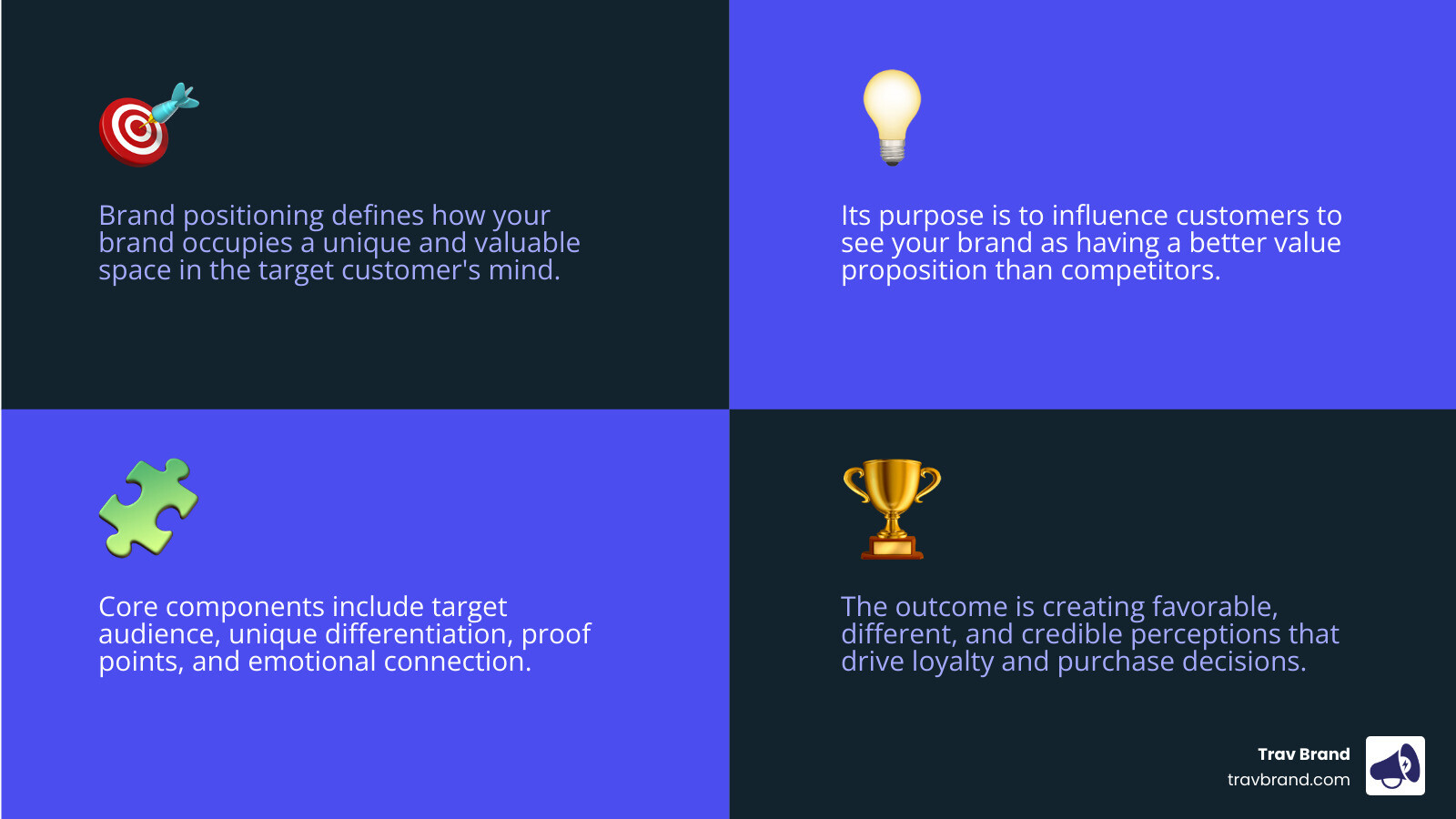
Brand positioning in advertising is the strategic process of defining how your brand occupies a unique and valuable place in your target customer’s mind, distinguishing it from competitors. It’s the foundation that shapes every marketing decision, from your messaging and visual identity to your pricing and customer experience.
Key Elements of Brand Positioning in Advertising:
- Definition: The act of designing your company’s offering and image to occupy a distinctive place in the mind of your target market
- Purpose: Influences customers to see your brand as having a better value proposition than competitors
- Core Components: Target audience, unique differentiation, proof points, and emotional connection
- Outcome: Creates favorable, different, and credible perceptions that drive loyalty and purchase decisions
Every company has a personality. Nike is your companion in athletic achievement. Apple is your innovative, high-tech friend. IKEA is your affordable interior decorator. But here’s the reality most founders miss: if you don’t proactively define your brand’s position, the market will do it for you—and you won’t love the result.
Without clear positioning, your brand gets lost in the competitive noise. You become just another option in a sea of choices, competing solely on price or features rather than building lasting customer loyalty and brand equity. Effective positioning creates the mental associations that make customers choose your brand, trust your brand, and stay loyal to your brand.
As Trav Lubinsky, I’ve helped build and scale brands from Flex Watches to partnerships with billion-dollar enterprises, and I’ve seen how brand positioning in advertising makes the difference between struggling for attention and owning a category. Through my work at Trav Brand, I’ve guided companies to craft positioning strategies that don’t just look good on paper—they drive measurable growth and create competitive moats that competitors can’t easily replicate.
What is Brand Positioning and Why Is It Your Most Powerful Tool?
At its core, brand positioning is about owning a specific, desirable space in the mind of your target consumer. It’s the unique value your brand presents to its customer, influencing them to perceive your offering as having a better value proposition than others. According to marketing guru Philip Kotler, brand positioning is “the act of designing the company’s offering and image to occupy a distinctive place in the mind of the target market.”
Why is this so crucial? Because brand positioning is the very foundation of your marketing strategy. It helps us differentiate our products or services from others, ensuring we don’t just blend into the background. Effective brand positioning creates specific associations in consumers’ minds, shaping how favorably, differently, and credibly our brand is perceived. A strong positioning strategy helps us stand out and control how we’re perceived, directly influencing consumer loyalty, brand equity, and ultimately, their willingness to purchase. It’s what sets your brand apart in a sea of choices, making it a powerful tool for driving purchase decisions.
The Difference Between Positioning, Branding, and Marketing
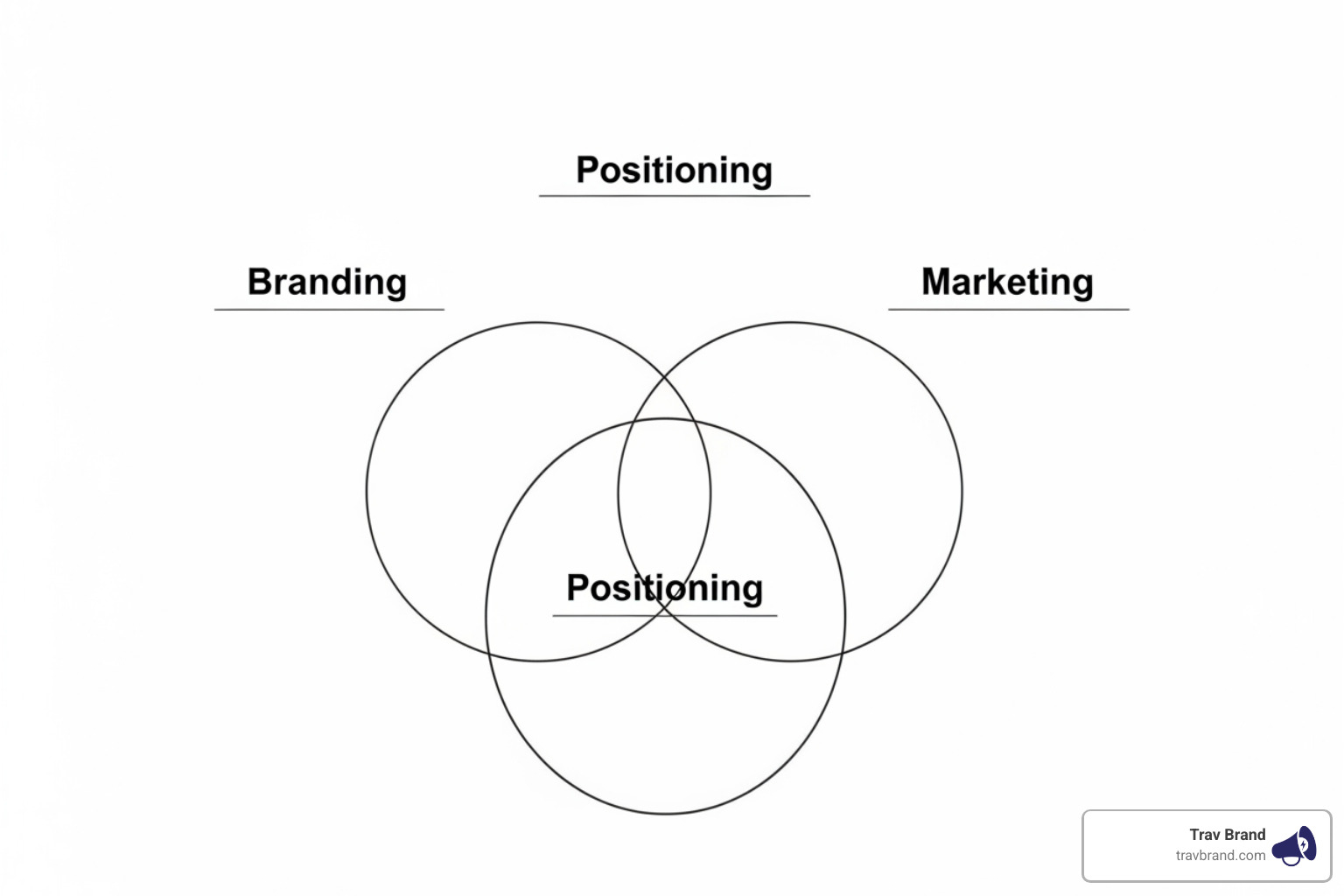
It’s easy to confuse these terms, but understanding their distinct roles is key to building a cohesive strategy. Think of it this way:
- Branding is the “who” and “what” of your company. It encompasses your brand’s personality, visual identity (logo, colors, typography), name, values, and overall promise. It’s the sum total of all experiences and perceptions a customer has about your company.
- Marketing is the “how” you communicate and promote your brand and its offerings to your target audience. This includes advertising, public relations, social media, content creation, sales promotions, and distribution channels.
- Positioning is the “why” and “where” your brand exists in the market and in the consumer’s mind. It’s the strategic choice of how you want to be perceived relative to your competitors, and why a customer should choose you.
As Simon Sinek famously asks with his Golden Circle framework, great leaders and brands start with “why.” Brand positioning is essentially defining that “why” – why your brand matters, why it’s different, and why customers should care. It’s the internal strategic document that guides every external communication and action.
How Positioning Shapes Consumer Perception and Loyalty
Our perception of a brand is rarely accidental. It’s carefully crafted through consistent brand positioning in advertising and across all touchpoints. By clearly defining what our brand stands for, we create specific mental associations that resonate with our target audience.
For instance, when you think of a luxury car, certain brands immediately come to mind, associated with quality, status, and performance. This isn’t just about the car itself; it’s about years of strategic positioning. This process builds trust and fosters an emotional connection with consumers. Modern audiences crave authenticity, and a well-positioned brand that stays true to its promise can forge deep, lasting bonds.
When customers feel a connection and trust a brand, they become more than just buyers; they become brand evangelists. They’re loyal, they advocate for your brand, and they’re more likely to forgive minor missteps. This shapes consumer preferences, directly linking to consumer loyalty, consumer-based brand equity, and a strong willingness to purchase our brand again and again. As we always say at Trav Brand, there’s immense power in storytelling to build a strong brand.
A 6-Step Guide to Crafting Your Strategy for Brand Positioning in Advertising
Developing a powerful brand positioning strategy isn’t about guesswork; it’s a systematic process that requires thoughtful analysis and execution. Here at Trav Brand, we guide our clients through a strategic framework to ensure their brand not only stands out but also resonates deeply with their target audience. This process forms a critical part of our overall brand creation strategy.
Step 1: Identify Your Target Audience and Current Position
Before we can decide where we want our brand to go, we need to understand where it currently stands and, more importantly, who we’re trying to reach.
- Define Your Ideal Customer: This involves creating detailed buyer personas. Beyond demographics, we dig into their hobbies, habits, pain points, aspirations, and what truly motivates their purchasing decisions. Understanding their needs helps us tailor our message directly to them.
- Audit Your Current Perception: How do customers and the market currently perceive your brand? Conduct surveys, gather customer feedback, and analyze market trends. This “market diagnosis” reveals what associations already exist, whether positive or negative. For instance, a brand might unintentionally be seen as too expensive or too generic, and knowing this is the first step to correcting it.
Step 2: Analyze Your Competitors
No business exists in a vacuum. Your success hinges on how you stack up against the competition.
- Map the Competitive Landscape: Identify your main competitors and thoroughly analyze their strengths, weaknesses, and, crucially, their current positioning strategies. What do they stand for? How do they communicate their value?
- Identify Market Gaps: By understanding what competitors offer and where they fall short, we can pinpoint underserved areas or unique angles where our brand can truly shine. This is where the role of competitors in shaping our brand positioning in advertising becomes evident – they help us define our differentiation.
Step 3: Define Your Unique Value Proposition (UVP)
This is the heart of your brand positioning: what makes you special? Your UVP is the clear statement of the tangible and intangible benefits customers receive from your brand that they can’t get elsewhere.
- What You Do Differently: Focus on the core benefits and solutions you offer that address your target audience’s pain points. What problems do you solve better than anyone else?
- The “Three Cs”: A powerful framework for defining your UVP considers:
- Company: What are your internal strengths, capabilities, and values? What can you realistically deliver?
- Customers: What do your target customers truly want, need, and believe?
- Competitors: How can you differentiate yourself from them in a meaningful way?
The sweet spot where these three overlap is your strongest UVP. This step is essential for developing innovative brand building strategies to stand out in a competitive market.
Step 4: Craft an Effective Brand Positioning Statement
Your brand positioning statement is an internal summary of your company’s unique value in the market. It’s not a tagline, but an internal compass that guides all your decisions, from product development to marketing campaigns.
A common and effective formula we use is:
For [Target Audience], [Brand Name] is the only [Your Market] that [Differentiation] because [Proof Point].
Let’s break down the key elements:
- Target Audience: Be specific about who you serve.
- Market Category: Where do you play? (e.g., “premium coffee brand,” “sustainable footwear company”).
- Brand Promise (Differentiation): What unique benefit or experience do you offer that sets you apart?
- Reason to Believe (Proof Point): Why should customers trust you? What evidence do you have to back up your promise?
This statement should balance aspiration with reality. It’s a vital tool to craft a killer brand positioning statement that anchors your brand’s success.
Step 5: Test and Validate Your Positioning
Once you’ve drafted your positioning statement, don’t just launch it into the wild! Testing is crucial to ensure it resonates with your target audience and accurately reflects your brand.
- Gather Feedback: Conduct focus groups, run surveys, and even perform A/B tests on different messaging variations. Ask potential customers if the statement is clear, believable, and appealing.
- Refine and Iterate: Based on the feedback, be prepared to refine your statement. This iterative process ensures your positioning is as strong and impactful as possible before a full rollout. It’s like checking your compass before starting on a long journey!
Step 6: Ensure Consistency Across All Touchpoints
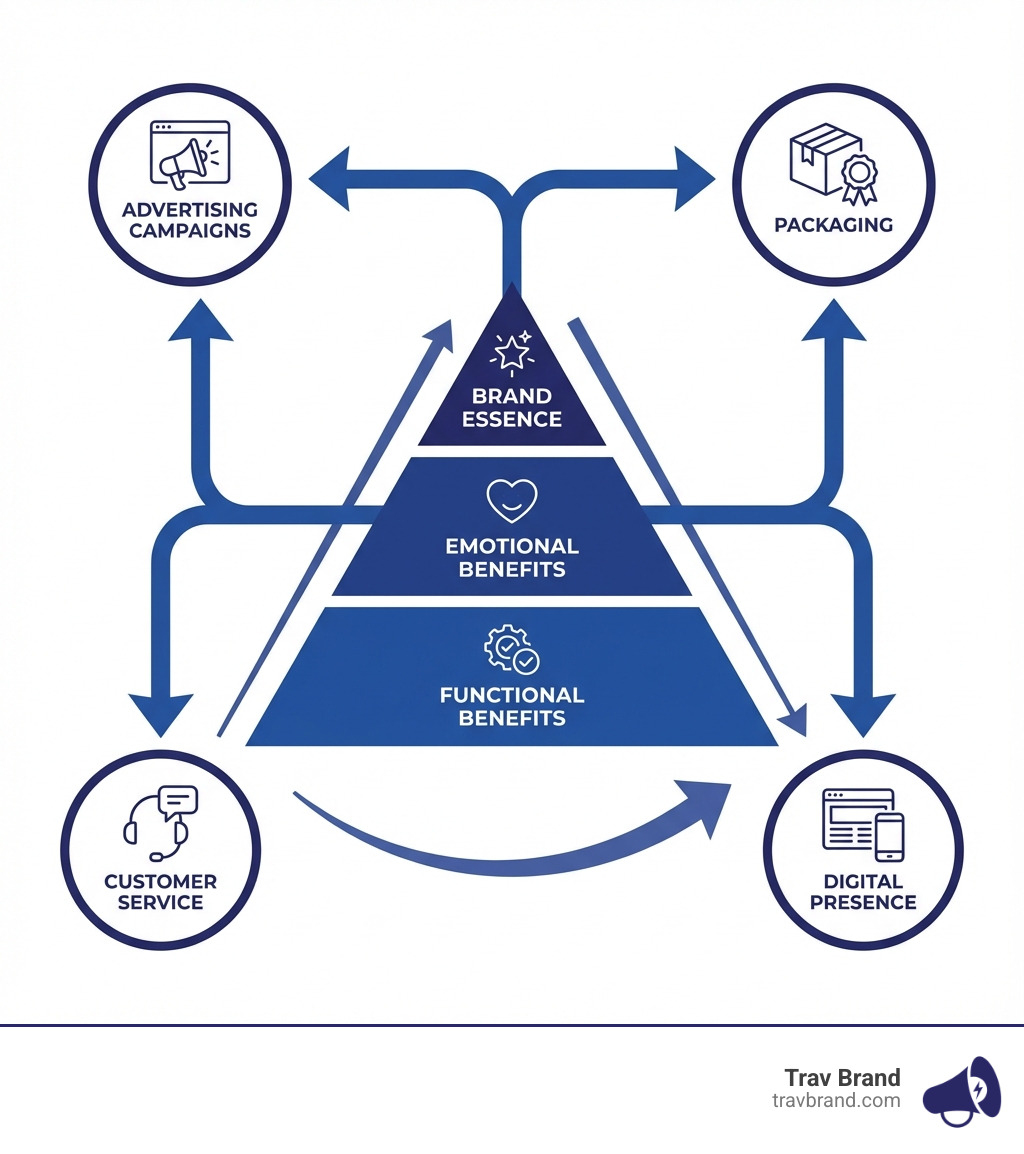
A brilliant positioning strategy is useless without consistent execution. Every interaction a customer has with your brand—from your website to your advertising, customer service, and even your product packaging—must reinforce your chosen position.
- Brand Voice and Visual Identity: Your brand voice (tone, language) and visual identity (logo, colors, imagery) must perfectly align with your positioning. If you’re positioned as innovative, your visuals should feel cutting-edge. If you’re friendly, your tone should reflect that.
- Customer Experience: The actual experience of using your product or service must deliver on your brand promise. If you position yourself on “effortless convenience,” your customer journey better be smooth as silk.
- Advertising Campaigns: This is where brand positioning in advertising comes to life. Your campaigns are the primary vehicle for communicating your distinct place in the market. Every ad, every piece of content, every social media post should subtly or overtly reinforce your core message.
This consistency is why your brand needs a brand guide. It ensures that everyone in your organization, and every external partner, understands and adheres to your brand’s distinguishing qualities.
Common Brand Positioning Strategies (With Examples)
Brands employ various strategies to carve out their unique space. Often, the most powerful positioning involves a blend of these approaches. Here’s a look at some common strategies:
| Strategy Type | Core Focus | Example Brands |
|---|---|---|
| Price-Based Positioning | Offers the best value or lowest cost to attract price-sensitive customers. | Dollar Shave Club, Walmart |
| Quality and Benefit Positioning | Focuses on superior craftsmanship, performance, durability, or unique features. | Tesla, Rolex |
| Convenience and Customer Service Positioning | Emphasizes ease of use, accessibility, and exceptional customer support. | Amazon, Southwest Airlines |
| Symbolic and Lifestyle Positioning | Connects the brand to a specific lifestyle, aspiration, or set of values. | Coca-Cola, Nike |
Price-Based Positioning
This strategy positions a brand as the most affordable option in its category. It’s not just about being cheap, but about offering a strong value proposition for a low price. Brands like Dollar Shave Club disrupted an entire industry by offering quality razors for a fraction of the cost of established competitors, delivered right to your door. This approach appeals directly to budget-conscious consumers who prioritize cost-effectiveness.
Quality and Benefit Positioning
Here, the focus is on being the best in terms of quality, features, or performance. These brands often command a premium price because they deliver a superior product or outcome. Tesla, for example, positioned itself not just as an electric car company, but as a leader in automotive innovation, performance, and cutting-edge technology. This strategy builds a reputation for excellence and reliability.
Convenience and Customer Service Positioning
In a world, convenience is a powerful differentiator. This strategy centers on making the customer’s life easier, whether through seamless user experience, fast delivery, or accessible locations. Southwest Airlines built its brand on friendly, no-frills service and a customer-first attitude, creating a loyal following that values a hassle-free travel experience over luxury perks.
Symbolic and Lifestyle Positioning
This strategy goes beyond functional benefits to connect with customers on an emotional level. It associates the brand with a particular lifestyle, identity, or set of values. Coca-Cola’s “Share a Coke” campaign, for instance, wasn’t about the taste of the soda; it was about connection, friendship, and shared moments. As we’ve discussed, this type of storytelling is a powerful way to build a strong brand.


