
How to Improve Brand Awareness Without Boring Your Audience
Why Most Brand Awareness Efforts Fall Flat (And What to Do Instead)
Brand engagement strategies are the tactics businesses use to turn passive audiences into active participants — people who buy, share, refer, and advocate for your brand over time.
Here are the most effective brand engagement strategies at a glance:
- Take an omnichannel approach — show up consistently across every channel your customers use
- Personalize your messaging — use customer data to make every interaction feel relevant
- Leverage user-generated content (UGC) — let your customers do the talking
- Build a brand community — create spaces where people connect around shared values
- Launch a loyalty or rewards program — give people a reason to keep coming back
- Use social media for two-way dialogue — respond fast, listen actively, and be human
- Incorporate gamification — tap into achievement psychology to drive repeat behavior
Here’s the uncomfortable truth for most founders: getting people to know your brand is not the same as getting them to care about it.
Brand awareness gets you noticed. Brand engagement keeps you relevant.
Nearly two-thirds of a company’s profit depends on how effectively it engages its customers. That’s not a soft, feel-good metric — that’s your bottom line.
Yet most businesses pour their energy into reach and impressions, then wonder why customers don’t stick around. The gap isn’t budget or creativity. It’s strategy.
I’m Trav Lubinsky — entrepreneur, brand builder, and founder of Trav Brand — and I’ve developed and applied brand engagement strategies across consumer products, e-commerce, and hospitality, working with brands like HexClad, Poppi, FightCamp, and billion-dollar enterprises. In this guide, I’ll break down exactly what works, what doesn’t, and how to build engagement that drives real, measurable growth.
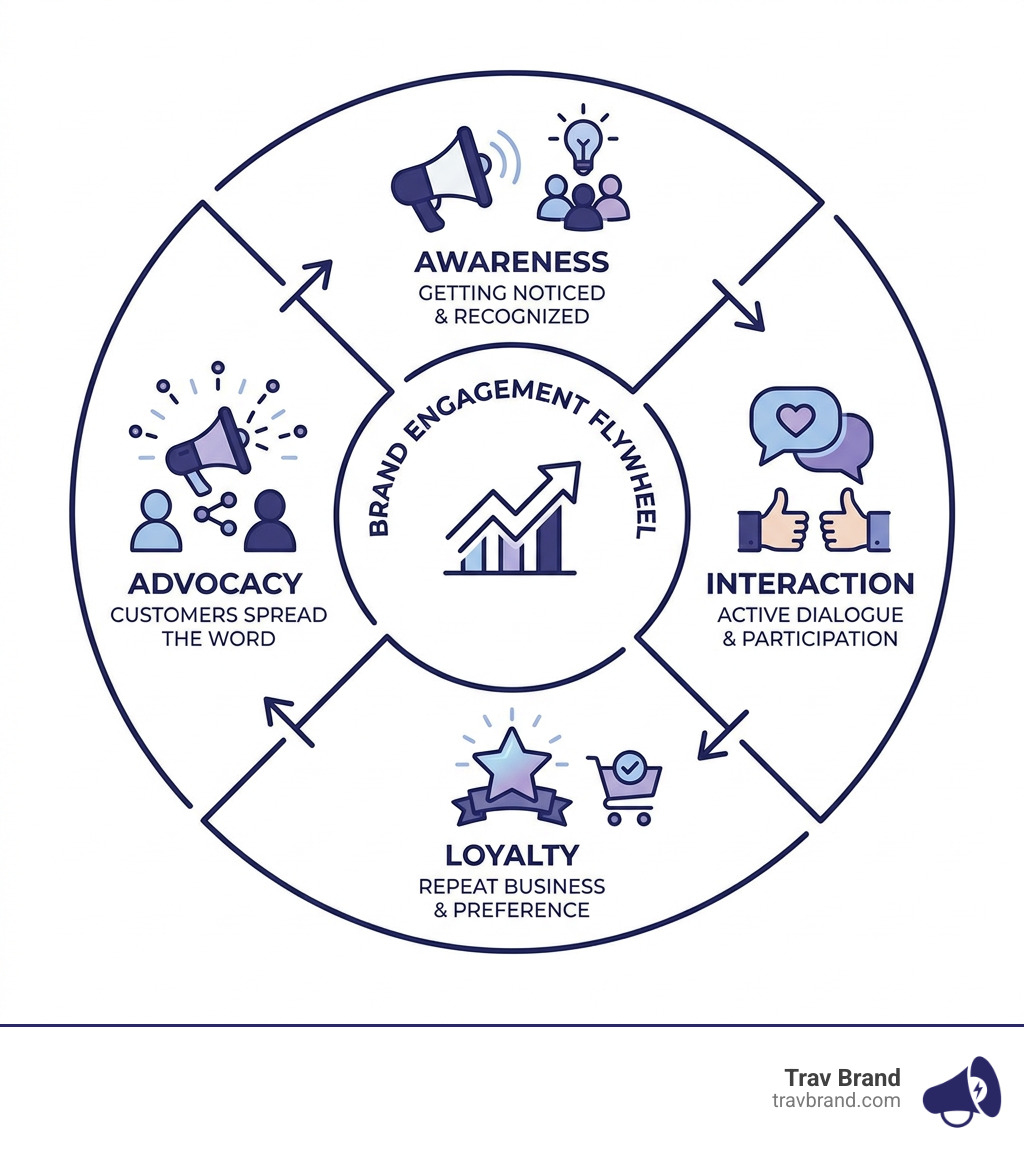
Defining Brand Engagement vs. Awareness
Before we dive into the “how,” we need to get clear on the “what.” A common mistake we see is treating brand awareness and brand engagement as the same thing. They aren’t.
Brand awareness is the degree to which potential customers recognize your brand. It’s the “I’ve heard of them” factor. It relies on visual cues like a memorable logo or a specific color palette. Brand engagement, however, is the emotional bond and active dialogue between a brand and its audience. It’s the difference between a stranger recognizing your face and a friend wanting to grab coffee with you.
To build true engagement, you need three pillars:
- Brand Identity: Your visual and verbal signature.
- Brand Values: The moral compass that guides your decisions. In an era where 90% of consumers say authenticity is key, your values must be more than just text on a website.
- Brand Reputation: The culmination of trust and integrity built over every single interaction.
Engagement isn’t a one-way street; it’s a conversation. While awareness is about reach, engagement is about cognitive and emotional investment. As noted by experts at Adobe, customer engagement typically takes place over multiple channels, including your website, social media, and even third-party review platforms.
If you are just starting out, check out our guide on 9 Actionable Strategies to Build a Successful Brand to lay the groundwork.
Comparison: Awareness vs. Engagement
| Feature | Brand Awareness | Customer Engagement | Brand Engagement |
|---|---|---|---|
| Primary Goal | Recognition & Recall | Transactional Interaction | Emotional Connection |
| Focus | Reach/Impressions | Customer Journey/Sales | Community/Advocacy |
| Metric | Search Volume/Mentions | CTR/Conversion Rate | Sentiment/NPS/UGC |
| Audience Role | Passive Observer | Active Buyer | Brand Advocate |
Why High-Impact Brand Engagement Strategies Matter
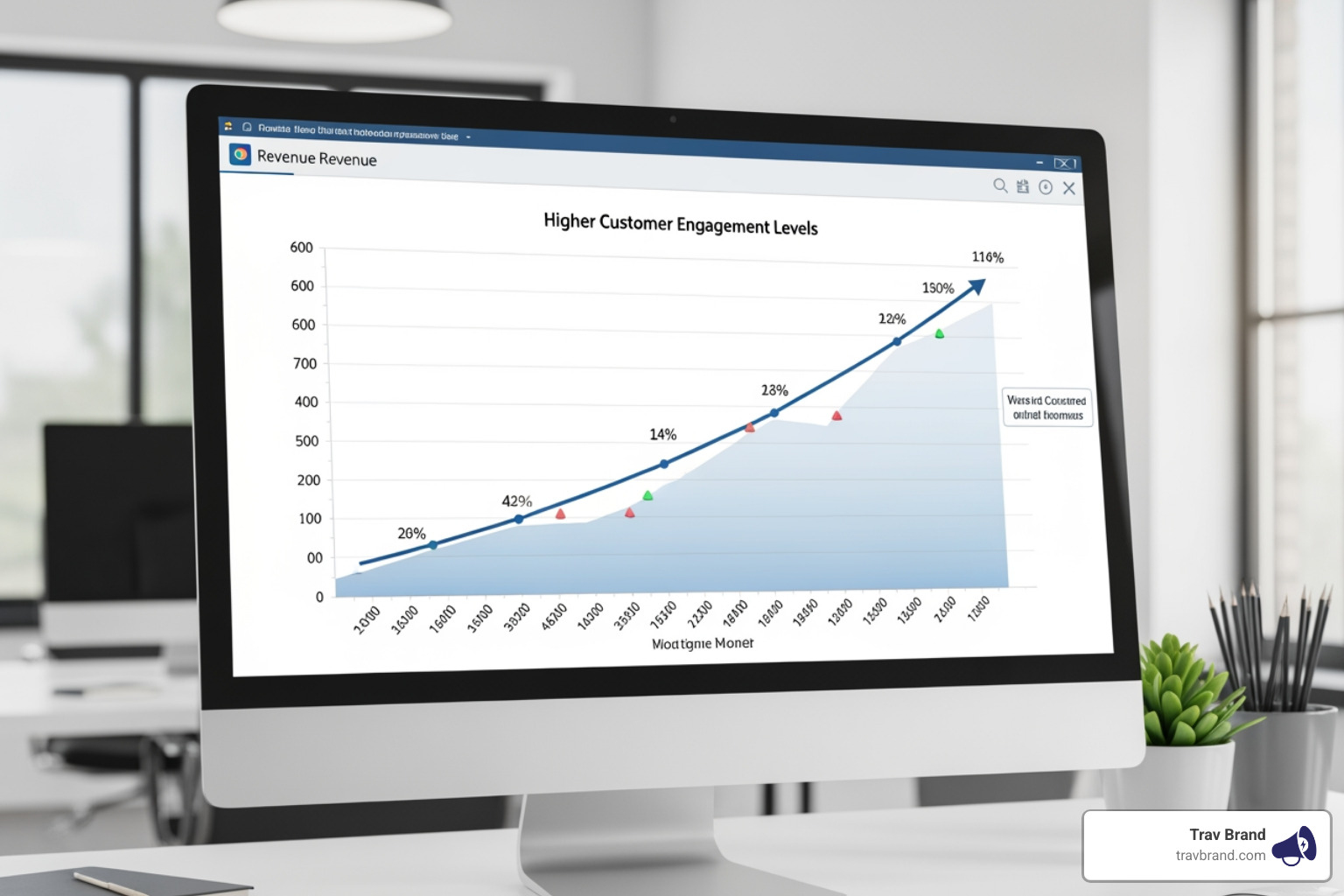
Why should you care about engagement? Because disengaged customers are expensive. Research shows that fully engaged customers contribute to a 23% increase in profitability, revenue, and relationship growth compared to those who are just “aware” of you.
When we implement robust brand engagement strategies, we aren’t just looking for “likes.” We are looking for:
- Revenue Growth: Businesses that prioritize engagement can see cross-sell revenue jump by 22% and up-sell revenue by 38%.
- Customer Retention: A tiny 5% increase in customer retention can boost profits by a staggering 25% to 95%. It is much cheaper to keep a customer than to find a new one.
- Churn Reduction: Engaged customers feel valued. When they feel like part of a community, they are less likely to jump ship for a slightly lower price.
- Increased Order Size: Effective engagement can increase average order sizes by anywhere from 5% to 85%.
In a crowded market, you can’t just be loud; you have to be meaningful. We specialize in innovative brand building strategies to stand out in a competitive market because we know that engagement is the ultimate competitive edge.
7 Proven Brand Engagement Strategies to Boost Interaction
Now, let’s get tactical. These aren’t just theories; these are proven methods used by the world’s most successful brands.
1. The Omnichannel Approach
Consistency is the bedrock of trust. An omnichannel strategy ensures that whether a customer is on your Instagram, reading an email, or unboxing a package, the experience feels seamless. Companies with strong omnichannel engagement retain about 89% of their customers, compared to just 33% for those with weak strategies.
2. User-Generated Content (UGC)
Stop trying to be the only voice in the room. Consumers trust other consumers far more than they trust your marketing department. In fact, 88% of people trust recommendations from friends and family over any other form of advertising. By encouraging customers to share their own photos and videos, you build social proof and authenticity.
3. Mastering Storytelling
Humans are hardwired for stories. Don’t just sell a product; sell a mission. The power of storytelling in building a strong brand lies in making the customer the hero of the journey. Whether it’s Nike’s “Just Do It” inspiring athletes or Lego’s fans submitting designs that become real products, stories create emotional hooks.
4. Tiered Loyalty Programs
A good loyalty program isn’t just about discounts; it’s about belonging. Take Starbucks, where the rewards program accounts for over 60% of their U.S. sales. By offering exclusive access and personalized perks, you turn a transaction into a relationship.
5. Gamification
We all love to win. Incorporating points, badges, or “streaks” (like Duolingo) taps into the “endowed progress effect.” It makes the process of interacting with your brand fun and addictive.
6. Experiential Rewards
Sometimes, the best reward isn’t a coupon—it’s an experience. Red Letter Days demonstrates this by offering “fine dining” or “spa days” that customers naturally want to share on social media. This turns a simple gift into a viral marketing moment.
7. Purpose-Driven Branding
Two-thirds of consumers are more likely to buy from brands with a strong purpose. Whether it’s sustainability or social justice, standing for something matters. For a deeper look, see our essential guide to purpose-driven branding.
Leveraging Social Media as a Brand Engagement Strategy
Social media isn’t a megaphone; it’s a telephone. It’s for two-way dialogue.
- Conversational Marketing: Move away from “salesy” posts and toward real conversations. Use polls, Q&As, and live streams to interact in real-time.
- Response Times: Speed matters. 42% of customers who reach out on social media expect a response within 60 minutes. If you leave them hanging, you’re losing them.
- Social Listening: Pay attention to what people are saying when they aren’t tagging you. This provides raw, honest feedback that can shape your next campaign.
- Platform Choice: Don’t try to be everywhere. Focus on navigating the social landscape and choosing the right platforms where your specific audience actually hangs out.
Using Personalization to Refine Brand Engagement Strategies
Generic messaging is the fastest way to get ignored. 67% of consumers say it is important for brands to provide personalized experiences.
- First-Party Data: Use the info customers give you (preferences, birthdays, purchase history) to tailor your outreach.
- Behavioral Triggers: If a customer views a product three times but doesn’t buy, send a helpful video or a limited-time offer related to that specific item.
- Chatbots & AI: Use chatbots for 24/7 support, but ensure they can seamlessly hand off to a human for complex issues.
- Feedback Loops: Don’t just ask for feedback—act on it. When customers see their suggestions implemented, their loyalty skyrockets.
Measuring Success and Avoiding Common Pitfalls
You can’t manage what you don’t measure. To see if your brand engagement strategies are actually working, look beyond “vanity metrics” like follower counts.
Key Metrics to Track:
- Net Promoter Score (NPS): How likely are customers to recommend you?
- Social Media Interaction Rate: Are people commenting and sharing, or just scrolling past?
- Email Open & Click Rates: Is your content interesting enough to open?
- Website Traffic & Conversion: Are you attracting the right people who actually take action?
- Customer Lifetime Value (CLV): How much is a customer worth over the long haul?
Common Pitfalls to Avoid:
- Ignoring Internal Engagement: Your employees are your first brand advocates. If they aren’t engaged, your customers won’t be either.
- Being “Too Salesy”: If every interaction is a pitch, people will tune out. Aim for a 80/20 mix of value vs. promotion.
- Static Strategies: The market moves fast. What worked in 2020 might not work today. You must constantly iterate.
- Losing the Human Touch: In the rush to automate with AI and chatbots, don’t lose the personality that made people like you in the first place.
Building relationships is essential for business success. As we discuss in our piece on the power of networking for entrepreneurs, your network—both internal and external—is your net worth.
Frequently Asked Questions about Brand Engagement
What is the difference between brand engagement and customer engagement?
Customer engagement is often narrower, focusing on the interactions between a buyer and a company during the sales process. Brand engagement is broader—it includes customers, but also employees, investors, and the general public. It’s about the overall emotional connection to the brand’s “world,” not just the latest purchase.
How do you measure the success of brand engagement strategies?
The best way is to use a “balanced scorecard” of metrics. Combine quantitative data (NPS, retention rates, repeat purchase frequency) with qualitative data (sentiment analysis of social media comments and direct customer feedback).
What are the most common pitfalls in brand engagement?
The biggest pitfall is inconsistency. If your brand is “fun and quirky” on TikTok but “cold and corporate” in customer support emails, you break the trust. Another major error is failing to “close the loop” on feedback—if customers tell you what’s wrong and you don’t fix it, they’ll stop engaging entirely.
Conclusion
At Trav Brand, we don’t believe in “fluffy” marketing. We believe in building a strategic roadmap that leads to long-term loyalty and brand resilience. Brand engagement strategies are not a luxury; they are the engine of modern business growth.
By moving from simple awareness to deep, two-way interaction, you transform your audience from passive browsers into a thriving community. This leads to measurable results—not just in your social stats, but in your bank account.
Ready to stop boring your audience and start building a brand people actually love? Whether you need a complete ecosystem overhaul or a targeted content strategy, we are here to help you scale.
To discover how to scale your brand and create a community that lasts, get in touch for a free consultation. Let’s build something extraordinary together.